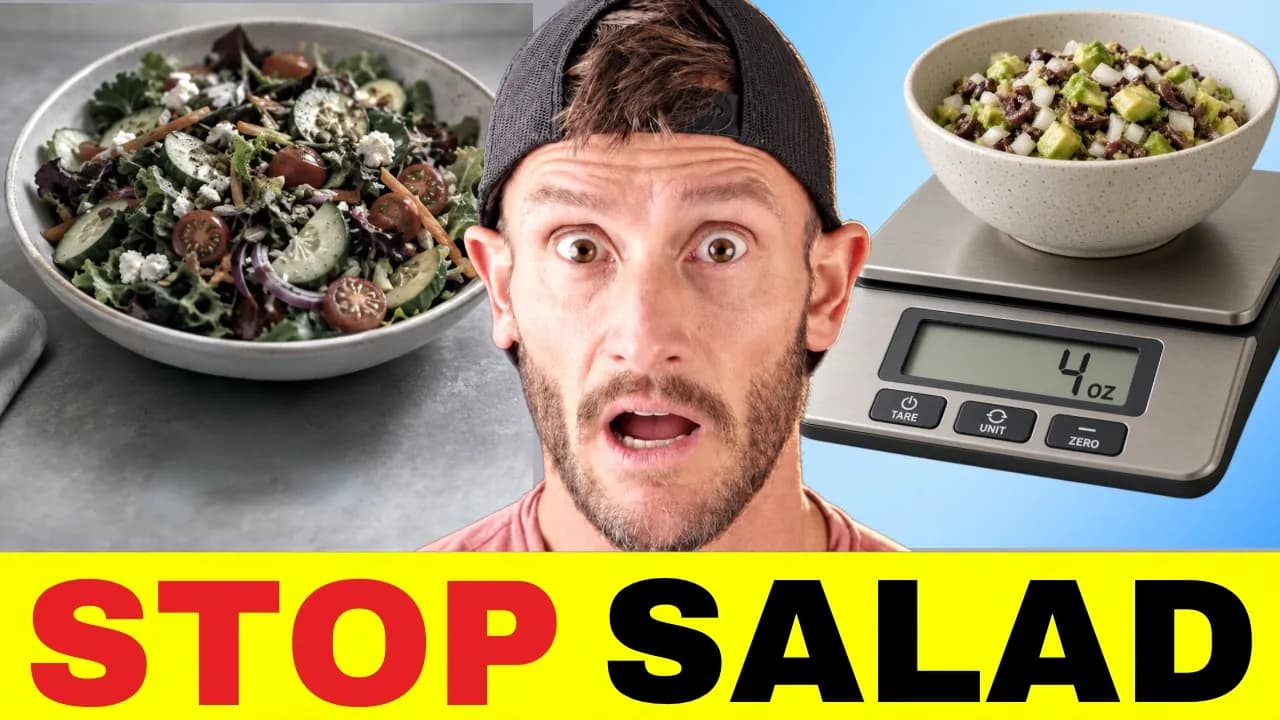
Adding avocado to a carotenoid-rich salad increased beta-carotene absorption 15.3 times more than the same salad with fat-free dressing.
See the scientific wording
Adding avocado to a carotenoid-rich salad increases beta-carotene absorption by 15.3 times RELATIVE (15.3-fold relative increase) compared with the same salad eaten with fat-free dressing; absolute beta-carotene absorption values were not reported.
Supported
Observational2 of 2 parts have evidence behind them.
Supported
2 of 2 parts have evidence behind them.
Parts of this claim
Adding avocado to a carotenoid-rich salad increases beta-carotene absorption.
Supported1 studyThe increase in beta-carotene absorption is 15.3 times relative compared with the same salad eaten with fat-free dressing.
Supported1 study
Evidence is judged against each part on its own, so a study that tests one part never counts as a verdict on the whole claim.
What the research says
1 study reviewedSupporting (1)
Cohort StudyHuman2005
In a human study, people who ate a salad with avocado absorbed 15.3 times more beta-carotene than when they ate the same salad without avocado. This exactly matches the claim.
Contradicting (0)
No contradicting studies found yet
That doesn't mean it's settled — it just means no study has tested the opposite.
Quality-weighted scoring: we follow the GRADE framework — each study is rated High, Moderate, Low, or Very Low based on study design, methodology rigor, and risk of bias. A single high-quality RCT can outweigh several weaker observational studies.
Scores reflect study quality, not just count.
When you eat a salad with avocado, the fat from the avocado mixes with the food in your gut. This fat breaks the beta-carotene into tiny packages that can be taken into the cells lining your intestine. Inside those cells, the fat helps wrap the beta-carotene into carriers that travel through lymph into your blood. Without enough fat, like with fat-free dressing, most beta-carotene passes through without being absorbed. Adding avocado gives the fat needed to absorb much more beta-carotene.
Score breakdown, mechanism chain, raw evidence, ideal studies needed & 1 supporting study
Related videos
How Fit Body Science checks a claim
- 1
We isolate the claim
Health advice from videos, articles and studies is broken down into single, testable claims.
- 2
We find the research
Each claim is matched against peer-reviewed studies, with every source cited by DOI.
- 3
We grade the evidence
Studies are scored on methodology, statistical rigor, transparency and publication quality.
The fitness and health internet is full of confident claims. We check them against real research.
Every claim on this site is traced back to peer-reviewed studies, scored on methodology and reporting quality, and given a verdict you can audit yourself — sources, DOIs and all.
- Full evidence breakdown and mechanism chains
- Ask our AI anything about a claim or its studies
- Get notified when new research changes a verdict
Adding avocado to a carotenoid-rich salad increased beta-carotene absorption 15.3 times more than the same salad with fat-free dressing.
Mechanism
1 studyThe body needs fat to absorb beta-carotene from salad. Avocado supplies that fat. The fat breaks beta-carotene into tiny drops that enter the gut cells, then helps pack those drops into carriers that go into the blood. Without fat, like fat-free dressing, most beta-carotene never gets absorbed. Adding avocado gives the fat needed to absorb 15.3 times more beta-carotene.
When you eat a salad with avocado, the fat from the avocado mixes with the food in your gut. This fat breaks the beta-carotene into tiny packages that can be taken into the cells lining your intestine. Inside those cells, the fat helps wrap the beta-carotene into carriers that travel through lymph into your blood. Without enough fat, like with fat-free dressing, most beta-carotene passes through without being absorbed. Adding avocado gives the fat needed to absorb much more beta-carotene.
A carotenoid-rich salad eaten with avocado delivers beta-carotene and dietary lipids together into the stomach and small intestine.
In the intestinal lumen, dietary lipids are digested by pancreatic lipase and bile salts, forming mixed micelles that trap and dissolve beta-carotene.
Beta-carotene carried inside mixed micelles reaches the surface of intestinal enterocytes and is taken up into those cells.
Inside enterocytes, long-chain fatty acids from avocado, especially oleic acid, enable the packaging of beta-carotene into chylomicrons.
Beta-carotene-laden chylomicrons are secreted into lymph and enter the bloodstream as triacylglycerol-rich lipoproteins.
The appearance of beta-carotene in the plasma triacylglycerol-rich lipoprotein fraction rises, producing a 15.3-fold higher relative absorption when avocado is added compared with a fat-free meal.
Evidence from Studies
Last searched 13h ago
Supporting (1)
Community contributions welcome
In a human study, people who ate a salad with avocado absorbed 15.3 times more beta-carotene than when they ate the same salad without avocado. This exactly matches the claim.
Contradicting (0)
Community contributions welcome
Score Breakdown
No multi-axis breakdown available yet. The overall Pro / Against score above is the best signal.
- No clinical evidence is available; the score reflects mechanistic plausibility only.
What Would Prove This
Per GRADE and EBM methodology, here is what ideal scientific evidence would look like to definitively prove or disprove this claim, ordered from strongest to weakest.
Systematic Review and Meta-Analysis of Avocado Co-Consumption on Carotenoid Bioavailability
Systematic search and meta-analysis of randomized controlled trials in healthy adults consuming carotenoid-rich salads with avocado versus fat-free dressing, measuring postprandial beta-carotene absorption (AUC or fractional absorption), with subgroup analysis by avocado dose and carotenoid source.
Randomized Crossover Trial of Avocado vs Fat-Free Dressing on Postprandial Beta-Carotene Absorption
Double-blind randomized crossover trial in healthy adults; same carotenoid-rich salad with avocado vs fat-free dressing on separate days; primary outcome postprandial beta-carotene AUC over 8-12 hours; controlled for background diet and washout.
Prospective Cohort Study of Avocado Intake and Serum Beta-Carotene Concentrations
Longitudinal cohort of adults without major malabsorption, measuring dietary avocado and carotenoid intake and serum beta-carotene at baseline and follow-up; adjust for confounders like total fat intake, BMI, and other carotenoid sources.
Cross-Sectional Study of Avocado Consumption and Beta-Carotene Status
Cross-sectional survey and biomarker study in adults measuring recent avocado intake and fasting serum beta-carotene, with adjustment for demographics and diet.
In Vitro Digestion Model of Avocado Lipids on Beta-Carotene Micellarization
Simulated gastrointestinal digestion of carotenoid-rich salad with avocado vs fat-free dressing; measure beta-carotene micellarization efficiency and lipid digestion products.