The Claim
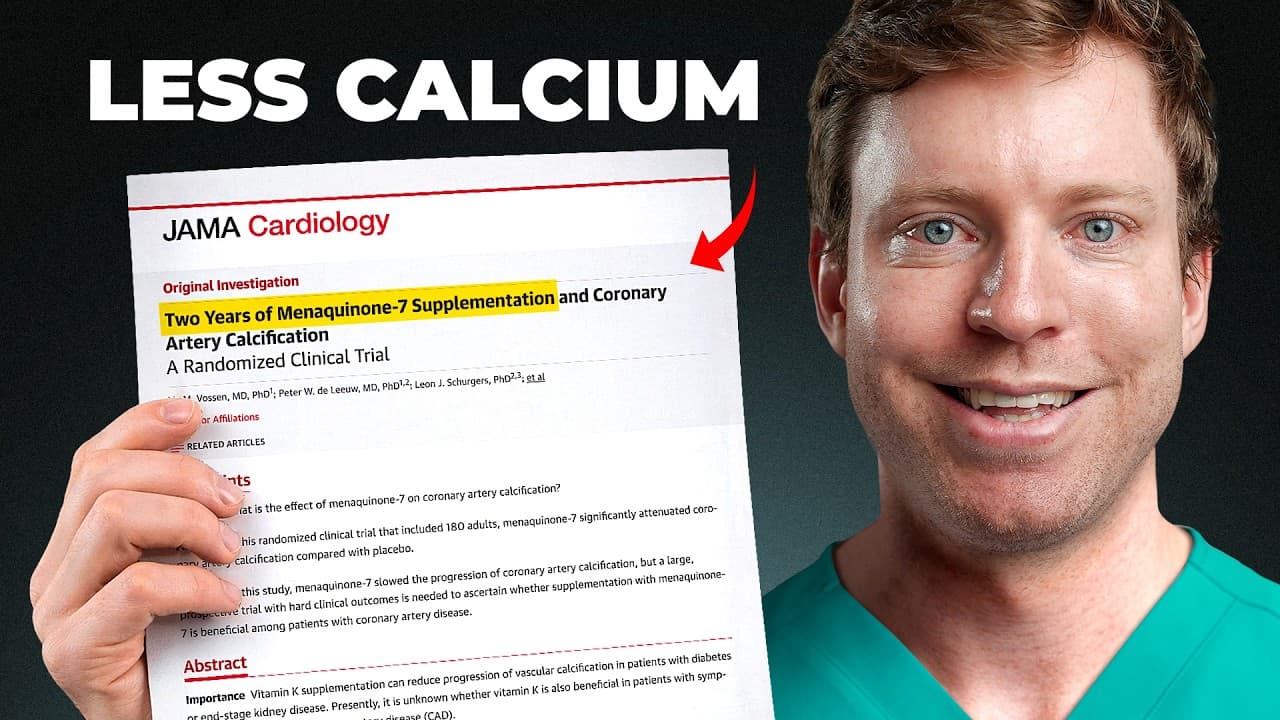
Daily supplementation with 360 micrograms of vitamin K2 over two years results in a smaller increase in arterial calcium mass compared to placebo.
What the research says
Supports is higher
Support is ahead, but a single strong opposing study can change this.
These are independent scores, not a percentage. Higher-grade studies count more, so a single strong opposing study can outweigh several weaker ones.
Taking 360 micrograms of vitamin K2 daily for two years leads to less buildup of calcium in the arteries than taking a placebo.
See the scientific wording
Daily supplementation with 360 micrograms of vitamin K2 over two years results in a smaller increase in arterial calcium mass compared to placebo.
Vitamin K2 enables a protein in artery walls to bind calcium and stop it from forming hard deposits. Without enough vitamin K2, this protein stays inactive and calcium builds up, making arteries stiff. When vitamin K2 is present, it turns on the protein, which grabs calcium and prevents it from turning into rock-like crystals in the artery walls.
What the research says
2 studiesTaking vitamin K2 for a year helped older women’s arteries stay more flexible and less stiff, which means less calcium was likely building up in them. This suggests that taking more for longer (like in the claim) would probably help even more.
Taking vitamin K2 daily helped reduce calcium buildup in the arteries of sick patients, even though the dose and time were lower than in the claim. This suggests that higher doses for longer might work even better.
Related videos
Score breakdown, mechanism chain, raw evidence, ideal studies needed & 2 supporting studies
Not medical advice. For informational purposes only. Always consult a qualified healthcare professional before making health decisions.