The Claim
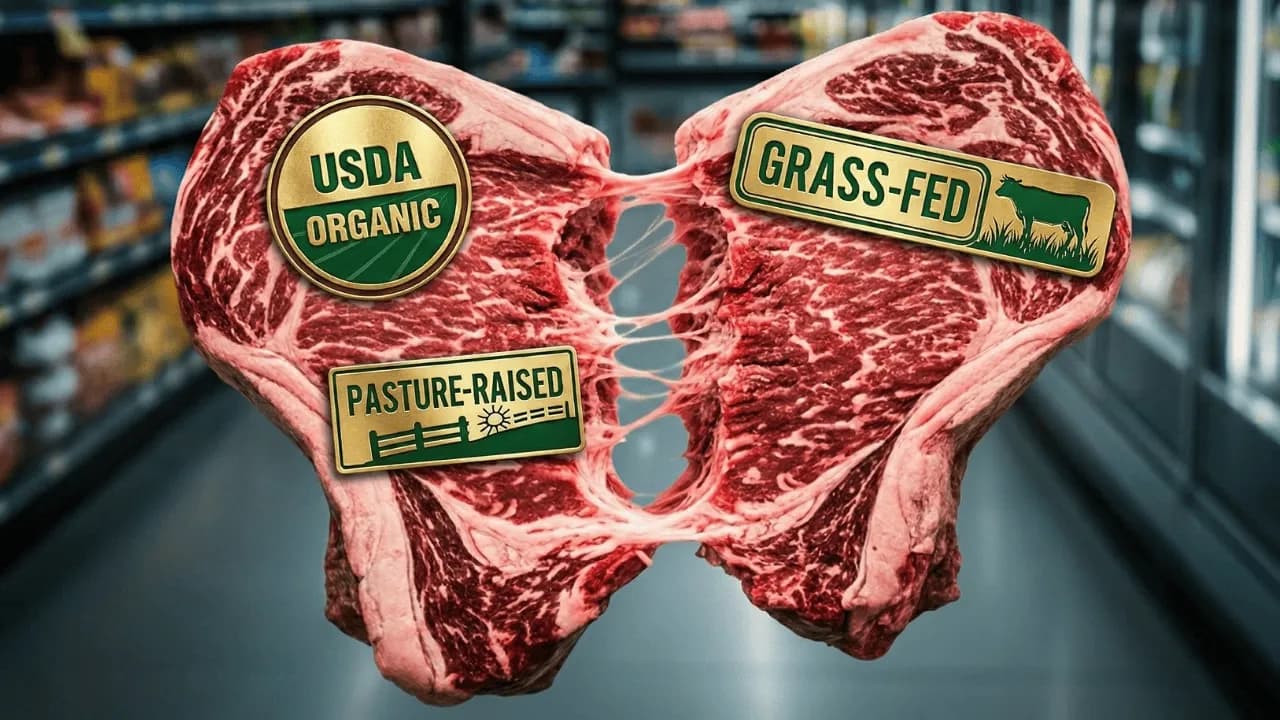
Grain feeding increases intramuscular fat content in cattle and results in meat with reduced perceived toughness.
What the research says
Supports is higher
Support is ahead, but a single strong opposing study can change this.
These are independent scores, not a percentage. Higher-grade studies count more, so a single strong opposing study can outweigh several weaker ones.
Cattle fed grain have more fat inside their muscle tissue, and the meat from these cattle is perceived as less tough.
See the scientific wording
Grain feeding increases intramuscular fat content in cattle, resulting in meat with reduced perceived toughness.
When cattle eat grain, their bodies convert the starch into energy molecules that trigger fat-making processes in muscle tissue. Special proteins turn on genes that build new fatty acids and store them as fat inside the muscle. At the same time, the body stops breaking down existing fat. This buildup of fat inside the muscle fibers physically separates the tough connective tissues, making the meat easier to chew.
What the research says
4 studiesCows fed grain develop more fat inside their meat, and people find that meat softer and tastier. Even older cows made tender meat if their meat had lots of fat streaks.
Feeding rams more high-moisture corn made their meat 56% fattier inside the muscle and 55% easier to chew, which means the meat was less tough. This supports the idea that grain-fed animals have more marbling and softer meat.
When cattle are fed grain instead of grass, their meat gets more fat inside the muscle and becomes easier to chew. This study showed that grain-fed yaks had almost twice as much fat in their meat and much less resistance when cut, meaning the meat was noticeably more tender.
Cattle fed grain developed more fat inside their muscles over time, and the type of fat got healthier—more of the good kind that makes meat tender. So yes, grain-fed beef is likely less tough.
Score breakdown, mechanism chain, raw evidence, ideal studies needed & 4 supporting studies
Not medical advice. For informational purposes only. Always consult a qualified healthcare professional before making health decisions.