When you stand still without moving your leg muscles, gravity pulls blood down into your legs. This makes it harder for your body to send the blood back to your heart and move it around your body.
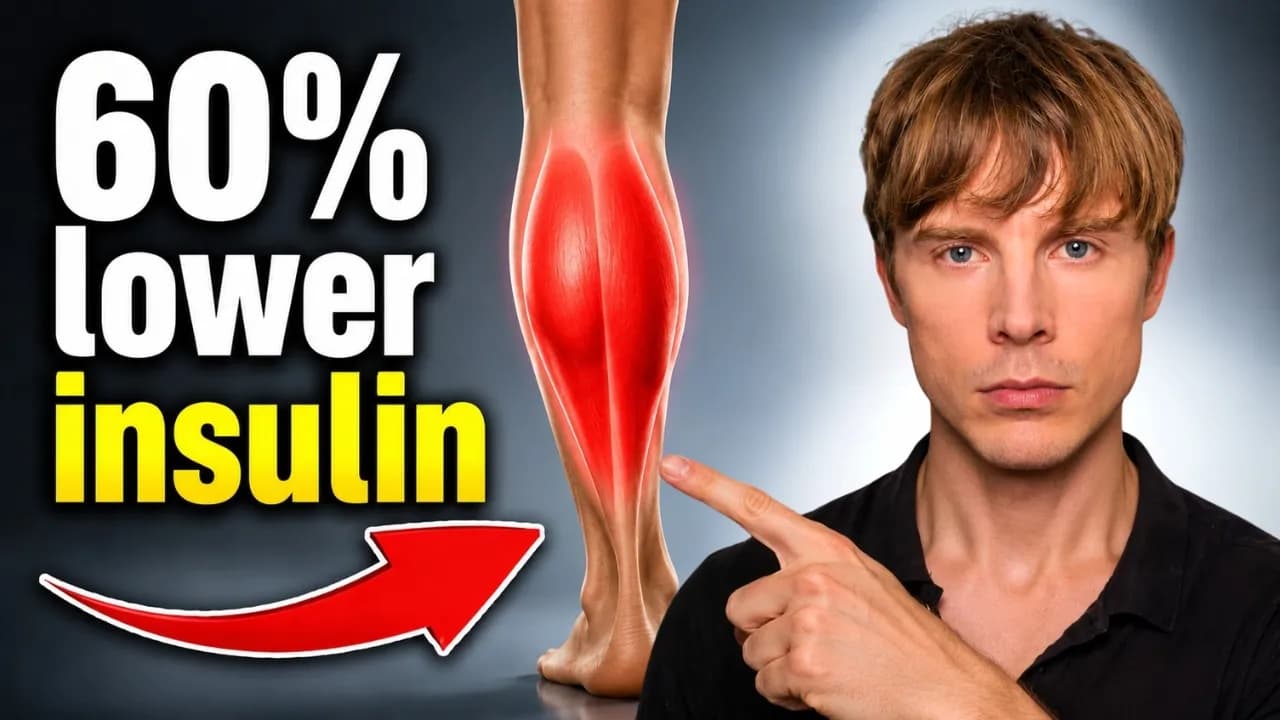 From Your Second Heart Is Destroying Your Metabolism · video
See the scientific wording
Gravity causes blood to pool in the lower extremities when skeletal muscles are inactive, which impairs venous return and circulation.
Very strong evidence
Randomized trialsOne good-quality study supports this claim.
What the research says
1 study reviewedSupporting (1)
Prolonged Sitting Induces Elevated Blood Pressure in Healthy Young Men: A Randomized Crossover Trial
Randomized Controlled TrialHuman2024
When you sit still without moving your legs, gravity pulls blood down, making it harder for your body to pump it back up. This raises your blood pressure because your heart has to work harder.
Contradicting (0)
No contradicting studies found yet
That doesn't mean it's settled — it just means no study has tested the opposite.
Quality-weighted scoring: we follow the GRADE framework — each study is rated High, Moderate, Low, or Very Low based on study design, methodology rigor, and risk of bias. A single high-quality RCT can outweigh several weaker observational studies.
Scores reflect study quality, not just count.
When you stay still for a long time, gravity pulls blood down into your legs. Because your leg muscles are not moving, they don't squeeze the veins to push the blood back up. So blood collects in your legs, and less blood returns to your heart. This means your heart can't pump as much blood to your body. Special sensors in your neck notice that less blood is coming back, so they send a message to your brain. Your brain then tells your blood vessels to get tighter. This makes your blood pressure go up to help keep blood flowing to your important organs. That is why sitting still for a long time can make your blood pressure go up.
Score breakdown, mechanism chain, raw evidence, ideal studies needed & 1 supporting study
How Fit Body Science checks a claim
- 1
We isolate the claim
Health advice from videos, articles and studies is broken down into single, testable claims.
- 2
We find the research
Each claim is matched against peer-reviewed studies, with every source cited by DOI.
- 3
We grade the evidence
Studies are scored on methodology, statistical rigor, transparency and publication quality.
The fitness and health internet is full of confident claims. We check them against real research.
Every claim on this site is traced back to peer-reviewed studies, scored on methodology and reporting quality, and given a verdict you can audit yourself — sources, DOIs and all.
- Full evidence breakdown and mechanism chains
- Ask our AI anything about a claim or its studies
- Get notified when new research changes a verdict
When you stand still without moving your leg muscles, gravity pulls blood down into your legs. This makes it harder for your body to send the blood back to your heart and move it around your body.
Mechanism
2 studiesWhen you sit or stand still, gravity makes blood pool in your legs. Because your muscles aren't moving, the blood doesn't get pumped back to your heart, so your heart gets less blood. Your body detects this and makes your blood vessels tighten to keep your blood pressure up.
When you stay still for a long time, gravity pulls blood down into your legs. Because your leg muscles are not moving, they don't squeeze the veins to push the blood back up. So blood collects in your legs, and less blood returns to your heart. This means your heart can't pump as much blood to your body. Special sensors in your neck notice that less blood is coming back, so they send a message to your brain. Your brain then tells your blood vessels to get tighter. This makes your blood pressure go up to help keep blood flowing to your important organs. That is why sitting still for a long time can make your blood pressure go up.
Gravity causes blood to accumulate in the veins of the lower legs because the skeletal muscles are inactive and do not pump blood upward. This leads to fluid retention and leg swelling.
The pooling of blood reduces the volume of blood returning to the heart, decreasing cardiac output.
The decrease in cardiac output lowers pressure in the carotid sinuses, reducing baroreceptor firing.
Reduced baroreceptor activity triggers an increase in sympathetic nervous system outflow from the vasomotor center.
Increased sympathetic activity stimulates norepinephrine release from nerve endings in peripheral blood vessels.
Norepinephrine binds to alpha-adrenergic receptors on vascular smooth muscle, causing vasoconstriction and raising peripheral vascular resistance.
Higher peripheral resistance increases diastolic and mean arterial blood pressure, compensating for reduced venous return.
Evidence from Studies
Last searched 1mo ago
Supporting (1)
Community contributions welcome
Prolonged Sitting Induces Elevated Blood Pressure in Healthy Young Men: A Randomized Crossover Trial
When you sit still without moving your legs, gravity pulls blood down, making it harder for your body to pump it back up. This raises your blood pressure because your heart has to work harder.
Contradicting (0)
Community contributions welcome
Score Breakdown
No multi-axis breakdown available yet. The overall Pro / Against score above is the best signal.
- No clinical evidence is available; the score reflects mechanistic plausibility only.
What Would Prove This
Per GRADE and EBM methodology, here is what ideal scientific evidence would look like to definitively prove or disprove this claim, ordered from strongest to weakest.
Systematic Review of Muscle Inactivity and Venous Return
Search multiple databases for studies comparing venous pooling and return in active versus inactive states, including RCTs, cohort, and cross-sectional studies, and meta-analyze the results.
Controlled Trial of Calf Muscle Pump Activity vs Inactivity on Venous Return
Randomize healthy adults to either stand still (inactive) or perform intermittent calf muscle contractions (active) for a fixed duration (e.g., 1 hour). Measure venous return via plethysmography or ultrasound at baseline and after.
Cohort Study of Prolonged Inactivity and Venous Pooling
Prospectively follow individuals who experience extended periods of inactivity (e.g., travelers on long flights) and compare with active individuals, measuring venous pooling and circulatory function at follow-up.
Case-Control Study of Venous Insufficiency and Physical Inactivity
Select cases with chronic venous insufficiency (e.g., varicose veins, edema) and matched controls without it. Compare their historical levels of physical activity and time spent inactive.
Cross-Sectional Analysis of Physical Activity Levels and Lower Extremity Blood Pooling
Measure blood pooling in the lower extremities (e.g., via ultrasound) in a sample of adults with varying levels of daily physical activity (e.g., sedentary vs. active) at a single time point.