The Claim
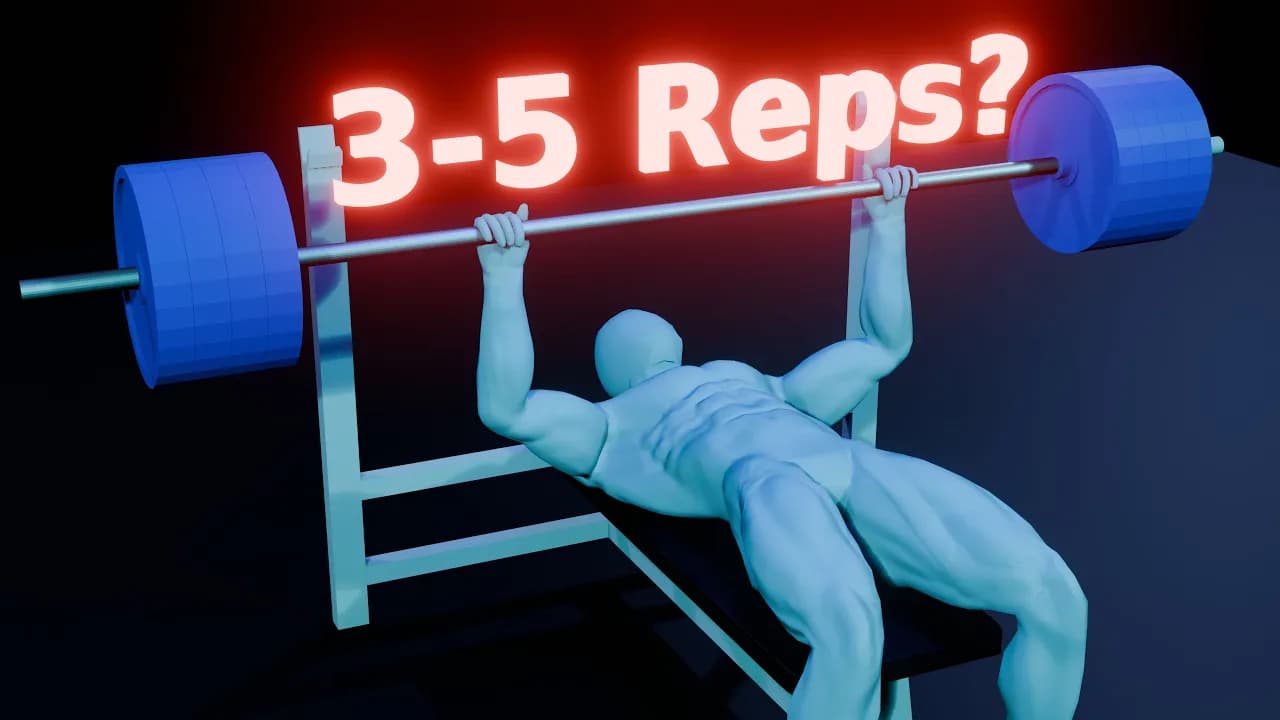
High-intensity resistance training (3-5 repetitions at 90% of one-repetition maximum with 3-minute rest intervals) produces greater strength and hypertrophy gains than high-volume resistance training (10-12 repetitions at 70% of one-repetition maximum with 1-minute rest intervals) when training volume is not equated.
What the research says
Supports is higher
Support is ahead, but a single strong opposing study can change this.
These are independent scores, not a percentage. Higher-grade studies count more, so a single strong opposing study can outweigh several weaker ones.
Lifting very heavy weights a few times with long breaks builds more muscle and strength faster than lifting lighter weights many times with short breaks, when the total amount of lifting isn't the same.
See the scientific wording
High-intensity resistance training (3-5 reps at 90% 1RM with 3-min rest) produces greater strength and hypertrophy gains than high-volume training (10-12 reps at 70% 1RM with 1-min rest) when volume is not equated.
What the research says
1 studyThe study compared two workout styles and found that lifting heavy weights with longer breaks led to more muscle and strength gains than lifting lighter weights with shorter breaks, just like the claim said.
Related videos
Score breakdown, mechanism chain, raw evidence, ideal studies needed & 1 supporting studies
Not medical advice. For informational purposes only. Always consult a qualified healthcare professional before making health decisions.