Doing really intense sprints gives your body a big, quick boost in growth hormone—up to 17 times more—which helps protect your muscles and burn fat.
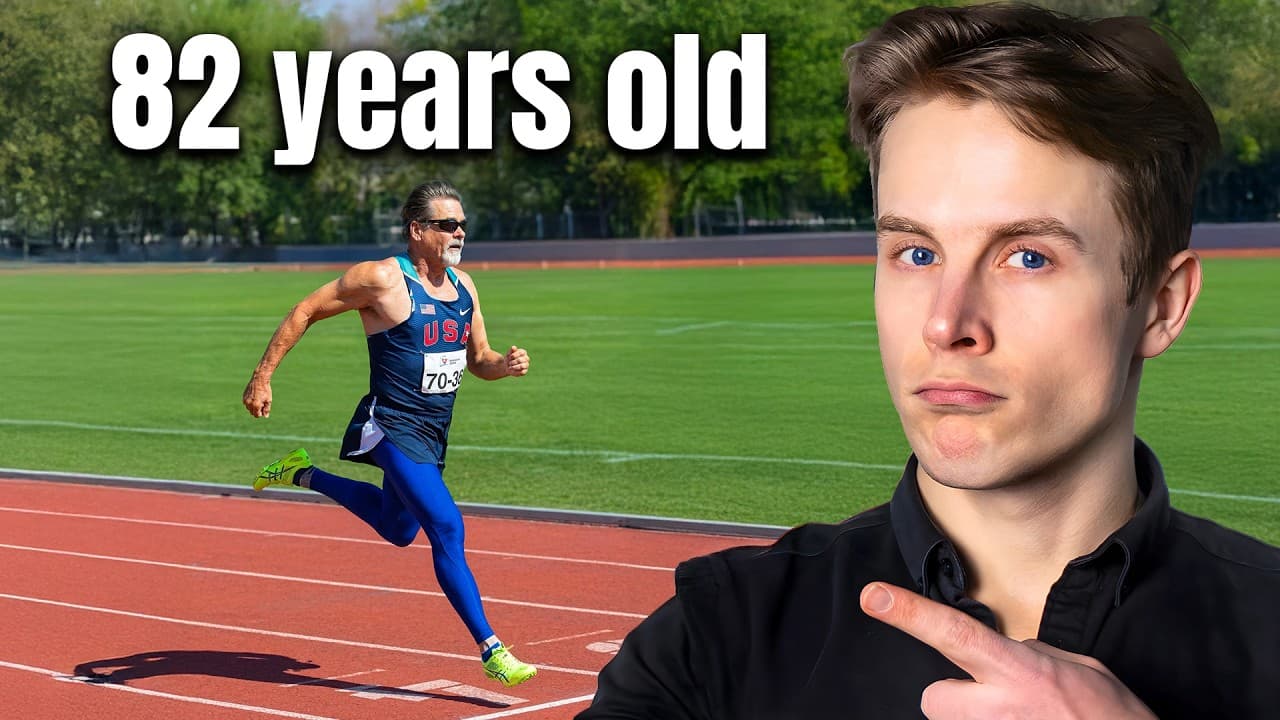 From The #1 Exercise That Keeps You Alive Longer · video
See the scientific wording
High-intensity sprinting induces a significant acute increase in growth hormone levels, with elevations of up to 17-fold, and enhances related anabolic markers, resulting in a systemic hormonal environment that reduces muscle breakdown and supports fat loss.
Correlational — new studies may shift this
ObservationalOne moderate-quality study links this claim to the outcome, but causation is not established.
What the research says
1 study reviewedSupporting (1)
Growth hormone responses to treadmill sprinting in sprint- and endurance-trained athletes
Cross-Sectional StudyHuman1996
The study shows that sprinting causes a big, lasting rise in growth hormone, which helps build muscle and may reduce muscle breakdown—supporting the main idea of the claim.
Contradicting (0)
No contradicting studies found yet
That doesn't mean it's settled — it just means no study has tested the opposite.
Quality-weighted scoring: we follow the GRADE framework — each study is rated High, Moderate, Low, or Very Low based on study design, methodology rigor, and risk of bias. A single high-quality RCT can outweigh several weaker observational studies.
Scores reflect study quality, not just count.
Score breakdown, mechanism chain, raw evidence, ideal studies needed & 1 supporting study
How Fit Body Science checks a claim
- 1
We isolate the claim
Health advice from videos, articles and studies is broken down into single, testable claims.
- 2
We find the research
Each claim is matched against peer-reviewed studies, with every source cited by DOI.
- 3
We grade the evidence
Studies are scored on methodology, statistical rigor, transparency and publication quality.
The fitness and health internet is full of confident claims. We check them against real research.
Every claim on this site is traced back to peer-reviewed studies, scored on methodology and reporting quality, and given a verdict you can audit yourself — sources, DOIs and all.
- Full evidence breakdown and mechanism chains
- Ask our AI anything about a claim or its studies
- Get notified when new research changes a verdict
Doing really intense sprints gives your body a big, quick boost in growth hormone—up to 17 times more—which helps protect your muscles and burn fat.
Evidence from Studies
Supporting (1)
Community contributions welcome
Growth hormone responses to treadmill sprinting in sprint- and endurance-trained athletes
The study shows that sprinting causes a big, lasting rise in growth hormone, which helps build muscle and may reduce muscle breakdown—supporting the main idea of the claim.
Contradicting (0)
Community contributions welcome
Score Breakdown
No multi-axis breakdown available yet. The overall Pro / Against score above is the best signal.
- No clinical evidence is available; the score reflects mechanistic plausibility only.
What Would Prove This
Per GRADE and EBM methodology, here is what ideal scientific evidence would look like to definitively prove or disprove this claim, ordered from strongest to weakest.
Systematic Review of Acute Growth Hormone Response to High-Intensity Sprinting in Humans
A systematic review and meta-analysis of randomized controlled trials measuring acute changes in growth hormone and anabolic markers in healthy adults following high-intensity sprinting versus control conditions.
Randomized Crossover Trial of High-Intensity Sprinting vs. Rest on Growth Hormone and Muscle Breakdown Markers
Double-blind, randomized crossover trial in healthy human participants comparing acute hormonal and metabolic responses after high-intensity sprinting versus a resting control, with blood sampling for growth hormone, IGF-1, cortisol, and muscle breakdown markers (e.g., 3-MH).
Prospective Cohort Study on Sprint Training and Body Composition Changes
Prospective cohort study tracking trained athletes and recreationally active individuals over 12 weeks, assessing sprint frequency, hormonal profiles, body composition via DEXA, and muscle protein turnover markers.
Cross-Sectional Analysis of Growth Hormone Levels in Sprinters vs. Non-Athletes
Cross-sectional study measuring resting and post-exercise growth hormone levels in competitive sprinters versus age-matched sedentary controls.
In Vitro Study of Growth Hormone Effects on Human Muscle Cell Protein Synthesis and Breakdown
In vitro study using cultured human myocytes exposed to physiological concentrations of growth hormone to measure changes in protein synthesis and degradation pathways.