A brain wave test can estimate how old your brain looks. This study found that if your brain looks 10 years older than your real age, your chance of getting dementia is 39% higher.
See the scientific wording
Each 10-year increase in the EEG-based brain age index is associated with a 39% higher risk of developing dementia.
Correlational — new studies may shift this
Observational2 moderate-quality studies link this claim to the outcome, but causation is not established.
What the research says
2 studies reviewedSupporting (2)
Cohort StudyMeta-analysis
The study checked brain wave tests and found that if your brain looks 10 years older than your real age, your chance of getting dementia is 39% higher, just like the claim says.
Machine Learning–Based Sleep Electroencephalographic Brain Age Index and Dementia Risk
Systematic Review With Meta-AnalysisMeta-analysis2026
The study proves that having a brain age that is 10 years older than your real age is linked to a 39% higher chance of getting dementia.
Contradicting (0)
No contradicting studies found yet
That doesn't mean it's settled — it just means no study has tested the opposite.
Quality-weighted scoring: we follow the GRADE framework — each study is rated High, Moderate, Low, or Very Low based on study design, methodology rigor, and risk of bias. A single high-quality RCT can outweigh several weaker observational studies.
Scores reflect study quality, not just count.
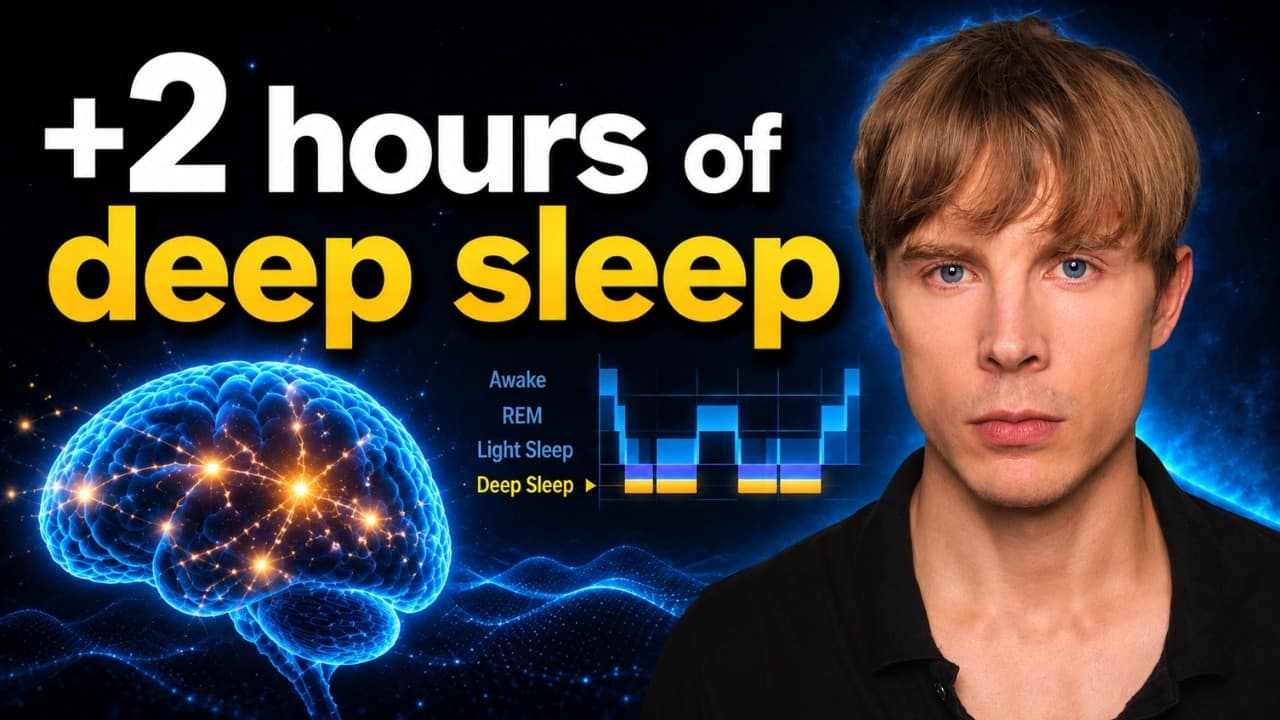
Getting older changes the patterns of brain waves during sleep. These changes, like less deep sleep and fewer sleep spindles, make it harder for the brain to clean out waste proteins and to strengthen memories. Over time, waste proteins build up and damage brain cells, making dementia more likely.
Score breakdown, mechanism chain, raw evidence, ideal studies needed & 2 supporting studies
Related videos
How Fit Body Science checks a claim
- 1
We isolate the claim
Health advice from videos, articles and studies is broken down into single, testable claims.
- 2
We find the research
Each claim is matched against peer-reviewed studies, with every source cited by DOI.
- 3
We grade the evidence
Studies are scored on methodology, statistical rigor, transparency and publication quality.
The fitness and health internet is full of confident claims. We check them against real research.
Every claim on this site is traced back to peer-reviewed studies, scored on methodology and reporting quality, and given a verdict you can audit yourself — sources, DOIs and all.
- Full evidence breakdown and mechanism chains
- Ask our AI anything about a claim or its studies
- Get notified when new research changes a verdict
A brain wave test can estimate how old your brain looks. This study found that if your brain looks 10 years older than your real age, your chance of getting dementia is 39% higher.
Mechanism
2 studiesSleep patterns change as we age, and these changes, like less deep sleep and fewer sleep spindles, make it harder for the brain to clear out harmful proteins and to form memories. Over time, the harmful proteins build up and damage brain cells, which increases the risk of dementia. The sleep test gives a 'brain age' that captures these changes, and when that brain age is older, dementia risk goes up.
Getting older changes the patterns of brain waves during sleep. These changes, like less deep sleep and fewer sleep spindles, make it harder for the brain to clean out waste proteins and to strengthen memories. Over time, waste proteins build up and damage brain cells, making dementia more likely.
Aging and neurodegenerative processes alter sleep EEG patterns, including reduced delta power (deep sleep), lower spindle density, and disrupted spindle-slow oscillation coupling, leading to an elevated EEG-based brain age index.
These sleep alterations impair synaptic homeostasis (reduced synaptic downscaling) and glymphatic clearance of metabolic waste products, including amyloid-beta and tau.
Impaired glymphatic clearance leads to accumulation of neurotoxic proteins (amyloid and tau) in the brain, contributing to synaptic dysfunction and neuronal injury.
Accumulation of neurotoxic proteins and disrupted synaptic plasticity cause progressive cognitive decline and increase the risk of dementia.
Evidence from Studies
Last searched 1mo ago
Supporting (2)
Community contributions welcome
The study checked brain wave tests and found that if your brain looks 10 years older than your real age, your chance of getting dementia is 39% higher, just like the claim says.
Machine Learning–Based Sleep Electroencephalographic Brain Age Index and Dementia Risk
The study proves that having a brain age that is 10 years older than your real age is linked to a 39% higher chance of getting dementia.
Contradicting (0)
Community contributions welcome
Score Breakdown
No multi-axis breakdown available yet. The overall Pro / Against score above is the best signal.
- No clinical evidence is available; the score reflects mechanistic plausibility only.
What Would Prove This
Per GRADE and EBM methodology, here is what ideal scientific evidence would look like to definitively prove or disprove this claim, ordered from strongest to weakest.
Systematic Review and Meta-Analysis of Cohort Studies on EEG-Based Brain Age Index and Dementia Risk
A systematic review of prospective cohort studies that measure EEG-based brain age index at baseline and follow participants for dementia incidence, with adjustment for confounders.
Randomized Trial of Brain Age Index Reduction Interventions on Dementia Incidence
Randomized controlled trial comparing an intervention that reduces brain age index (e.g., cognitive training, lifestyle changes) versus placebo/control, measuring dementia incidence over a long follow-up period.
Large Prospective Cohort Study of EEG Brain Age Index and Dementia Risk
Prospective cohort study enrolling healthy adults, measuring EEG-based brain age index at baseline, and following them for dementia development over 10-20 years, with thorough adjustment for known confounders.
Retrospective Case-Control Study of EEG Brain Age Index in Dementia Patients vs Controls
Cases with dementia and matched controls, retrieving historical EEG records to estimate brain age index, comparing the odds of having a higher index.
Cross-Sectional Analysis of Brain Age Index and Cognitive Impairment
Measure EEG-based brain age index and cognitive function or dementia diagnosis simultaneously in a population, examining association.