When people increase the proportion of protein in their diet from 15% to 30% of total calories, they consume about 400 fewer calories per day without trying to restrict food intake.
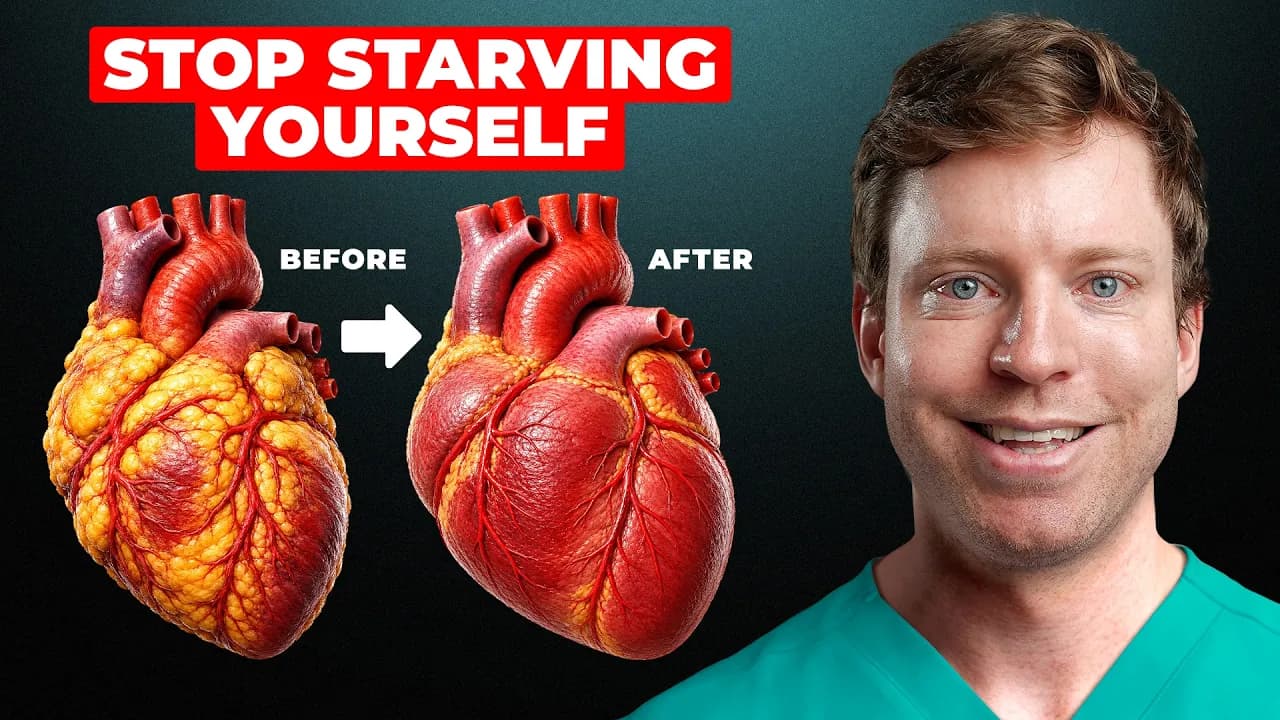 From Shrink the Fat Around Your Heart · video
See the scientific wording
Increasing dietary protein intake from 15% to 30% of total energy reduces spontaneous daily energy intake by approximately 400 calories.
Very strong evidence
Randomized trialsOne good-quality study supports this claim.
What the research says
1 study reviewedSupporting (1)
Short-term effects of high-protein, lower-carbohydrate ultra-processed foods on human energy balance
Randomized Controlled TrialHuman2025
When people ate more protein in their ultra-processed meals, they naturally ate about 200 fewer calories a day without trying—this supports the idea that more protein helps people eat less, even if the number isn’t exactly 400.
Contradicting (0)
No contradicting studies found yet
That doesn't mean it's settled — it just means no study has tested the opposite.
Quality-weighted scoring: we follow the GRADE framework — each study is rated High, Moderate, Low, or Very Low based on study design, methodology rigor, and risk of bias. A single high-quality RCT can outweigh several weaker observational studies.
Scores reflect study quality, not just count.
When more protein is eaten, the gut releases hormones that tell the brain to stop eating, and the food takes longer to chew, which also tells the brain to feel full sooner. This causes people to eat fewer calories without trying.
Score breakdown, mechanism chain, raw evidence, ideal studies needed & 1 supporting study
How Fit Body Science checks a claim
- 1
We isolate the claim
Health advice from videos, articles and studies is broken down into single, testable claims.
- 2
We find the research
Each claim is matched against peer-reviewed studies, with every source cited by DOI.
- 3
We grade the evidence
Studies are scored on methodology, statistical rigor, transparency and publication quality.
The fitness and health internet is full of confident claims. We check them against real research.
Every claim on this site is traced back to peer-reviewed studies, scored on methodology and reporting quality, and given a verdict you can audit yourself — sources, DOIs and all.
- Full evidence breakdown and mechanism chains
- Ask our AI anything about a claim or its studies
- Get notified when new research changes a verdict
When people increase the proportion of protein in their diet from 15% to 30% of total calories, they consume about 400 fewer calories per day without trying to restrict food intake.
Mechanism
2 studiesEating more protein makes the gut release signals that tell the brain you're full, and it makes food take longer to chew, which also tells the brain to stop eating sooner. This combination causes people to naturally eat fewer calories without trying.
When more protein is eaten, the gut releases hormones that tell the brain to stop eating, and the food takes longer to chew, which also tells the brain to feel full sooner. This causes people to eat fewer calories without trying.
Protein ingestion stimulates L-cells in the distal ileum and colon to secrete peptide YY (PYY)
Protein ingestion suppresses ghrelin secretion from gastric X/A-like cells
Increased PYY and decreased ghrelin signal via vagal afferents and circulation to the arcuate nucleus of the hypothalamus and nucleus tractus solitarius
Higher protein content increases food chewiness and springiness, prolonging mastication and oro-sensory exposure time
Prolonged oral stimulation activates vagal afferents, amplifying satiety hormone release and reducing hunger perception
Combined hormonal and oral signaling reduces appetite and terminates meals earlier, leading to lower spontaneous energy intake
Less supported by current evidence, but not ruled out
The liver burns extra energy to process excess protein, which raises the body's overall calorie use and reduces the need to consume more food.
High protein intake increases circulating amino acids, stimulating glucagon secretion from pancreatic alpha-cells
Glucagon activates hepatic gluconeogenesis and ureagenesis pathways to metabolize amino acids
Amino acids also stimulate insulin secretion, promoting anabolic processes in liver and muscle
Simultaneous glucagon-driven catabolism and insulin-driven anabolism create futile metabolic cycles that consume ATP and generate heat
Increased metabolic activity in liver and other tissues elevates basal and 24-hour energy expenditure
The body switches from burning carbs to burning fat for fuel when protein intake is high, which reduces fat storage and may lower overall hunger signals.
Elevated glucagon activates hepatic adenylate cyclase and increases cAMP
Glucagon stimulates hormone-sensitive lipase in adipose tissue, promoting fatty acid mobilization
Glucagon inhibits acetyl-CoA carboxylase and fatty acid synthase, suppressing de novo lipogenesis in liver
Increased fatty acid delivery to liver and muscle enhances beta-oxidation, reducing fat storage and altering metabolic fuel preference
Evidence from Studies
Last searched 2mo ago
Supporting (1)
Community contributions welcome
Short-term effects of high-protein, lower-carbohydrate ultra-processed foods on human energy balance
When people ate more protein in their ultra-processed meals, they naturally ate about 200 fewer calories a day without trying—this supports the idea that more protein helps people eat less, even if the number isn’t exactly 400.
Contradicting (0)
Community contributions welcome
Score Breakdown
No multi-axis breakdown available yet. The overall Pro / Against score above is the best signal.
- No clinical evidence is available; the score reflects mechanistic plausibility only.
What Would Prove This
Per GRADE and EBM methodology, here is what ideal scientific evidence would look like to definitively prove or disprove this claim, ordered from strongest to weakest.
Systematic Review of Controlled Feeding Studies on Protein Intake and Spontaneous Energy Intake
Population: Healthy adults; Intervention: Controlled diets with protein at 30% of total energy; Comparator: Controlled diets with protein at 15% of total energy; Outcome: Spontaneous daily energy intake measured by direct observation over 7–14 days; Duration: Minimum 7 days per phase in crossover or parallel designs.
Double-Blind Randomized Trial of 30% vs 15% Protein Diets on Spontaneous Energy Intake in Adults
Population: Healthy adults aged 18–65; Intervention: 30% protein diet; Comparator: 15% protein diet; Outcome: Daily energy intake measured by food records and direct observation over 14 days; Duration: 14 days with washout period.
Prospective Cohort Study of Protein Intake and Spontaneous Energy Intake Over 12 Months
Population: Free-living adults; Intervention: Natural variation in protein intake from 15% to 30%; Comparator: Individuals maintaining protein intake below 20%; Outcome: Daily energy intake measured by dietary recall over 12 months; Duration: 12 months.
Cross-Sectional Analysis of Protein Intake and Daily Energy Intake in a National Survey Population
Population: Representative sample of adults from national dietary survey; Intervention: Self-reported protein intake categorized as 15% vs 30% of total energy; Comparator: Group with 15% protein intake; Outcome: Self-reported daily energy intake; Duration: Single time point.
Case Report of Individual with Increased Protein Intake from 15% to 30% and Spontaneous Reduction in Daily Energy Intake
Population: Single adult; Intervention: Dietary change from 15% to 30% protein; Comparator: Baseline intake before intervention; Outcome: Daily energy intake measured before and after intervention; Duration: 14 days.