Lowering LDL cholesterol reduces the relative risk of major heart events, and larger LDL reductions reduce that relative risk more.
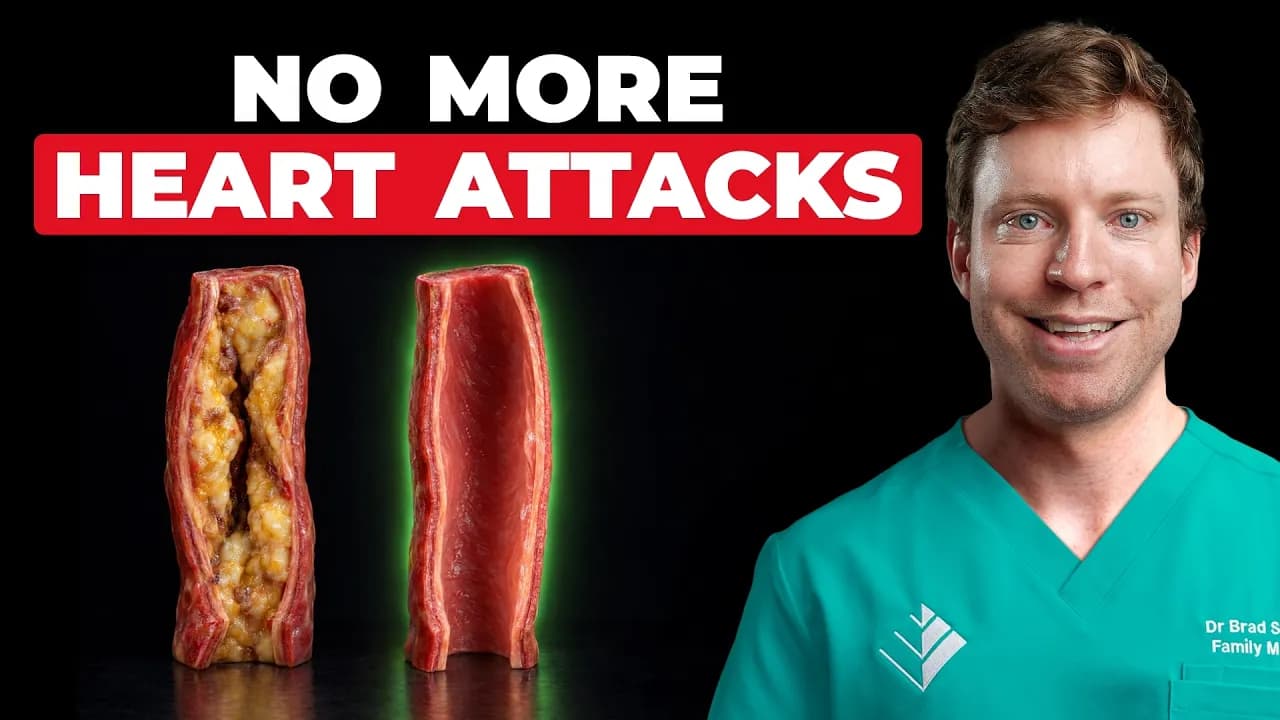 From We Are Witnessing The End of Heart Attacks · video
See the scientific wording
In adults (population characteristics and baseline cardiovascular risk not reported), lowering LDL cholesterol concentration reduces the relative risk of major cardiovascular events, with the relative risk reduction proportional to the absolute magnitude of LDL cholesterol reduction; the absolute risk reduction, follow-up duration, and specific LDL-lowering intervention are not reported.
Supported
Observational2 of 2 parts have evidence behind them.
Supported
2 of 2 parts have evidence behind them.
Parts of this claim
Lowering LDL cholesterol concentration reduces the relative risk of major cardiovascular events.
Supported2 studiesThe relative risk reduction in major cardiovascular events is proportional to the absolute magnitude of LDL reduction.
Supported2 studies
Evidence is judged against each part on its own, so a study that tests one part never counts as a verdict on the whole claim.
What the research says
4 studies reviewedSupporting (3)
Cohort StudyHuman
The study found that patients whose LDL cholesterol dropped more had a lower chance of future heart problems, matching the idea that lowering LDL more lowers risk more.
Systematic Review With Meta-AnalysisMeta-analysis
Lowering LDL cholesterol by 1 mmol/L reduced the risk of major heart problems by about 22% in this large analysis. That matches the idea that the more you lower LDL, the more you lower heart risk.
Systematic Review With Meta-AnalysisMeta-analysis2025
The study found that for every 1 mmol/L drop in LDL cholesterol, the risk of major heart events fell by about 16%, supporting that lowering LDL more leads to greater risk reduction.
Contradicting (1)
Systematic Review With Meta-AnalysisMeta-analysis2026
This study compared different cholesterol-lowering drugs in older people, mostly looking at side effects and which drug lowered cholesterol best. It didn't measure whether bigger cholesterol drops lead to bigger reductions in heart attack risk, so it can't really answer the claim.
Quality-weighted scoring: we follow the GRADE framework — each study is rated High, Moderate, Low, or Very Low based on study design, methodology rigor, and risk of bias. A single high-quality RCT can outweigh several weaker observational studies.
Scores reflect study quality, not just count.
Fat is carried through the blood inside tiny packets called LDL. The more LDL packets floating in the blood, the more of them push through the artery's inner lining and get stuck in the wall. Once stuck, the fat changes into a form that pulls in clean-up cells from the blood. Those clean-up cells swallow the changed fat until they are stuffed and turn into foam. Piles of foam build up into bumps inside the artery called plaques. A plaque that breaks open lets blood clot right at that spot, and the clot blocks the artery, which causes a heart attack or stroke. Cutting the number of LDL packets in the blood cuts how many get stuck, so plaques grow more slowly and break open less often. The bigger the cut in LDL packets, the fewer the blocked arteries.
Score breakdown, mechanism chain, raw evidence, ideal studies needed & 3 supporting, 1 contradicting studies
Related videos
How Fit Body Science checks a claim
- 1
We isolate the claim
Health advice from videos, articles and studies is broken down into single, testable claims.
- 2
We find the research
Each claim is matched against peer-reviewed studies, with every source cited by DOI.
- 3
We grade the evidence
Studies are scored on methodology, statistical rigor, transparency and publication quality.
The fitness and health internet is full of confident claims. We check them against real research.
Every claim on this site is traced back to peer-reviewed studies, scored on methodology and reporting quality, and given a verdict you can audit yourself — sources, DOIs and all.
- Full evidence breakdown and mechanism chains
- Ask our AI anything about a claim or its studies
- Get notified when new research changes a verdict
Lowering LDL cholesterol reduces the relative risk of major heart events, and larger LDL reductions reduce that relative risk more.
Mechanism
2 studiesLDL fat packets in the blood push into the artery wall, and the more packets there are, the more get stuck and build up into bumps called plaques. Those bumps break open and cause clots that block the artery, which is a heart attack or stroke. Cutting the number of LDL packets cuts how much builds up in the wall, so fewer bumps break open, and a bigger cut in LDL means fewer blocked arteries.
Fat is carried through the blood inside tiny packets called LDL. The more LDL packets floating in the blood, the more of them push through the artery's inner lining and get stuck in the wall. Once stuck, the fat changes into a form that pulls in clean-up cells from the blood. Those clean-up cells swallow the changed fat until they are stuffed and turn into foam. Piles of foam build up into bumps inside the artery called plaques. A plaque that breaks open lets blood clot right at that spot, and the clot blocks the artery, which causes a heart attack or stroke. Cutting the number of LDL packets in the blood cuts how many get stuck, so plaques grow more slowly and break open less often. The bigger the cut in LDL packets, the fewer the blocked arteries.
Apolipoprotein B-containing LDL particles circulate in plasma and cross the vascular endothelium into the subendothelial intima at a rate set by their plasma concentration, so a higher plasma LDL concentration delivers a larger number of particles into the arterial wall per unit time.
LDL particles retained in the intima undergo oxidative modification, generating oxidized phospholipids and modified apolipoprotein B that activate endothelial cells and increase expression of leukocyte adhesion molecules.
Circulating monocytes adhere to activated endothelium, migrate into the intima, and differentiate into macrophages.
Macrophages internalize oxidized LDL through scavenger receptors without negative feedback control, accumulate cholesteryl esters, and transform into lipid-laden foam cells.
Foam cells secrete pro-inflammatory cytokines and growth factors that recruit smooth muscle cells, which migrate over a growing lipid-rich necrotic core and synthesize a collagenous fibrous cap, forming an atherosclerotic plaque.
Continued lipid deposition enlarges the necrotic core, degrades extracellular matrix through matrix metalloproteinases, and thins the fibrous cap, lowering the mechanical tensile strength of the plaque.
Rupture of the fibrous cap exposes tissue factor and subendothelial collagen to circulating blood, triggering platelet activation and the coagulation cascade, producing an intraluminal thrombus that occludes the coronary or cerebral artery and causes a major cardiovascular event.
Lowering plasma LDL concentration reduces the number of apolipoprotein B particles entering the intima, slowing foam cell formation, necrotic core expansion, and fibrous cap thinning; because retained particle number scales with plasma concentration, the reduction in plaque progression and rupture events scales with the absolute magnitude of LDL reduction.
Less supported by current evidence, but not ruled out
LDL packets carry irritating fats on their surface. More LDL packets in the blood means more of this irritating fat reaching the artery wall. The irritation wakes up the clean-up cells and makes the artery wall swollen and angry. An angry wall releases substances that eat away the tough outer cover of the plaque, making the plaque break open more easily. Fewer LDL packets means less irritating fat delivered, a calmer artery wall, a tougher plaque cover, and fewer blockages.
LDL particles transport oxidized phospholipids in the circulation, so a higher plasma LDL concentration carries a larger burden of oxidized phospholipids to the arterial wall.
Oxidized phospholipids stimulate endothelial cells and intimal macrophages, amplifying nuclear factor kappa B signaling and production of interleukin-6, tumor necrosis factor alpha, and C-reactive protein.
Sustained inflammatory signaling increases matrix metalloproteinase secretion within the plaque, accelerating collagen breakdown and fibrous cap thinning.
Lowering LDL concentration reduces oxidized phospholipid delivery to the intima, decreases cytokine-driven matrix metalloproteinase activity, preserves cap collagen, and lowers the frequency of plaque rupture and downstream arterial occlusion.
Evidence from Studies
Last searched 4d ago
Supporting (3)
Community contributions welcome
The study found that patients whose LDL cholesterol dropped more had a lower chance of future heart problems, matching the idea that lowering LDL more lowers risk more.
Course of the effects of LDL-cholesterol reduction on cardiovascular risk over time: a meta-analysis of 59 trials
Lowering LDL cholesterol by 1 mmol/L reduced the risk of major heart problems by about 22% in this large analysis. That matches the idea that the more you lower LDL, the more you lower heart risk.
Remnant cholesterol lowering in cardiovascular disease risk reduction in statin, ezetimibe, and PCSK9 inhibitor trials: meta-regression analyses.
The study found that for every 1 mmol/L drop in LDL cholesterol, the risk of major heart events fell by about 16%, supporting that lowering LDL more leads to greater risk reduction.
Contradicting (1)
Community contributions welcome
Safety and efficacy of low-density lipoprotein-lowering drugs in the elderly: a network meta-analysis of randomized controlled trials.
This study compared different cholesterol-lowering drugs in older people, mostly looking at side effects and which drug lowered cholesterol best. It didn't measure whether bigger cholesterol drops lead to bigger reductions in heart attack risk, so it can't really answer the claim.
Score Breakdown
No multi-axis breakdown available yet. The overall Pro / Against score above is the best signal.
- No clinical evidence is available; the score reflects mechanistic plausibility only.
What Would Prove This
Per GRADE and EBM methodology, here is what ideal scientific evidence would look like to definitively prove or disprove this claim, ordered from strongest to weakest.
Meta-Analysis of LDL-C Lowering Trials and Major Cardiovascular Events
Systematic review and meta-regression of double-blind randomized controlled trials in adults at elevated cardiovascular risk, comparing LDL-lowering interventions vs placebo or usual care, measuring absolute LDL-C reduction and major cardiovascular events over at least 2 years.
Randomized Trial of Intensive vs Standard LDL-C Lowering for Major Cardiovascular Events
Double-blind randomized controlled trial in adults with high cardiovascular risk, intensive LDL-lowering vs standard care, achieving a prespecified absolute LDL-C difference, primary composite major adverse cardiovascular events, follow-up 3-5 years.
Prospective Cohort Study of LDL-C Reduction and Cardiovascular Event Risk
Large prospective cohort of adults with repeated LDL-C measurements and LDL-lowering exposure, followed for incident major cardiovascular events, adjusted for confounders, assessing absolute LDL-C change and relative risk.
Case-Control Study of LDL-Lowering Exposure and Major Cardiovascular Events
Case-control study in adults, cases with major cardiovascular events vs matched controls without events, retrospective measurement of LDL-lowering exposure and absolute LDL-C reduction.
Cross-Sectional Study of LDL-C Levels and Cardiovascular Event Prevalence
Cross-sectional survey or registry in adults, measuring current LDL-C and prevalent major cardiovascular events, assessing relationship with absolute LDL-C levels.