The Claim
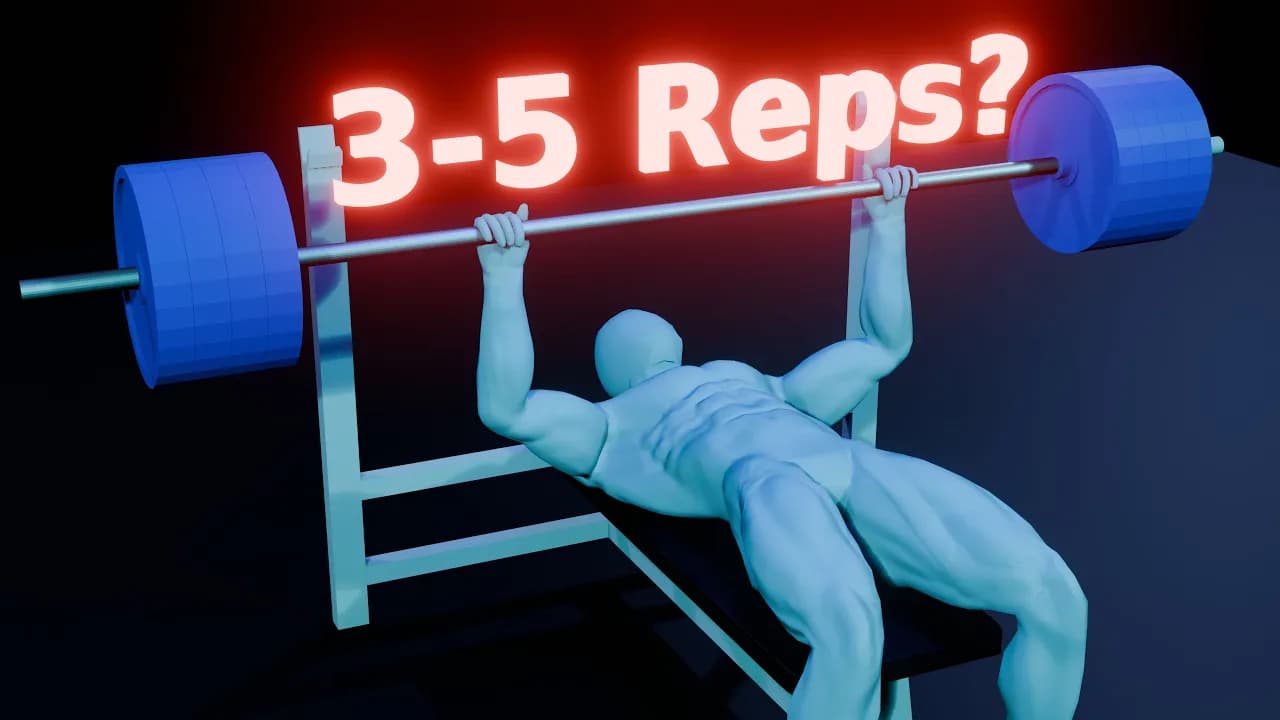
Resistance training performed to volitional failure using low loads (20-25 repetitions) produces muscle hypertrophy similar to that achieved with high loads (3-5 repetitions) in trained individuals.
What the research says
Supports is higher
Support is ahead, but a single strong opposing study can change this.
These are independent scores, not a percentage. Higher-grade studies count more, so a single strong opposing study can outweigh several weaker ones.
Lifting lighter weights many times until you can't do any more builds as much muscle as lifting heavy weights a few times in people who already exercise regularly.
See the scientific wording
Resistance training to volitional failure with low loads (20-25 reps) produces similar muscle hypertrophy as high loads (3-5 reps) in trained individuals.
When muscles are worked to exhaustion with light weights, the buildup of metabolic byproducts triggers signaling that activates muscle repair cells and boosts protein production, leading to muscle growth. Heavy weights also cause growth, but through different stress signals that don't require more muscle damage to achieve the same result.
What the research says
4 studiesIn people who already lift weights, doing lots of reps with light weights until you're exhausted builds just as much muscle as doing fewer reps with heavy weights — both work equally well for growing muscles.
The study found that lifting lighter weights many times until you can't do more builds muscle just as well as lifting heavy weights a few times until failure, which matches the claim.
The study found that lifting lighter weights many times and lifting heavy weights a few times both made muscles grow about the same amount in people who already work out, which matches the claim.
Related videos
Score breakdown, mechanism chain, raw evidence, ideal studies needed & 4 supporting studies
Not medical advice. For informational purposes only. Always consult a qualified healthcare professional before making health decisions.