SGLT2 inhibitor medications lower the amount of fat surrounding the heart without requiring weight loss.
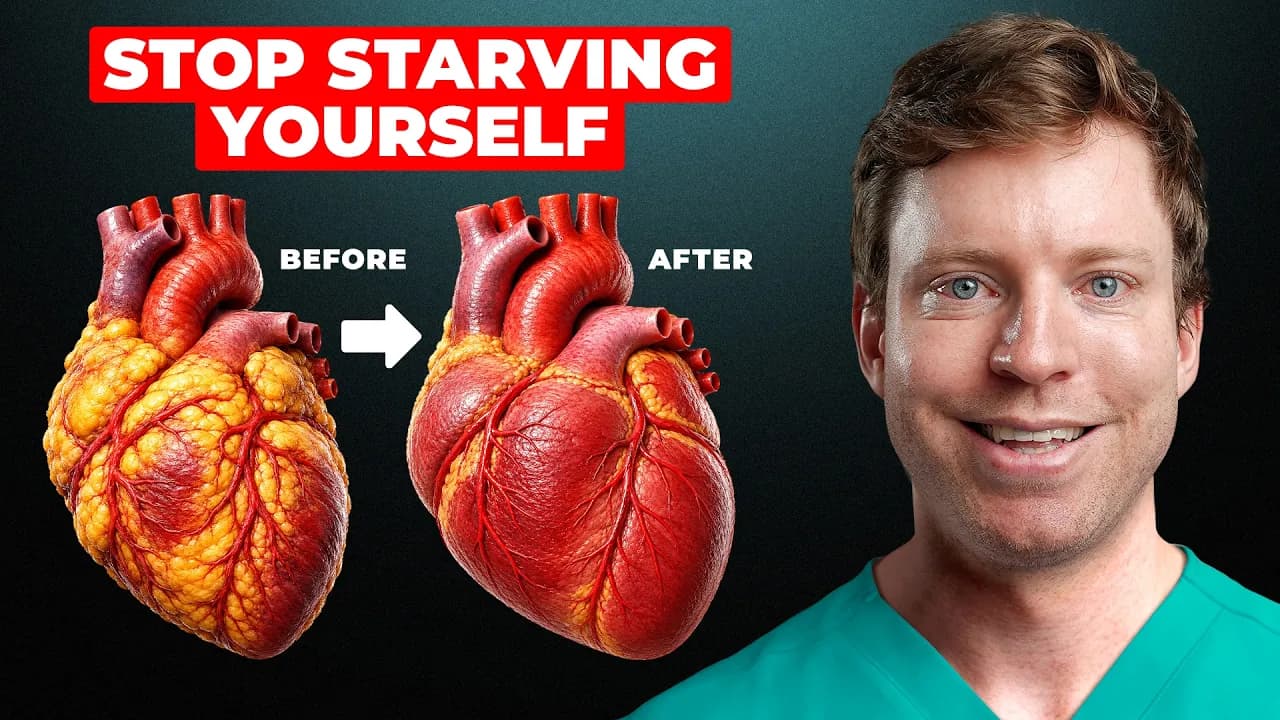 From Shrink the Fat Around Your Heart · video
See the scientific wording
SGLT2 inhibitor medications reduce epicardial fat independently of changes in body mass index.
Very strong evidence
Mixed evidence3 good-quality studies support this claim.
What the research says
3 studies reviewedSupporting (3)
Randomized Controlled TrialHuman
This study found that a diabetes drug called empagliflozin reduced the fat around the heart, even though the patients didn’t necessarily lose weight. So yes, the drug seems to shrink heart fat without needing weight loss.
Cohort StudyHuman2017
The medicine did reduce fat around the heart, but it also made people lose weight, and the amount of heart fat lost was linked to how much weight they lost — so it didn’t work without some weight loss.
Cross-Sectional StudyHuman
This medicine, empagliflozin, directly stops heart fat cells from becoming full-grown fat cells and reduces inflammation, even without making people lose weight. So yes, it lowers heart fat on its own.
Contradicting (0)
No contradicting studies found yet
That doesn't mean it's settled — it just means no study has tested the opposite.
Quality-weighted scoring: we follow the GRADE framework — each study is rated High, Moderate, Low, or Very Low based on study design, methodology rigor, and risk of bias. A single high-quality RCT can outweigh several weaker observational studies.
Scores reflect study quality, not just count.
A drug that blocks sugar reabsorption in the kidneys causes the body to lose sugar through urine, which lowers blood sugar and insulin. Lower insulin stops fat cells around the heart from growing and storing more fat. At the same time, the drug directly stops immature fat cells near the heart from turning into mature fat cells, so fewer fat cells form and existing ones store less fat. This reduces the total fat around the heart without needing weight loss.
Score breakdown, mechanism chain, raw evidence, ideal studies needed & 3 supporting studies
How Fit Body Science checks a claim
- 1
We isolate the claim
Health advice from videos, articles and studies is broken down into single, testable claims.
- 2
We find the research
Each claim is matched against peer-reviewed studies, with every source cited by DOI.
- 3
We grade the evidence
Studies are scored on methodology, statistical rigor, transparency and publication quality.
The fitness and health internet is full of confident claims. We check them against real research.
Every claim on this site is traced back to peer-reviewed studies, scored on methodology and reporting quality, and given a verdict you can audit yourself — sources, DOIs and all.
- Full evidence breakdown and mechanism chains
- Ask our AI anything about a claim or its studies
- Get notified when new research changes a verdict
SGLT2 inhibitor medications lower the amount of fat surrounding the heart without requiring weight loss.
Mechanism
3 studiesThe drug reduces sugar in the blood by making the kidneys flush it out, which lowers insulin. Lower insulin stops fat cells around the heart from storing more fat. At the same time, the drug directly stops new fat cells from forming near the heart. Together, this shrinks the fat layer around the heart without needing weight loss.
A drug that blocks sugar reabsorption in the kidneys causes the body to lose sugar through urine, which lowers blood sugar and insulin. Lower insulin stops fat cells around the heart from growing and storing more fat. At the same time, the drug directly stops immature fat cells near the heart from turning into mature fat cells, so fewer fat cells form and existing ones store less fat. This reduces the total fat around the heart without needing weight loss.
SGLT2 inhibition in the renal proximal tubule increases urinary glucose excretion, lowering plasma glucose and insulin levels
Reduced insulin signaling decreases lipogenic drive in epicardial adipose tissue, limiting lipid storage in mature adipocytes
SGLT2 receptors are expressed on human epicardial preadipocytes, and their inhibition directly blocks differentiation into mature adipocytes
Inhibition of adipocyte maturation reduces lipid droplet formation and downregulates FABP4 expression in epicardial adipose tissue
Reduced epicardial adipocyte maturation and lipid storage lead to decreased epicardial adipose tissue volume
Evidence from Studies
Last searched 2mo ago
Supporting (3)
Community contributions welcome
This study found that a diabetes drug called empagliflozin reduced the fat around the heart, even though the patients didn’t necessarily lose weight. So yes, the drug seems to shrink heart fat without needing weight loss.
The medicine did reduce fat around the heart, but it also made people lose weight, and the amount of heart fat lost was linked to how much weight they lost — so it didn’t work without some weight loss.
Empagliflozin suppresses the differentiation/maturation of human epicardial preadipocytes and improves paracrine secretome profile
This medicine, empagliflozin, directly stops heart fat cells from becoming full-grown fat cells and reduces inflammation, even without making people lose weight. So yes, it lowers heart fat on its own.
Contradicting (0)
Community contributions welcome
Score Breakdown
No multi-axis breakdown available yet. The overall Pro / Against score above is the best signal.
- No clinical evidence is available; the score reflects mechanistic plausibility only.
What Would Prove This
Per GRADE and EBM methodology, here is what ideal scientific evidence would look like to definitively prove or disprove this claim, ordered from strongest to weakest.
Systematic Review of SGLT2 Inhibitor Trials Assessing Epicardial Fat Change Independent of BMI
Population: Adults with type 2 diabetes or cardiovascular risk; Intervention: SGLT2 inhibitor; Comparator: Placebo or non-SGLT2 inhibitor therapy; Outcome: Change in epicardial fat volume by MRI; Duration: Minimum 12 weeks; Analysis: Pooling of results from RCTs with BMI-adjusted analyses.
Double-Blind RCT of Empagliflozin vs Placebo on Epicardial Fat in Non-Obese Adults with Type 2 Diabetes
Population: Adults with type 2 diabetes and normal BMI (18.5–24.9); Intervention: Empagliflozin 10 mg daily; Comparator: Placebo; Outcome: Epicardial fat volume measured by cardiac MRI at baseline and 24 weeks; Duration: 24 weeks; Design: Double-blind, parallel-group, BMI-matched.
Prospective Cohort Study of SGLT2 Inhibitor Use and Epicardial Fat Accumulation Over 3 Years in a Real-World Population
Population: Adults prescribed SGLT2 inhibitors vs. those on other antidiabetics; Intervention: Naturalistic SGLT2 inhibitor use; Comparator: Non-SGLT2 inhibitor users; Outcome: Serial epicardial fat measurements via CT/MRI; Duration: 3 years; Adjustment: BMI, HbA1c, age, sex, comorbidities.
Case-Control Study Comparing Epicardial Fat in SGLT2 Inhibitor Users vs. Non-Users with Matched BMI and Diabetes Duration
Population: Cases: SGLT2 inhibitor users with documented epicardial fat reduction; Controls: Non-users matched for age, sex, BMI, HbA1c, and diabetes duration; Outcome: Epicardial fat volume measured by CT; Duration: Cross-sectional assessment at single time point; Design: Retrospective, imaging-based comparison.
In Vitro Study of SGLT2 Inhibitors on Human Epicardial Adipocyte Lipid Metabolism
Population: Human epicardial adipose tissue explants or primary adipocytes; Intervention: Exposure to SGLT2 inhibitors (e.g., dapagliflozin); Comparator: Vehicle control; Outcome: Lipid droplet size, glycerol release, gene expression of lipolytic enzymes; Duration: 24–72 hours; Design: Dose-response, controlled media conditions.