For people who already have heart disease, aiming for an LDL cholesterol of 55 mg/dL lowers the relative risk of heart events compared with aiming for 70 mg/dL.
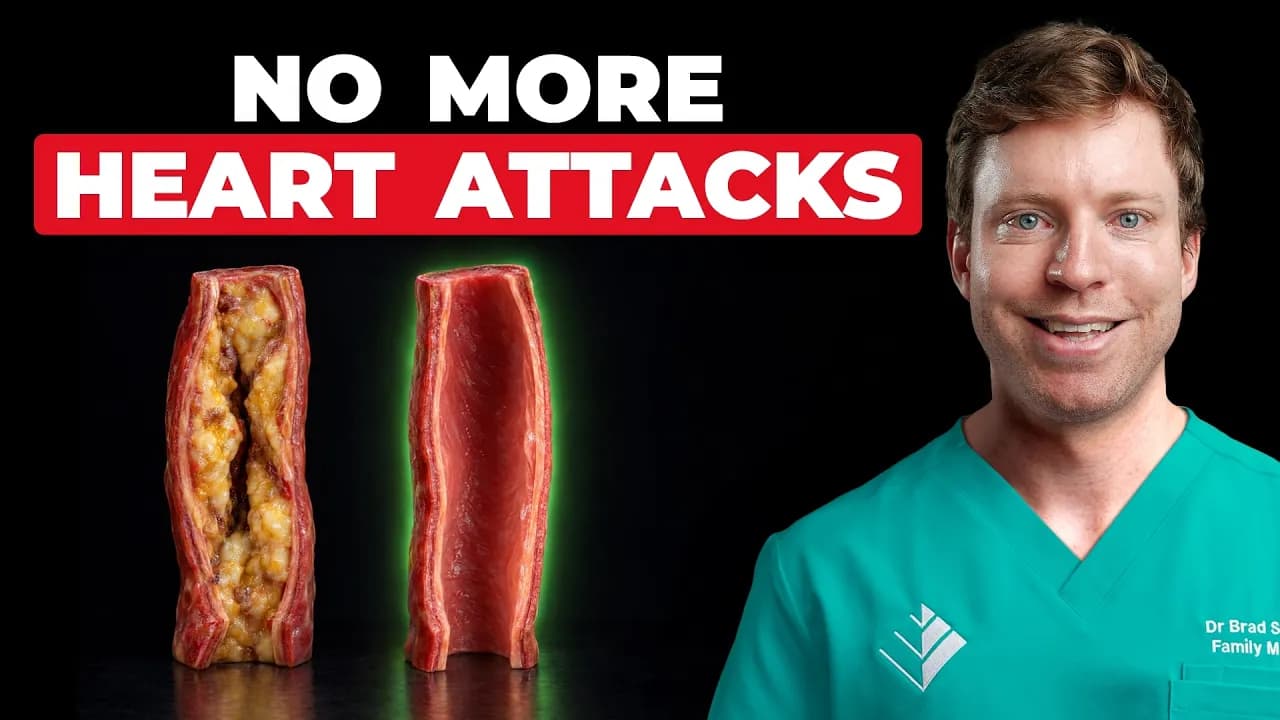 From We Are Witnessing The End of Heart Attacks · video
See the scientific wording
In patients with established cardiovascular disease, targeting an LDL cholesterol of 55 mg/dL reduces the RELATIVE risk of cardiovascular events compared with targeting 70 mg/dL. The absolute risk reduction was not reported.
Supported
Observational1 of 1 parts have evidence behind them.
Supported
1 of 1 parts have evidence behind them.
Parts of this claim
Targeting an LDL cholesterol of 55 mg/dL reduces the relative risk of cardiovascular events compared to targeting 70 mg/dL in patients with established cardiovascular disease.
Maybe3 studies
Evidence is judged against each part on its own, so a study that tests one part never counts as a verdict on the whole claim.
What the research says
3 studies reviewedSupporting (3)
Cohort StudyHuman2026
The study found that patients who reached very low LDL cholesterol (under 55) had fewer heart problems, which agrees with the idea that lower is better. But it didn't directly compare aiming for 55 versus aiming for 70, so it doesn't prove the exact claim.
Cohort StudyHuman2026
The study showed that getting LDL cholesterol below 55 helped people who had a certain type of dangerous plaque in their arteries, but it didn't help everyone. It also didn't compare aiming for 55 versus 70, so it doesn't fully prove the claim.
Cohort StudyHuman2026
The study found that patients with more intensive cholesterol care had lower LDL cholesterol and fewer heart problems, but the heart problem difference was not statistically significant and the study did not directly compare 55 vs 70 targets. So it points in the same direction but does not prove the claim's specific one-third reduction.
Contradicting (0)
No contradicting studies found yet
That doesn't mean it's settled — it just means no study has tested the opposite.
Quality-weighted scoring: we follow the GRADE framework — each study is rated High, Moderate, Low, or Very Low based on study design, methodology rigor, and risk of bias. A single high-quality RCT can outweigh several weaker observational studies.
Scores reflect study quality, not just count.
When a person takes strong cholesterol-lowering medicines, the amount of bad cholesterol in the blood drops very low. Less bad cholesterol means less fat gets pushed into the walls of arteries. The fatty bumps already there lose their soft, dangerous center and grow a thicker, tougher cap. These bumps become less likely to break open. When a bump does not break open, it does not cause a blood clot that blocks blood flow to the heart. So fewer heart attacks and other heart problems happen.
Score breakdown, mechanism chain, raw evidence, ideal studies needed & 3 supporting studies
Related videos
How Fit Body Science checks a claim
- 1
We isolate the claim
Health advice from videos, articles and studies is broken down into single, testable claims.
- 2
We find the research
Each claim is matched against peer-reviewed studies, with every source cited by DOI.
- 3
We grade the evidence
Studies are scored on methodology, statistical rigor, transparency and publication quality.
The fitness and health internet is full of confident claims. We check them against real research.
Every claim on this site is traced back to peer-reviewed studies, scored on methodology and reporting quality, and given a verdict you can audit yourself — sources, DOIs and all.
- Full evidence breakdown and mechanism chains
- Ask our AI anything about a claim or its studies
- Get notified when new research changes a verdict
For people who already have heart disease, aiming for an LDL cholesterol of 55 mg/dL lowers the relative risk of heart events compared with aiming for 70 mg/dL.
Mechanism
3 studiesStrong cholesterol medicine lowers the bad cholesterol in the blood to a very low level. With less bad cholesterol, the fatty bumps inside arteries lose their soft, dangerous center and get a tougher cap. Tough bumps are less likely to break open. When they do not break open, they do not cause clots that block blood flow to the heart, so fewer heart attacks happen.
When a person takes strong cholesterol-lowering medicines, the amount of bad cholesterol in the blood drops very low. Less bad cholesterol means less fat gets pushed into the walls of arteries. The fatty bumps already there lose their soft, dangerous center and grow a thicker, tougher cap. These bumps become less likely to break open. When a bump does not break open, it does not cause a blood clot that blocks blood flow to the heart. So fewer heart attacks and other heart problems happen.
Intensive lipid-lowering therapy with statins, ezetimibe, and/or PCSK9 inhibitors reduces cholesterol synthesis, blocks intestinal cholesterol absorption, and increases LDL receptor recycling, which lowers circulating LDL cholesterol to 55 mg/dL or below.
Lower circulating LDL cholesterol reduces the movement of LDL particles into the arterial intima and increases reverse cholesterol transport out of the plaque core.
Reduced LDL cholesterol in the artery wall decreases oxidation of LDL, macrophage uptake, foam cell formation, and the release of inflammatory signals, which lowers inflammatory infiltrate and slows necrotic core expansion.
The plaque remodels with a thicker fibrous cap and a smaller necrotic core, making the plaque stable and less vulnerable to rupture.
Stable plaques do not rupture or erode, so they do not expose clotting factors to blood, preventing thrombosis, myocardial infarction, and ischemia-driven revascularization.
Targeting an LDL cholesterol of 55 mg/dL rather than 70 mg/dL increases the proportion of time spent at very low LDL cholesterol levels, which sustains plaque stabilization and reduces the relative risk of cardiovascular events.
Evidence from Studies
Last searched 4d ago
Supporting (3)
Community contributions welcome
The study found that patients who reached very low LDL cholesterol (under 55) had fewer heart problems, which agrees with the idea that lower is better. But it didn't directly compare aiming for 55 versus aiming for 70, so it doesn't prove the exact claim.
The study showed that getting LDL cholesterol below 55 helped people who had a certain type of dangerous plaque in their arteries, but it didn't help everyone. It also didn't compare aiming for 55 versus 70, so it doesn't fully prove the claim.
The study found that patients with more intensive cholesterol care had lower LDL cholesterol and fewer heart problems, but the heart problem difference was not statistically significant and the study did not directly compare 55 vs 70 targets. So it points in the same direction but does not prove the claim's specific one-third reduction.
Contradicting (0)
Community contributions welcome
Score Breakdown
No multi-axis breakdown available yet. The overall Pro / Against score above is the best signal.
Clinical support requires direct evidence. Mechanistic proxy and tangential studies contribute only to the mechanistic score.
- All linked studies are tangential or mechanistic proxies — no direct test of the claim has been found.
- No clinical evidence is available; the score reflects mechanistic plausibility only.
What Would Prove This
Per GRADE and EBM methodology, here is what ideal scientific evidence would look like to definitively prove or disprove this claim, ordered from strongest to weakest.
Meta-Analysis of RCTs Comparing LDL Targets 55 vs 70 mg/dL for Cardiovascular Events in Established CVD
Systematic review and meta-analysis of randomized controlled trials in adults with established cardiovascular disease, comparing treatment strategies targeting LDL cholesterol 55 mg/dL versus 70 mg/dL, with primary outcome major adverse cardiovascular events over at least 3 years.
Randomized Trial of LDL Target 55 vs 70 mg/dL in Established Cardiovascular Disease
Multicenter, randomized, open-label or blinded trial in patients with established cardiovascular disease, randomizing to LDL target 55 mg/dL or 70 mg/dL, with adjudicated cardiovascular events as primary outcome and follow-up of 3-5 years.
Prospective Cohort of LDL Targets 55 vs 70 mg/dL and Cardiovascular Events in Established CVD
Prospective cohort of patients with established cardiovascular disease, classified by intended or achieved LDL target of 55 vs 70 mg/dL, followed for cardiovascular events, with adjustment for confounders.
Case-Control Study of LDL Target Exposure and Cardiovascular Events in Established CVD
Case-control study identifying patients with established CVD who had cardiovascular events (cases) and matched controls without events, comparing prior LDL target strategies (55 vs 70 mg/dL).
Cross-Sectional Study of LDL Targets and Cardiovascular Event Prevalence in Established CVD
Cross-sectional survey or registry of patients with established cardiovascular disease, recording current LDL target and history of cardiovascular events at a single time point.