In high-risk adults without diabetes, aiming for systolic blood pressure under 120 cut the relative risk of major heart and blood vessel events by 25% versus aiming for under 140.
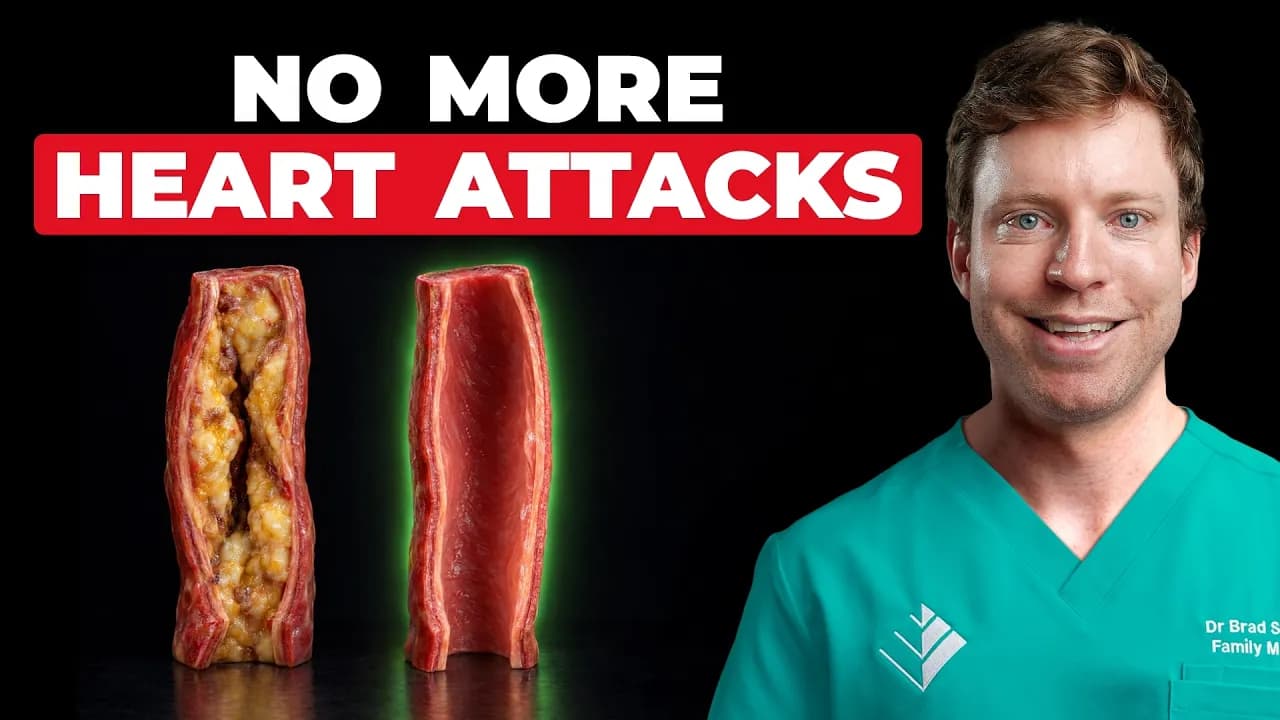 From We Are Witnessing The End of Heart Attacks · video
See the scientific wording
In high-risk adults without diabetes, targeting a systolic blood pressure below 120 mm Hg reduces the relative risk of major cardiovascular events by 25% (RELATIVE risk reduction; absolute risk reduction not reported) compared with targeting a systolic blood pressure below 140 mm Hg.
Supported
Mixed evidence1 of 1 parts have evidence behind them.
Supported
1 of 1 parts have evidence behind them.
Parts of this claim
In high-risk adults without diabetes, targeting systolic blood pressure below 120 mm Hg reduces the relative risk of major cardiovascular events by 25% compared to targeting below 140 mm Hg.
Supported2 studies
Evidence is judged against each part on its own, so a study that tests one part never counts as a verdict on the whole claim.
What the research says
5 studies reviewedSupporting (5)
Randomized Controlled TrialHuman
In high-risk people without diabetes, aiming for a top blood pressure number under 120 instead of under 140 cut the chance of major heart and blood vessel problems by about 25%, which matches the claim.
A Randomized Trial of Intensive versus Standard Blood-Pressure Control
Randomized Controlled TrialHuman2015
In a large trial of high-risk adults without diabetes, aiming for a blood pressure below 120 instead of below 140 cut the risk of major heart problems by about 25%, matching the claim.
Cohort StudyHuman2026
The study found that tight blood pressure control cut major heart and blood vessel events by about 14–17%, not 25%, but it agrees that the strategy helps. The 25% number is higher than the study's main estimate.
Contradicting (0)
No contradicting studies found yet
That doesn't mean it's settled — it just means no study has tested the opposite.
Quality-weighted scoring: we follow the GRADE framework — each study is rated High, Moderate, Low, or Very Low based on study design, methodology rigor, and risk of bias. A single high-quality RCT can outweigh several weaker observational studies.
Scores reflect study quality, not just count.
When blood pressure is lowered more forcefully with extra medicines, the push of blood against artery walls becomes weaker. This reduces wear and tear on the arteries. Fatty deposits inside arteries break open less often and cause fewer clots. The heart also has less resistance to pump against, so it needs less oxygen and suffers less damage. As a result, fewer heart attacks, strokes, heart failures, and heart-related deaths occur.
Score breakdown, mechanism chain, raw evidence, ideal studies needed & 5 supporting studies
Related videos
How Fit Body Science checks a claim
- 1
We isolate the claim
Health advice from videos, articles and studies is broken down into single, testable claims.
- 2
We find the research
Each claim is matched against peer-reviewed studies, with every source cited by DOI.
- 3
We grade the evidence
Studies are scored on methodology, statistical rigor, transparency and publication quality.
The fitness and health internet is full of confident claims. We check them against real research.
Every claim on this site is traced back to peer-reviewed studies, scored on methodology and reporting quality, and given a verdict you can audit yourself — sources, DOIs and all.
- Full evidence breakdown and mechanism chains
- Ask our AI anything about a claim or its studies
- Get notified when new research changes a verdict
In high-risk adults without diabetes, aiming for systolic blood pressure under 120 cut the relative risk of major heart and blood vessel events by 25% versus aiming for under 140.
Mechanism
2 studiesThe unified picture is that pushing blood pressure down harder with more medicines reduces the physical force on artery walls and on the heart. That lower force means less damage to arteries and less strain on the heart, which directly prevents heart attacks, strokes, heart failure, and heart-related death. The evidence for this exact chain comes from large trials that measured the final outcomes, while the intermediate biological steps are inferred from how blood pressure works.
When blood pressure is lowered more forcefully with extra medicines, the push of blood against artery walls becomes weaker. This reduces wear and tear on the arteries. Fatty deposits inside arteries break open less often and cause fewer clots. The heart also has less resistance to pump against, so it needs less oxygen and suffers less damage. As a result, fewer heart attacks, strokes, heart failures, and heart-related deaths occur.
Intensive antihypertensive therapy, including higher use of diuretics, ACE inhibitors, angiotensin-receptor blockers, beta-blockers, and calcium-channel blockers, achieves a mean systolic blood pressure of approximately 120 mm Hg compared with approximately 140 mm Hg in standard treatment.
The lower systolic blood pressure reduces mechanical tensile and shear stress on arterial walls and decreases left ventricular afterload, lowering cardiac work and myocardial oxygen demand.
Reduced arterial wall stress stabilizes atherosclerotic plaques, decreasing plaque rupture and thrombosis, while lower afterload reduces myocardial ischemia and heart failure progression.
These vascular and cardiac effects translate into fewer myocardial infarctions, acute coronary syndromes, strokes, heart failures, and cardiovascular deaths.
Evidence from Studies
Last searched 4d ago
Supporting (5)
Community contributions welcome
In high-risk people without diabetes, aiming for a top blood pressure number under 120 instead of under 140 cut the chance of major heart and blood vessel problems by about 25%, which matches the claim.
A Randomized Trial of Intensive versus Standard Blood-Pressure Control
In a large trial of high-risk adults without diabetes, aiming for a blood pressure below 120 instead of below 140 cut the risk of major heart problems by about 25%, matching the claim.
Effects of Intensive Blood Pressure Control in Patients With Frailty: A Post Hoc Analysis From ESPRIT.
The study found that tight blood pressure control cut major heart and blood vessel events by about 14–17%, not 25%, but it agrees that the strategy helps. The 25% number is higher than the study's main estimate.
A study found that people who got their blood pressure under 120 had about 42% fewer heart events than those with higher blood pressure, so the idea that lower is better is supported. But the study included people with diabetes, while the claim is about people without diabetes, so it is not a perfect match.
Impact of intensive versus standard blood pressure control on cardiovascular events in hypertensive patients: a meta-analysis of randomized controlled trials.
The study found that aiming for blood pressure below 120 instead of 140 lowered the risk of strokes, heart attacks, and heart-related deaths by roughly 17–27%. So the claim that it cuts heart problems by about a quarter is in the right ballpark.
Contradicting (0)
Community contributions welcome
Score Breakdown
No multi-axis breakdown available yet. The overall Pro / Against score above is the best signal.
- No clinical evidence is available; the score reflects mechanistic plausibility only.
What Would Prove This
Per GRADE and EBM methodology, here is what ideal scientific evidence would look like to definitively prove or disprove this claim, ordered from strongest to weakest.
Meta-Analysis of RCTs of Intensive vs Standard Systolic BP Targets for Major Cardiovascular Events
Systematic review and meta-analysis of randomized controlled trials in high-risk adults without diabetes comparing intensive SBP target <120 mm Hg with standard SBP target <140 mm Hg, with primary outcome of major cardiovascular events (e.g., composite MI, stroke, heart failure, cardiovascular death) and follow-up of at least 3–5 years.
Intensive Systolic BP Target <120 vs <140 mm Hg for Major Cardiovascular Events in High-Risk Adults Without Diabetes
Randomized, controlled, open-label or blinded outcome trial in high-risk adults without diabetes, assigned to intensive SBP target <120 mm Hg or standard target <140 mm Hg, with primary composite outcome of major cardiovascular events and follow-up of at least 3–5 years.
Prospective Cohort of Achieved Systolic BP <120 vs <140 mm Hg and Cardiovascular Events
Prospective cohort of high-risk adults without diabetes, classified by achieved systolic BP target <120 mm Hg vs <140 mm Hg, followed for incident major cardiovascular events over 3–5 years, with adjustment for confounders.
Case-Control Study of Systolic BP Targets and Major Cardiovascular Events
Case-control study in high-risk adults without diabetes: cases with major cardiovascular events matched to controls without events, comparing prior systolic BP treatment targets <120 vs <140 mm Hg, with adjustment for confounders.