The soleus muscle, located in the calf, is composed mostly of 'slow-twitch' muscle fibers. These fibers contract slowly but are very efficient and do not tire easily, allowing the soleus to sustain activity for long periods without fatigue.
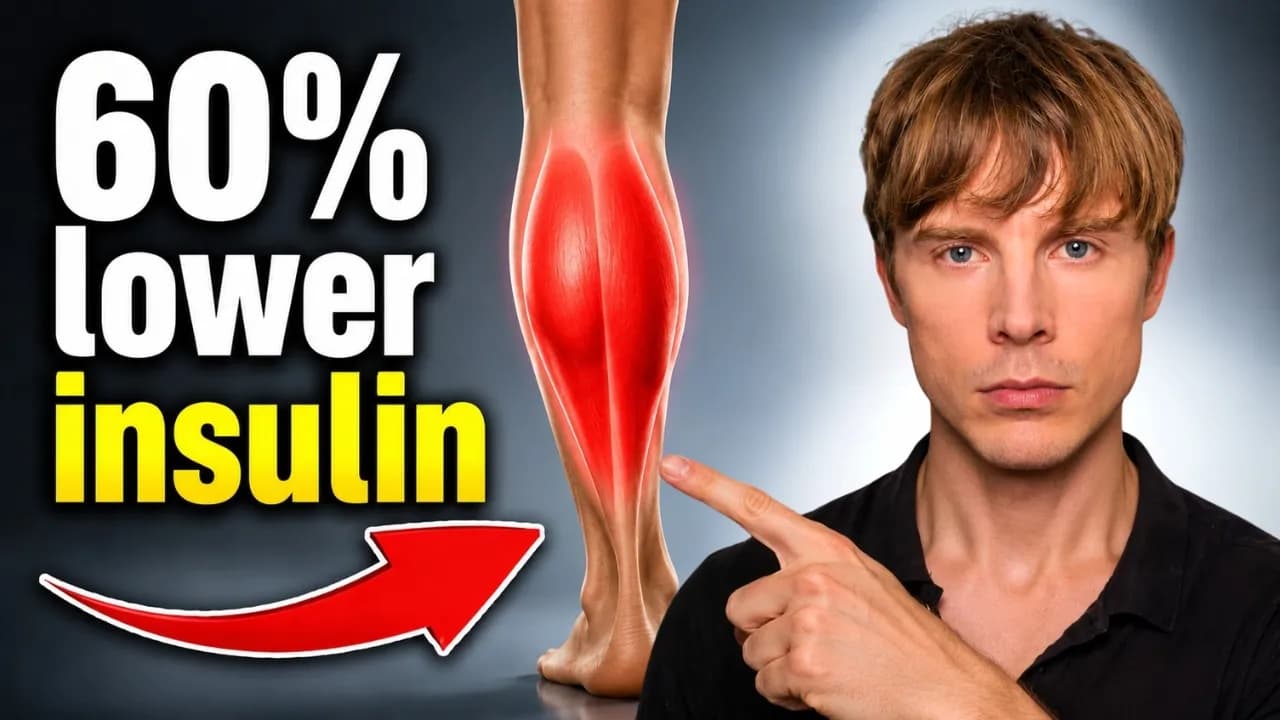 From Your Second Heart Is Destroying Your Metabolism · video
See the scientific wording
The soleus muscle contains a very high proportion of slow-twitch oxidative muscle fibers, which confers a high resistance to fatigue.
Unverified — no studies directly back this
We haven't found enough studies to verify this claim yet.
Score breakdown, mechanism chain, raw evidence, ideal studies needed
How Fit Body Science checks a claim
- 1
We isolate the claim
Health advice from videos, articles and studies is broken down into single, testable claims.
- 2
We find the research
Each claim is matched against peer-reviewed studies, with every source cited by DOI.
- 3
We grade the evidence
Studies are scored on methodology, statistical rigor, transparency and publication quality.
The fitness and health internet is full of confident claims. We check them against real research.
Every claim on this site is traced back to peer-reviewed studies, scored on methodology and reporting quality, and given a verdict you can audit yourself — sources, DOIs and all.
- Full evidence breakdown and mechanism chains
- Ask our AI anything about a claim or its studies
- Get notified when new research changes a verdict
The soleus muscle, located in the calf, is composed mostly of 'slow-twitch' muscle fibers. These fibers contract slowly but are very efficient and do not tire easily, allowing the soleus to sustain activity for long periods without fatigue.
Evidence from Studies
Last searched 1mo ago
No evidence studies found yet.
What Would Prove This
Per GRADE and EBM methodology, here is what ideal scientific evidence would look like to definitively prove or disprove this claim, ordered from strongest to weakest.
Systematic Review and Meta-Analysis of Soleus Muscle Fiber Type Composition and Fatigue Resistance
A systematic search and meta-analysis of studies that measure soleus muscle fiber type proportions (via biopsy or histology) and fatigue resistance (via physiological tests), pooling data to assess the association.
Cross-Sectional Analysis of Soleus Muscle Fiber Composition and Fatigue Resistance in Healthy Adults
Recruit a diverse sample of adults, perform muscle biopsies of the soleus to determine fiber type proportions, and measure fatigue resistance via endurance tests (e.g., repeated plantar flexion until fatigue); analyze the correlation.
In Vitro Analysis of Fatigue Resistance in Isolated Soleus Muscle Fibers
Isolate individual muscle fibers from the soleus, classify them by fiber type, and subject them to repeated electrical stimulation while measuring force decline over time.
Animal Model Study of Soleus Muscle Fiber Composition and Fatigue Resistance
Use a suitable animal model (e.g., rat or mouse), perform histochemical analysis of soleus fiber types, and conduct fatigue tests on isolated muscles or in vivo to measure resistance.