The soleus push-up is an exercise that keeps your leg muscles working hard, which helps control blood sugar. It works better than walking because walking becomes easier for your body over time, so it doesn't demand as much energy.
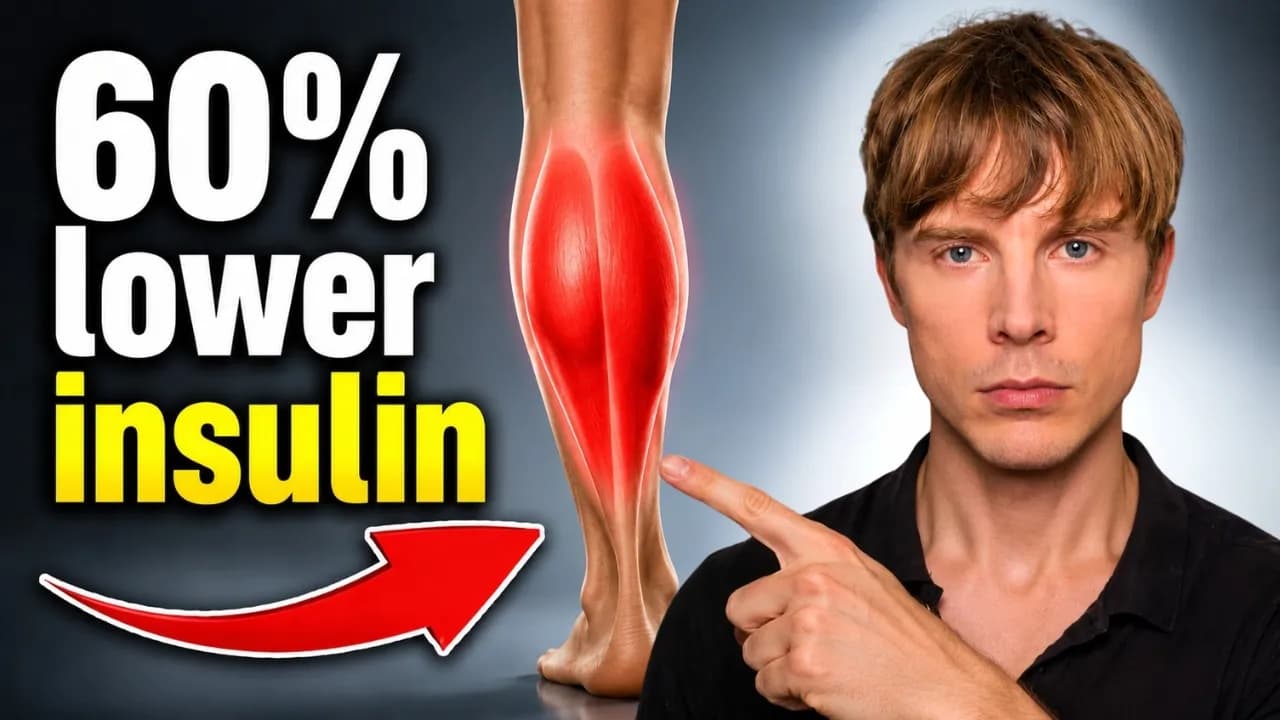 From Your Second Heart Is Destroying Your Metabolism · video
See the scientific wording
The soleus push-up exercise, by creating a sustained metabolic demand, may be more effective for blood sugar regulation than walking, which becomes more energy-efficient with adaptation.
Very strong evidence
Mixed evidence2 moderate-quality studies support this claim, so treat these as early signals rather than settled science.
What the research says
2 studies reviewedSupporting (2)
Randomized Controlled TrialHuman2022
The study found that doing soleus push-ups (sitting calf raises) greatly reduces blood sugar spikes and helps control blood sugar, which supports the claim.
Penerapan soleus push-up terhadap glukosa darah postprandial pada pasien diabetes mellitus tipe 2
Cohort StudyHuman
The study shows that doing soleus push-ups after meals helps lower blood sugar in people with type 2 diabetes. It didn't compare to walking, but it proves this exercise is good for blood sugar control.
Contradicting (0)
No contradicting studies found yet
That doesn't mean it's settled — it just means no study has tested the opposite.
Quality-weighted scoring: we follow the GRADE framework — each study is rated High, Moderate, Low, or Very Low based on study design, methodology rigor, and risk of bias. A single high-quality RCT can outweigh several weaker observational studies.
Scores reflect study quality, not just count.
When you do soleus push-ups, you squeeze a muscle in your lower leg that is built for endurance. This muscle starts burning blood sugar for fuel quickly and keeps doing it for a long time. Because it uses up sugar from the blood, the rise in blood sugar after a meal goes down, and so the body does not need to release as much insulin to control it. This helps keep blood sugar levels in a healthy range.
Score breakdown, mechanism chain, raw evidence, ideal studies needed & 2 supporting studies
How Fit Body Science checks a claim
- 1
We isolate the claim
Health advice from videos, articles and studies is broken down into single, testable claims.
- 2
We find the research
Each claim is matched against peer-reviewed studies, with every source cited by DOI.
- 3
We grade the evidence
Studies are scored on methodology, statistical rigor, transparency and publication quality.
The fitness and health internet is full of confident claims. We check them against real research.
Every claim on this site is traced back to peer-reviewed studies, scored on methodology and reporting quality, and given a verdict you can audit yourself — sources, DOIs and all.
- Full evidence breakdown and mechanism chains
- Ask our AI anything about a claim or its studies
- Get notified when new research changes a verdict
The soleus push-up is an exercise that keeps your leg muscles working hard, which helps control blood sugar. It works better than walking because walking becomes easier for your body over time, so it doesn't demand as much energy.
Mechanism
2 studiesSoleus push-ups make a specific muscle in your calf work without tiring out. This muscle then sucks up sugar from your blood and burns it for energy. Because it does this quickly and for a long time, your blood sugar doesn't spike as much after eating, and your body doesn't have to produce as much insulin. This helps keep blood sugar levels under control.
When you do soleus push-ups, you squeeze a muscle in your lower leg that is built for endurance. This muscle starts burning blood sugar for fuel quickly and keeps doing it for a long time. Because it uses up sugar from the blood, the rise in blood sugar after a meal goes down, and so the body does not need to release as much insulin to control it. This helps keep blood sugar levels in a healthy range.
Soleus push-up contractions activate the soleus muscle, which is composed predominantly of slow-twitch, oxidative muscle fibers.
These contractions markedly increase the oxidative metabolism and oxygen consumption of the soleus muscle.
The elevated metabolic demand increases the muscle's uptake of glucose from the bloodstream, facilitated by high levels of glucose transporters and hexokinase.
The soleus muscle oxidizes blood glucose for energy while sparing its own glycogen stores, allowing sustained activity without fatigue.
The increased carbohydrate oxidation from blood glucose blunts postprandial blood glucose spikes.
The smaller glucose rise reduces the amount of insulin the pancreas needs to secrete, lowering overall insulin demand.
Evidence from Studies
Last searched 1mo ago
Supporting (2)
Community contributions welcome
A potent physiological method to magnify and sustain soleus oxidative metabolism improves glucose and lipid regulation
The study found that doing soleus push-ups (sitting calf raises) greatly reduces blood sugar spikes and helps control blood sugar, which supports the claim.
The study shows that doing soleus push-ups after meals helps lower blood sugar in people with type 2 diabetes. It didn't compare to walking, but it proves this exercise is good for blood sugar control.
Contradicting (0)
Community contributions welcome
Score Breakdown
No multi-axis breakdown available yet. The overall Pro / Against score above is the best signal.
- No clinical evidence is available; the score reflects mechanistic plausibility only.
What Would Prove This
Per GRADE and EBM methodology, here is what ideal scientific evidence would look like to definitively prove or disprove this claim, ordered from strongest to weakest.
Systematic Review and Meta-Analysis of Comparative Efficacy of Soleus Push-ups vs Walking on Blood Sugar Regulation
Meta-analysis of all randomized controlled trials comparing soleus push-up exercise to walking or other aerobic exercises in adults with or without type 2 diabetes, measuring changes in blood glucose levels (e.g., postprandial glucose, HbA1c) over a specified duration.
Randomized Controlled Trial of Soleus Push-up Exercise vs Walking for Glycemic Control
Randomize adults with prediabetes or type 2 diabetes into two groups: one doing soleus push-ups (specific protocol) and one doing brisk walking, matched for duration and intensity, then measure postprandial glucose and insulin levels over a period (e.g., 12 weeks).
Prospective Cohort Study on Long-term Soleus Push-up Practice and Glycemic Outcomes
Follow a cohort of adults who regularly perform soleus push-ups and a comparison group who walk regularly, tracking blood glucose markers (HbA1c, fasting glucose) over several years.
Case-Control Study of Soleus Push-up Habit in Individuals with and without Impaired Glucose Tolerance
Select cases with impaired glucose tolerance and controls with normal glucose tolerance, compare their historical exercise habits including soleus push-up practice.