The Claim
Performing a higher proportion of repetitions within two repetitions of muscular failure enhances hypertrophic stimulus efficiency, resulting in equivalent muscle growth with fewer total repetitions.
What the research says
Supports is higher
Support is ahead, but a single strong opposing study can change this.
These are independent scores, not a percentage. Higher-grade studies count more, so a single strong opposing study can outweigh several weaker ones.
Doing more reps until you're almost too tired to finish makes your muscles grow just as much with less overall work.
See the scientific wording
A higher proportion of repetitions performed within two reps of muscular failure enhances hypertrophic stimulus efficiency, producing equivalent muscle growth with fewer total repetitions.
When you lift weights close to failure, your muscles get tired, forcing your body to recruit more muscle fibers to keep pushing. This full recruitment, combined with the tension from the lift, sends signals inside muscle cells that trigger growth. The muscle adds more contractile units and builds more nuclei to support larger fibers, resulting in bigger muscles without needing more total reps.
What the research says
4 studiesThis study found that lifting weights until you're almost too tired to do another rep builds just as much muscle as lifting until you can't do any more—meaning you can get the same results with less total work.
People who lifted weights almost until they couldn’t do another rep grew just as much muscle as those who stopped earlier—even though both groups did the same total amount of work. So, going close to failure can be just as good for building muscle without doing more reps.
This study found that doing just one tough set of lifts until you're almost too tired to continue grew muscles just as well — or even better — than doing three easier sets, meaning you can get the same results with less work.
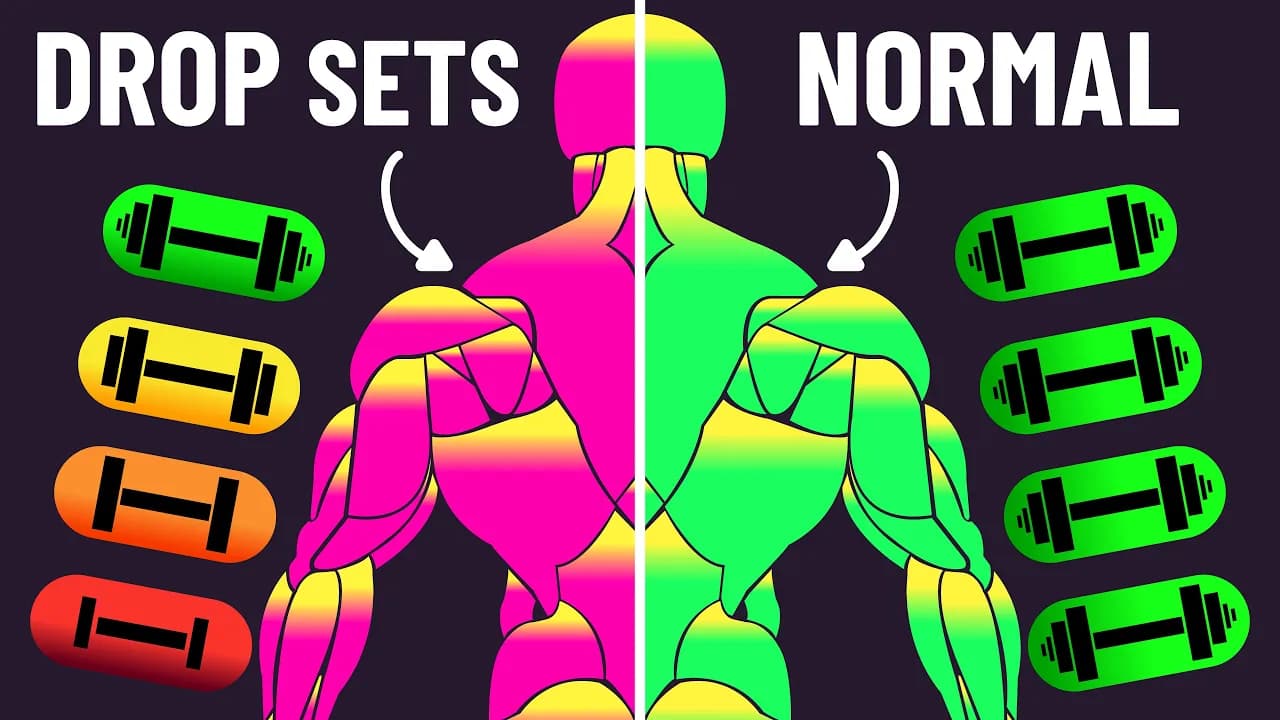
Study: Effects of Drop Sets on Skeletal Muscle Hypertrophy: A Systematic Review and Meta-analysis
This study found that lifting weights until you're almost too tired to continue, then making the weight lighter and doing it again, builds just as much muscle as doing a lot more reps the normal way—so you can get the same results with less work.
Related videos
Score breakdown, mechanism chain, raw evidence, ideal studies needed & 4 supporting studies
Not medical advice. For informational purposes only. Always consult a qualified healthcare professional before making health decisions.