The Claim
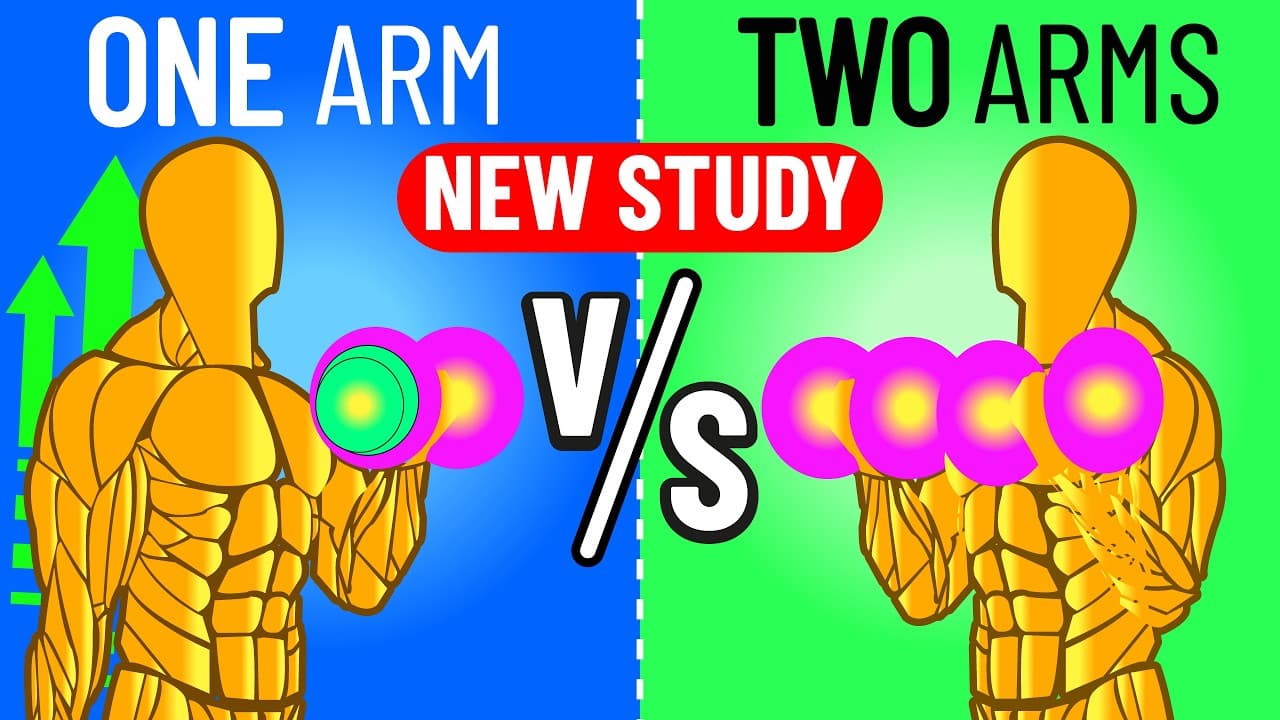
For small muscle groups, unilateral and bilateral resistance training produce equivalent hypertrophic adaptations when volume and effort are matched.
What the research says
Roughly balanced
Support and challenge are close. The picture may shift as more studies come in.
These are independent scores, not a percentage. Higher-grade studies count more, so a single strong opposing study can outweigh several weaker ones.
Training one arm or leg at a time doesn’t make muscles bigger than using both at once, at least for small muscles like the biceps.
See the scientific wording
For small muscle groups, unilateral and bilateral resistance training produce equivalent hypertrophic adaptations when volume and effort are matched.
What the research says
5 studiesBoth ways of doing bicep curls—using both arms at once or one arm at a time—built the same amount of muscle when people did the same number of reps and worked just as hard.
This study showed that training one arm or leg at a time with the same amount of work leads to big muscle gains, just like training both sides together would—so the claim that one-sided and two-sided training are equally good for building muscle (when you do the same total work) is supported.
Study: Neuromuscular Adaptations to Unilateral vs. Bilateral Strength Training in Women
Both one-arm/one-leg and two-arm/two-leg workouts made the muscles grow the same amount, as long as people did the same total amount of work.
Even when doing the same amount of work, training one leg at a time made that leg stronger than training both legs together — so they’re not the same.
Related videos
Score breakdown, mechanism chain, raw evidence, ideal studies needed & 5 supporting studies
Not medical advice. For informational purposes only. Always consult a qualified healthcare professional before making health decisions.