The Claim
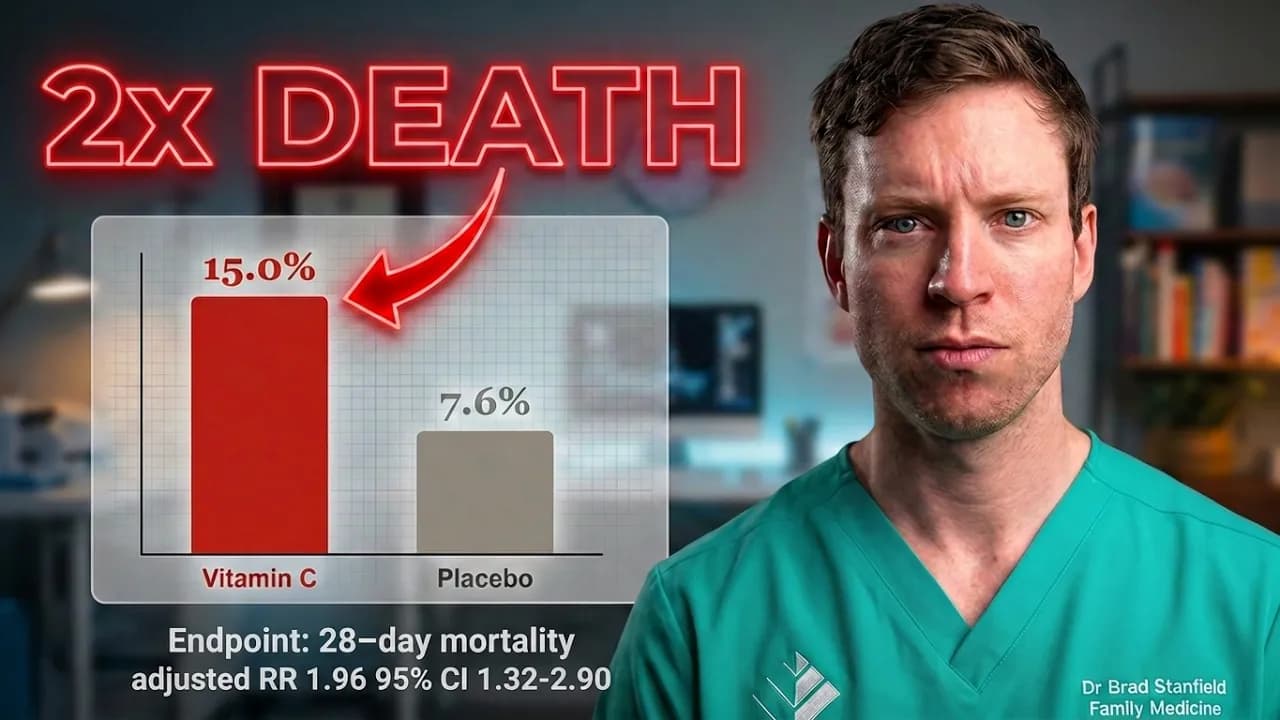
High-dose intravenous vitamin C increases mortality and organ failure in critically ill patients.
What the research says
Supports is higher
Support is ahead, but a single strong opposing study can change this.
These are independent scores, not a percentage. Higher-grade studies count more, so a single strong opposing study can outweigh several weaker ones.
In critically ill patients, high-dose intravenous vitamin C is associated with higher rates of death and organ failure.
See the scientific wording
High-dose intravenous vitamin C increases mortality and organ failure in critically ill patients.
Too much vitamin C in critically ill patients overwhelms the body's ability to manage oxygen-based chemicals, causing harmful reactions that damage cells and block the production of essential stress hormones, leading to worse organ failure and higher death rates.
What the research says
1 studyStudy: Use of Intravenous Vitamin C in Critically Ill Patients With COVID-19 Infection
In this small study, critically ill COVID-19 patients who got high doses of IV vitamin C were more likely to die and had worse organ damage than those who didn’t. So, it suggests the treatment might have made things worse, not better.
Score breakdown, mechanism chain, raw evidence, ideal studies needed & 1 supporting studies
Not medical advice. For informational purposes only. Always consult a qualified healthcare professional before making health decisions.