The Claim
Resistance training performed to momentary muscular failure, with maximal concentric velocity and a controlled eccentric phase, induces skeletal muscle hypertrophy in humans.
What the research says
Supports is higher
Support is ahead, but a single strong opposing study can change this.
These are independent scores, not a percentage. Higher-grade studies count more, so a single strong opposing study can outweigh several weaker ones.
If you lift weights until your muscles can't do another rep, pushing fast on the way up and slowing down on the way back, it helps your muscles grow bigger.
See the scientific wording
Performing resistance exercises to momentary muscular failure with maximal concentric velocity and controlled eccentric phase induces skeletal muscle hypertrophy.
When muscles are stretched and contracted under heavy load, the force pulls on special sensors in the muscle fibers. These sensors turn on chemical signals that tell the cell to build more contractile proteins. More proteins mean the muscle fibers get thicker over time.
What the research says
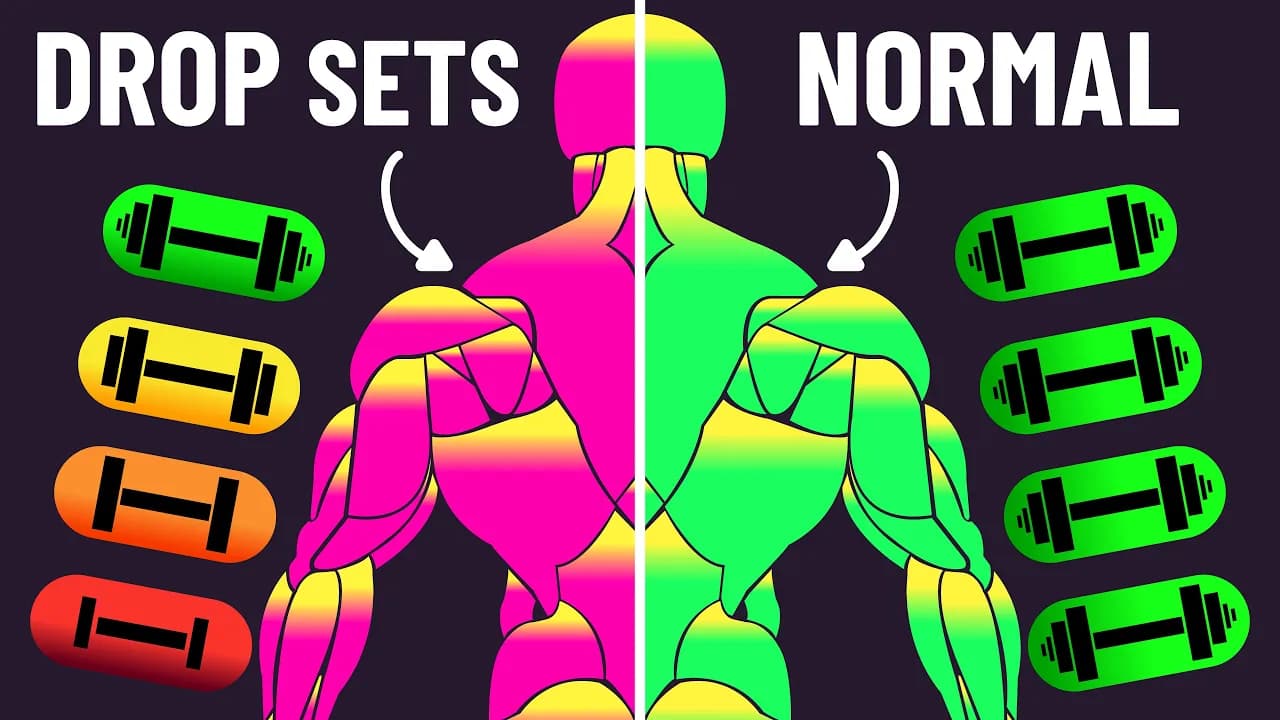
5 studiesStudy: Investigating the Effect of the Tonal Drop Set Mode On Elbow Flexor Hypertrophy
Both workout styles made people’s biceps bigger, so doing heavy lifts until you can’t do another rep does cause muscle growth, even if one way is faster.
Lifting weights until you can't do another rep does make your muscles bigger, but so does stopping just before you can't — both work about the same. You don't have to go all the way to failure to grow muscle.
This study found that lifting weights until you can't do another rep makes your muscles bigger — and doing a few extra tiny reps after that makes them grow even more. So yes, pushing to failure helps muscles grow.
This study found that lifting weights until you can't do another rep (even with fewer sets) made muscles grow bigger, which supports the idea that pushing to failure helps build muscle.
Related videos
Score breakdown, mechanism chain, raw evidence, ideal studies needed & 5 supporting studies
Not medical advice. For informational purposes only. Always consult a qualified healthcare professional before making health decisions.