Cheat Reps, Biofeedback & Science-Based Lifting: Today's Top Fitness Findings
New research challenges exercise form assumptions while exploring innovative training techniques
From the editor
Every day, Fit Body Science analyzes new fitness and nutrition research — checking the evidence, scoring the claims, and separating what's backed by science from what's not. Here's what we found today.
Do Cheat Reps Actually Work? Science Says Yes (With a Catch)
Here's a finding that might ruffle some feathers in the gym: strict form may not be as crucial for muscle growth as we've been led to believe. A new study titled "Do Cheaters Prosper?" investigated whether external momentum—commonly called "cheat form"—affects muscle hypertrophy compared to strict technique during upper body resistance training.
The research followed untrained young adults performing biceps curls and triceps pushdowns over 8 weeks, comparing strict execution against conditions where external momentum was deliberately introduced. The results? Both groups showed equivalent increases in muscle thickness in the elbow flexors and extensors.
But before you start swinging every weight, note this important caveat: the researchers emphasize this equivalence applies specifically to single-joint upper body exercises and cannot be generalized to multi-joint movements or lower body muscles. The Bayesian analysis provided strong evidence supporting the null hypothesis—that external momentum doesn't significantly impact hypertrophy outcomes in these specific conditions.
For the average lifter, this challenges the dogma of perfect form above all else, though experts still caution against completely abandoning technique, especially for compound movements where injury risk increases.
External momentum (cheat form) produces equivalent muscle hypertrophy to strict form in single-joint upper body exercises for untrained individuals.
Read the full study review
Do Cheat Reps Actually Work? Science Says Yes (With a Catch)
External momentum (cheat form) produces equivalent muscle hypertrophy to strict form in single-joint upper body exercises for untrained individuals.
EMG Biofeedback: The Secret to Targeting Stubborn Shoulder Muscles?
If you've ever struggled to feel your rear deltoids or infraspinatus firing during shoulder exercises, new research might offer a solution. A study examined the effects of real-time EMG biofeedback on selective muscle activation during Theraband shoulder external rotation exercises in individuals with round shoulder posture.
The research specifically looked at whether visual feedback about muscle activity could help people activate the infraspinatus (a key rotator cuff muscle) while inhibiting the posterior deltoid—a common problem for those with postural issues.
This approach represents a fascinating intersection of technology and traditional rehabilitation. By giving users real-time data about which muscles are working, EMG biofeedback could accelerate motor learning and help correct muscle imbalances that contribute to poor posture and injury risk.
For fitness professionals and physical therapists, this finding suggests that incorporating biofeedback tools could revolutionize how we address postural dysfunctions and rehabilitate shoulder injuries. The ability to "see" muscle activation in real-time provides an objective measure that supplements verbal cues and hands-on coaching.
Real-time EMG biofeedback can help individuals with round shoulder posture selectively activate the infraspinatus while inhibiting overactive posterior deltoid muscles.
Read the full study review
EMG Biofeedback: The Secret to Targeting Stubborn Shoulder Muscles?
Real-time EMG biofeedback can help individuals with round shoulder posture selectively activate the infraspinatus while inhibiting overactive posterior deltoid muscles.
What Science-Based Lifting Gets Wrong: A YouTuber's Take
In a thought-provoking video, popular fitness content creator Dr. Mike addresses two major frustrations with the science-based lifting community. While the channel has built a reputation for rigorously analyzing fitness claims using scientific evidence, the creator argues that the movement has developed some problematic tendencies.
The video critiques aspects of how science is communicated in fitness circles, suggesting that overemphasis on methodological purity can sometimes obscure practical application. Additionally, the creator points out concerns about how certain "evidence-based" accounts can come across as gatekeeping or dismissive of practical experience.
This meta-analysis of fitness science communication highlights an ongoing tension in the industry: the challenge of translating complex research into actionable advice without oversimplifying or losing nuance. For readers navigating conflicting fitness information, the video offers a reminder that critical thinking applies even to "science-based" content—and that perfect adherence to research protocols doesn't always translate to better real-world results.
The discussion serves as a valuable reminder that while science should guide our fitness decisions, the way we consume and interpret research matters just as much as the research itself.
The science-based lifting community sometimes prioritizes methodological purity over practical application, potentially alienating everyday fitness enthusiasts.
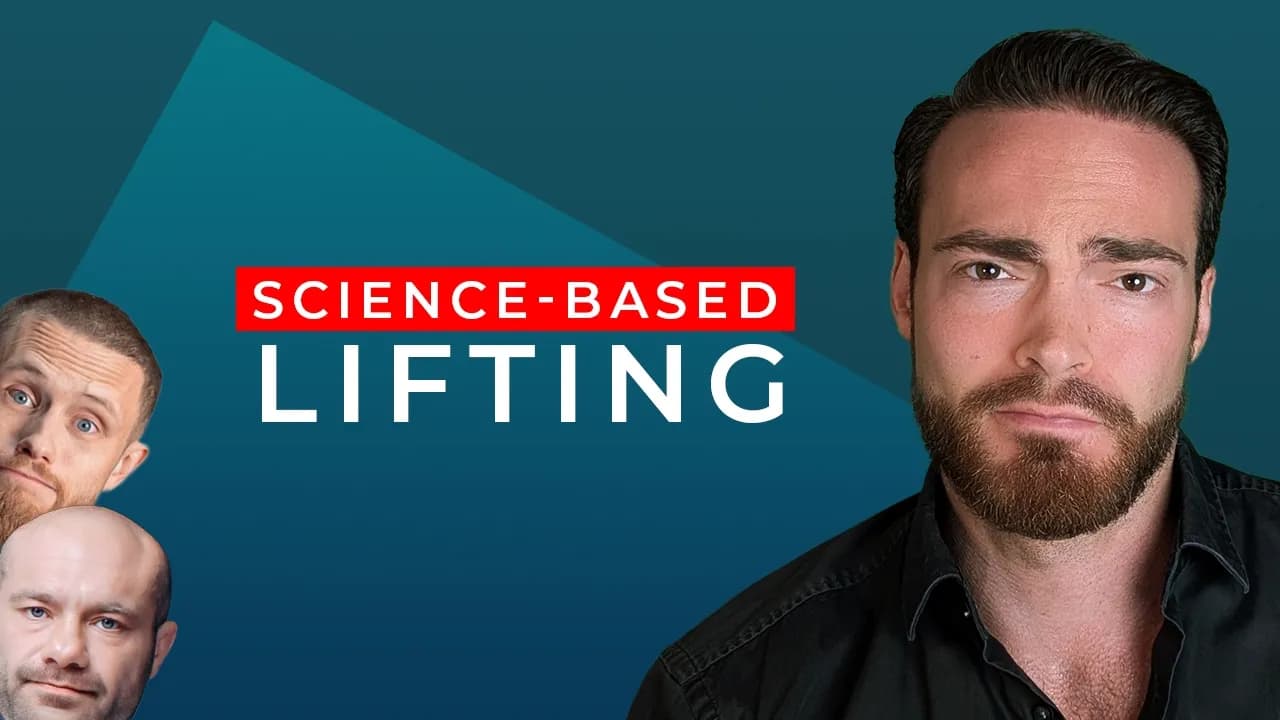
Watch the full analysis
What Science-Based Lifting Gets Wrong: A YouTuber's Take
The bottom line
Today's research presents a fascinating tension in fitness science: while one study challenges the sacred cows of perfect form by showing cheat reps can work for hypertrophy, another embraces cutting-edge technology to help us move more precisely. Meanwhile, the meta-discussion about science communication reminds us that even evidence-based fitness has room for nuance. The common thread? Progress in fitness isn't about finding one "right" way—it's about understanding when strict technique matters, when momentum is acceptable, and how tools like biofeedback can help us achieve our goals. Stay curious, keep questioning, and train smart.
Topics
Sources & References
What Science-Based Lifting Gets Wrong: A YouTuber's Take
The science-based lifting community sometimes prioritizes methodological purity over practical application, potentially alienating everyday fitness enthusiasts.
Do Cheat Reps Actually Work? Science Says Yes (With a Catch)
External momentum (cheat form) produces equivalent muscle hypertrophy to strict form in single-joint upper body exercises for untrained individuals.
EMG Biofeedback: The Secret to Targeting Stubborn Shoulder Muscles?
Real-time EMG biofeedback can help individuals with round shoulder posture selectively activate the infraspinatus while inhibiting overactive posterior deltoid muscles.