Creatine, Statins & the Truth About Fat Loss Hacks
Science-Backed Breakthroughs That Could Change How You Train and Eat
From the editor
Each week, Fit Body Science reviews the most important fitness and nutrition research — validating claims against the evidence and surfacing what actually matters. Here are this week's highlights.
Creatine Isn’t Just for Bodybuilders — It’s a Lifeline for Postmenopausal Women
A landmark meta-analysis confirms that creatine monohydrate, when paired with resistance training, significantly boosts strength and lean mass in postmenopausal women. Over 12 to 104 weeks, participants gained an average of 0.37 kg of lean body mass and improved leg press strength by 7.5 kg — a clinically meaningful gain. This isn’t just about aesthetics; it’s about combating sarcopenia, the silent muscle loss that increases fall risk and metabolic decline after menopause. The kicker? Creatine alone does nothing. The magic happens only when combined with lifting weights. And here’s the reassurance: doses up to 5g/day for two years showed no adverse effects on liver or kidney function. This is one of the safest, most effective anti-aging tools available — yet still underutilized by women over 50.
Creatine monohydrate combined with resistance training is a proven, safe strategy to preserve muscle and strength in postmenopausal women.
**Creatine monohydrate combined with resistance training is a proven, safe strategy to preserve muscle and strength in postmenopausal women.**
Read the full study review
Creatine Isn’t Just for Bodybuilders — It’s a Lifeline for Postmenopausal Women
**Creatine monohydrate combined with resistance training is a proven, safe strategy to preserve muscle and strength in postmenopausal women.**
Atorvastatin Lowers Cholesterol — But Doesn’t Stop Aortic Calcification
The BICATOR trial tested whether 20mg of atorvastatin daily could slow the progression of aortic valve calcification and ascending aorta dilation in adults with bicuspid aortic valve — a common congenital condition. Despite reducing LDL cholesterol by a median of 30 mg/dL, the drug showed no significant effect on calcification progression or aortic dilation over three years. This challenges the assumption that lowering LDL automatically protects valve structure. Interestingly, there was a non-significant trend toward reduced new calcification in those without baseline calcification — a hint for future research. For patients with this condition, statins still matter for heart health, but they shouldn’t be relied upon to halt structural valve damage. Lifestyle and monitoring remain critical.
Atorvastatin reduces LDL but does not significantly slow aortic valve calcification or dilation in bicuspid aortic valve patients.
**Atorvastatin reduces LDL but does not significantly slow aortic valve calcification or dilation in bicuspid aortic valve patients.**
Read the full study review
Atorvastatin Lowers Cholesterol — But Doesn’t Stop Aortic Calcification
**Atorvastatin reduces LDL but does not significantly slow aortic valve calcification or dilation in bicuspid aortic valve patients.**
This Powder Is 2X Stronger Than Creatine? Let’s Be Skeptical
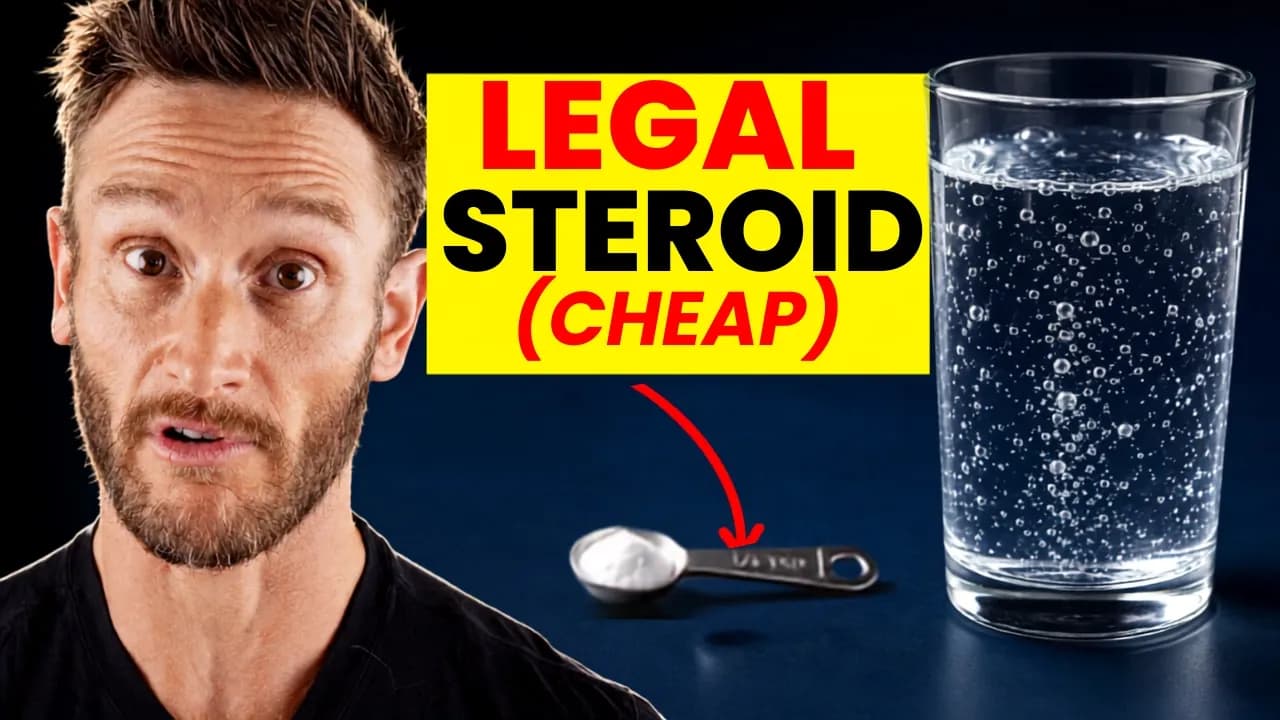
A viral video claims a new performance powder is twice as potent as creatine — and cheaper. But without a name, mechanism, or peer-reviewed data, this is pure speculation. Creatine has over 1,000 studies backing its efficacy. No supplement has reliably surpassed it in both safety and performance outcomes across diverse populations. While novel compounds like beta-alanine or citrulline have niche benefits, none match creatine’s broad impact on strength, power, and even cognition. Until independent labs replicate these claims with double-blind trials, treat this as marketing, not science. Don’t chase the next big thing — stick with what’s proven.
No supplement has scientifically outperformed creatine monohydrate for performance — claims of a '2X stronger' alternative lack evidence.
**No supplement has scientifically outperformed creatine monohydrate for performance — claims of a '2X stronger' alternative lack evidence.**
Watch the full analysis
This Powder Is 2X Stronger Than Creatine? Let’s Be Skeptical
Stop Obsessing Over Macros — Only 2 Things Matter
A popular video argues that macro counting is overrated, and only two factors determine fat loss: total calories and protein intake. The science backs this. A randomized crossover trial showed that protein preloads reduced spontaneous calorie intake more than carb preloads — even in ad libitum settings. When protein is prioritized, hunger drops, satiety rises, and fat loss follows naturally. You don’t need to track every gram of fat or carb — just ensure adequate protein (1.6–2.2g/kg) and stay in a modest calorie deficit. Macro obsession often leads to burnout. Focus on whole foods, protein first, and consistency over perfection.
Prioritizing protein and total calorie balance matters far more than obsessing over carb/fat ratios for fat loss.
**Prioritizing protein and total calorie balance matters far more than obsessing over carb/fat ratios for fat loss.**
Watch the full analysis
Stop Obsessing Over Macros — Only 2 Things Matter
Vitamin K2 and Heart Health: Promising, But Not Proven
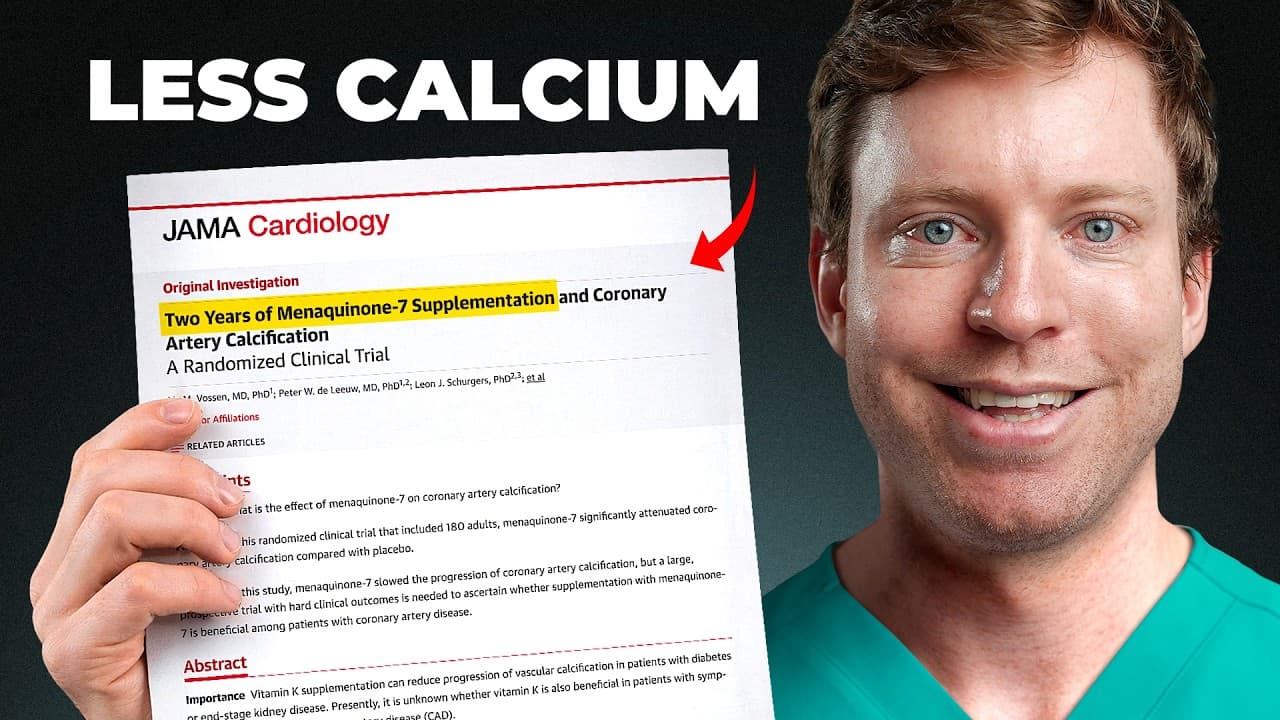
A video touts vitamin K2 as a heart protector based on a new trial. While K2 helps direct calcium away from arteries and into bones — a plausible mechanism — human trials remain mixed. No large-scale RCT has yet confirmed K2 supplementation reduces cardiovascular events. The video’s score reflects optimism, not conclusive evidence. For now, getting K2 from natto, fermented cheeses, or egg yolks is wise, but don’t expect supplements to replace statins or blood pressure control. More research is needed before K2 becomes a cardiac recommendation.
Vitamin K2 supports calcium metabolism, but current evidence doesn’t confirm it protects against heart disease.
**Vitamin K2 supports calcium metabolism, but current evidence doesn’t confirm it protects against heart disease.**
Watch the full analysis
Vitamin K2 and Heart Health: Promising, But Not Proven
The Best Recovery Drink? Science Weighs In
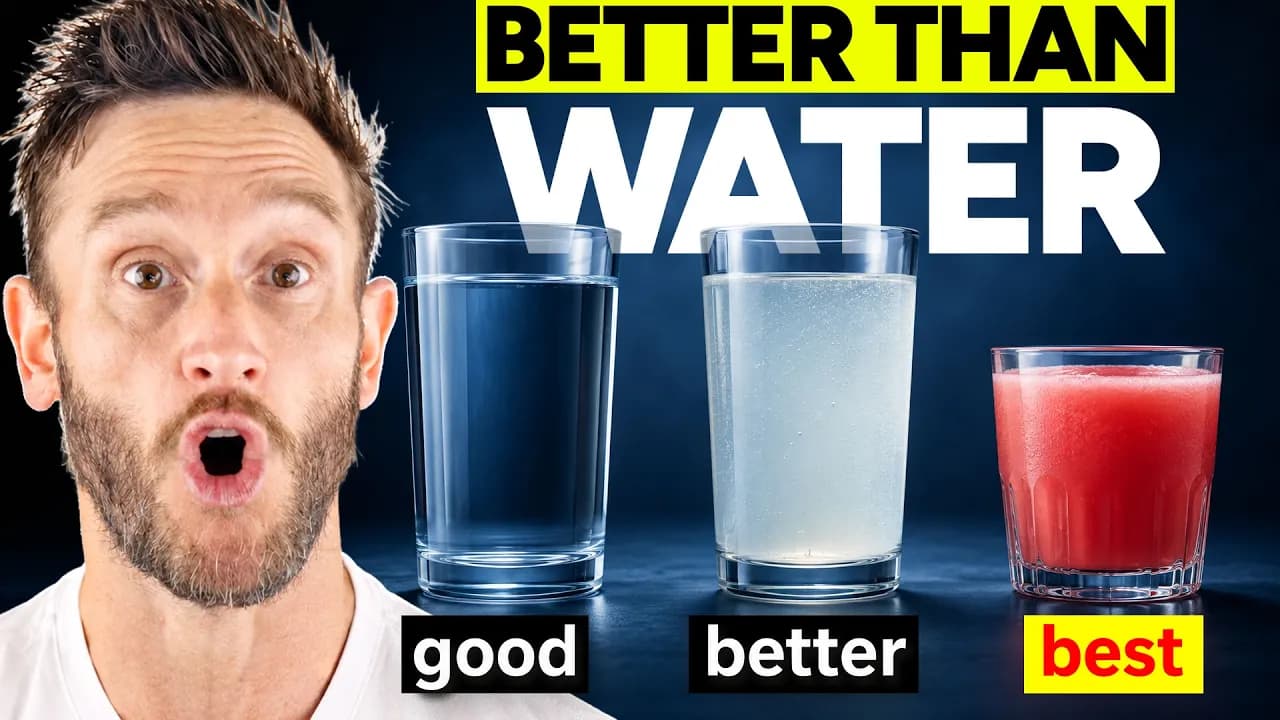
A video claims scientists tested 13 beverages for recovery, hydration, and fat loss — and crowned one winner. Without naming the drink or publishing the methodology, this is a red flag. Real science uses controlled trials measuring electrolytes, muscle damage markers, and energy balance. For recovery, evidence supports chocolate milk, tart cherry juice, or sodium-rich electrolyte drinks. For fat loss, water or unsweetened tea are best. No beverage magically burns fat. Be wary of videos that promise a single ‘best’ solution without data transparency.
No single beverage is a magic bullet for recovery and fat loss — evidence supports whole-food-based hydration and electrolyte balance.
**No single beverage is a magic bullet for recovery and fat loss — evidence supports whole-food-based hydration and electrolyte balance.**
Watch the full analysis
The Best Recovery Drink? Science Weighs In
Senescence Biomarkers Predict Mobility Loss — And Exercise Can Reverse Them
A high-quality study found that biomarkers of cellular senescence — like p16 and SASP factors — strongly predict future mobility disability in older adults. Even more exciting: regular physical activity significantly reduced these biomarkers. This isn’t just about staying active — it’s about delaying biological aging at the cellular level. Walking, resistance training, and even gardening can lower senescent cell burden. This is one of the clearest links between movement and longevity biology. If you want to stay mobile into your 80s, move now — your cells are listening.
Physical activity reduces cellular senescence biomarkers, directly lowering the risk of future mobility disability in older adults.
**Physical activity reduces cellular senescence biomarkers, directly lowering the risk of future mobility disability in older adults.**
Read the full study review
Senescence Biomarkers Predict Mobility Loss — And Exercise Can Reverse Them
**Physical activity reduces cellular senescence biomarkers, directly lowering the risk of future mobility disability in older adults.**
Creatine Doesn’t Improve Bone Density — But That’s Not the Point
A critical claim confirms creatine monohydrate does not improve bone mineral density at the hip or spine in postmenopausal women. This might disappoint those hoping for a dual-action supplement. But here’s the nuance: bone density isn’t the only factor in fracture risk. Muscle strength, balance, and fall prevention matter more. Creatine’s real value is in building the muscles that protect bones. Don’t use creatine for bones — use it for strength. For bone health, prioritize vitamin D, calcium, and weight-bearing exercise.
Creatine monohydrate does not improve bone mineral density — its benefit lies in enhancing muscle strength, not skeletal density.
**Creatine monohydrate does not improve bone mineral density — its benefit lies in enhancing muscle strength, not skeletal density.**
See the evidence breakdown
“Creatine Doesn’t Improve Bone Density — But That’s Not the Point”
**Creatine monohydrate does not improve bone mineral density — its benefit lies in enhancing muscle strength, not skeletal density.**
The bottom line
This week’s findings reveal a powerful theme: biology rewards consistency, not shortcuts. Creatine works — but only with lifting. Statins lower cholesterol but can’t fix structural heart flaws. Movement reduces cellular aging. Protein beats macro counting. Science doesn’t endorse viral hacks — it rewards evidence, patience, and smart habits. Focus on what’s proven, not what’s trending.
Topics
Sources & References
Vitamin K2 and Heart Health: Promising, But Not Proven
**Vitamin K2 supports calcium metabolism, but current evidence doesn’t confirm it protects against heart disease.**
This Powder Is 2X Stronger Than Creatine? Let’s Be Skeptical
**No supplement has scientifically outperformed creatine monohydrate for performance — claims of a '2X stronger' alternative lack evidence.**
Stop Obsessing Over Macros — Only 2 Things Matter
**Prioritizing protein and total calorie balance matters far more than obsessing over carb/fat ratios for fat loss.**
The Best Recovery Drink? Science Weighs In
**No single beverage is a magic bullet for recovery and fat loss — evidence supports whole-food-based hydration and electrolyte balance.**
Creatine Isn’t Just for Bodybuilders — It’s a Lifeline for Postmenopausal Women
**Creatine monohydrate combined with resistance training is a proven, safe strategy to preserve muscle and strength in postmenopausal women.**
Senescence Biomarkers Predict Mobility Loss — And Exercise Can Reverse Them
**Physical activity reduces cellular senescence biomarkers, directly lowering the risk of future mobility disability in older adults.**
Atorvastatin Lowers Cholesterol — But Doesn’t Stop Aortic Calcification
**Atorvastatin reduces LDL but does not significantly slow aortic valve calcification or dilation in bicuspid aortic valve patients.**
Creatine Doesn’t Improve Bone Density — But That’s Not the Point
**Creatine monohydrate does not improve bone mineral density — its benefit lies in enhancing muscle strength, not skeletal density.**