Liver Health Alert: What’s Really Harming Your Liver?
New research reveals surprising dietary culprits and powerful fixes for liver fat—even without calorie cuts.
From the editor
Every day, Fit Body Science analyzes new fitness and nutrition research — checking the evidence, scoring the claims, and separating what's backed by science from what's not. Here's what we found today.
Diet Quality Slashes Liver Fat by 28%—No Calorie Cutting Needed
In a groundbreaking study, researchers discovered that simply upgrading the quality of food—without changing calories or macronutrient totals—can dramatically reduce liver fat in overweight adults. Over just 14 days, participants who swapped high-glycemic, high-saturated fat foods for low-glycemic, low-saturated fat alternatives saw a 28% reduction in intrahepatic lipid content. This wasn’t due to weight loss or fewer carbs—it was purely about food quality.
The implications are profound: you don’t need to starve yourself or overhaul your diet to impact liver health. Choosing brown rice over white, olive oil over butter, and whole grains over refined carbs can make a measurable difference in weeks. The study used MRI scans to confirm fat loss, making the results especially robust.
This is a game-changer for the 1 in 4 adults with non-alcoholic fatty liver disease (NAFLD). For many, a simple dietary upgrade could reverse early-stage liver fat—no calorie counting required.
**Replacing high-GI, high-saturated fat foods with healthier alternatives reduces liver fat by 28% in two weeks—even without changing calories.**
See the evidence breakdown
“Diet Quality Slashes Liver Fat by 28%—No Calorie Cutting Needed”
**Replacing high-GI, high-saturated fat foods with healthier alternatives reduces liver fat by 28% in two weeks—even without changing calories.**
Low-GI, Low-Saturated Fat Diet Reverses Fatty Liver Diagnosis
For overweight adults already showing signs of fatty liver, hope may come from the grocery store—not the pharmacy. A new finding shows that switching to a diet lower in glycemic index and saturated fat for just two weeks can reduce liver fat below the 5% threshold used to diagnose non-alcoholic fatty liver disease (NAFL). This means some people could effectively reverse a clinical diagnosis through food choices alone.
The diet was isocaloric—meaning participants ate the same number of calories and the same amounts of fat and carbs. The only change? Better quality ingredients. Think steel-cut oats instead of sugary cereals, avocado instead of cheese, and legumes instead of processed meats.
This reinforces that liver fat is highly responsive to dietary quality, not just quantity. For those at risk, this is a powerful motivator to prioritize whole, minimally processed foods—even without aiming for weight loss.
**A two-week switch to better-quality foods can reduce liver fat below the diagnostic threshold for fatty liver disease.**
See the evidence breakdown
“Low-GI, Low-Saturated Fat Diet Reverses Fatty Liver Diagnosis”
**A two-week switch to better-quality foods can reduce liver fat below the diagnostic threshold for fatty liver disease.**
Fructose vs. Glucose: How Sugar Type Affects Hormones and Triglycerides
Not all sugars are metabolized the same—and new research shows fructose may be uniquely disruptive to metabolic health in women. When normal-weight women consumed fructose instead of glucose, their bodies showed lower insulin and leptin levels, hormones critical for signaling fullness and regulating energy balance. Even more concerning: fructose blunted the normal post-meal drop in ghrelin, the 'hunger hormone,' meaning participants likely felt less satisfied and more prone to overeat.
Additionally, fructose significantly increased triglyceride levels—a known risk factor for heart and liver disease. Unlike glucose, which is used by all cells, fructose is primarily processed in the liver, where it can be converted into fat.
This doesn’t mean fruit is dangerous (it comes with fiber and nutrients), but it highlights the risks of added fructose—especially from sweetened beverages and processed foods. The message: watch your sugar source, not just the total amount.
**Fructose disrupts key appetite hormones and raises triglycerides in women, even when calorie intake is matched to glucose.**
Read the full study review
Fructose vs. Glucose: How Sugar Type Affects Hormones and Triglycerides
**Fructose disrupts key appetite hormones and raises triglycerides in women, even when calorie intake is matched to glucose.**
Low-GI Diet Tames Blood Sugar Spikes—Even at Lunch
Want better blood sugar control? Focus on the glycemic quality of your meals. A recent analysis found that overweight adults on a low-glycemic index (GI) diet had significantly lower interstitial glucose levels after meals, especially lunch, over a 14-day period. This means fewer blood sugar spikes and crashes—key for energy, focus, and long-term metabolic health.
The diet wasn’t lower in carbs or calories—just better in quality. Swapping white bread for whole grain, baked potatoes for sweet potatoes, and sugary snacks for nuts made a measurable difference in real-time glucose monitoring.
Stable blood sugar isn’t just for diabetics. It helps reduce inflammation, supports fat loss, and protects against insulin resistance. The takeaway? Choose slow-digesting carbs to keep your energy steady all day.
**A low-GI diet reduces post-meal blood sugar spikes in overweight adults, even without changing calorie or carb intake.**
See the evidence breakdown
“Low-GI Diet Tames Blood Sugar Spikes—Even at Lunch”
**A low-GI diet reduces post-meal blood sugar spikes in overweight adults, even without changing calorie or carb intake.**
Liver Fat Drops—But Fat Burning Doesn’t Increase
Here’s a metabolic mystery: liver fat can plummet on a better-quality diet, but whole-body fat oxidation doesn’t budge. In the same study that found a 28% drop in liver fat, researchers measured fat burning during sleep and after meals—and found no significant change in how much fat the body burned overall.
This suggests the liver fat reduction wasn’t due to increased fat metabolism, but rather reduced fat production and storage in the liver itself. High-GI carbs and saturated fats may directly stimulate lipogenesis (fat creation) in the liver, even when total calories are stable.
So while you might not be burning more fat overall, you’re likely storing less of it in dangerous places. This highlights the liver’s unique sensitivity to dietary inputs—and why food quality matters beyond just 'calories in, calories out.'
**Liver fat drops on a better diet, but whole-body fat burning stays the same—pointing to reduced fat production, not increased oxidation.**
See the evidence breakdown
“Liver Fat Drops—But Fat Burning Doesn’t Increase”
**Liver fat drops on a better diet, but whole-body fat burning stays the same—pointing to reduced fat production, not increased oxidation.**
Popular 'Healthy' Foods May Be Harming Your Liver
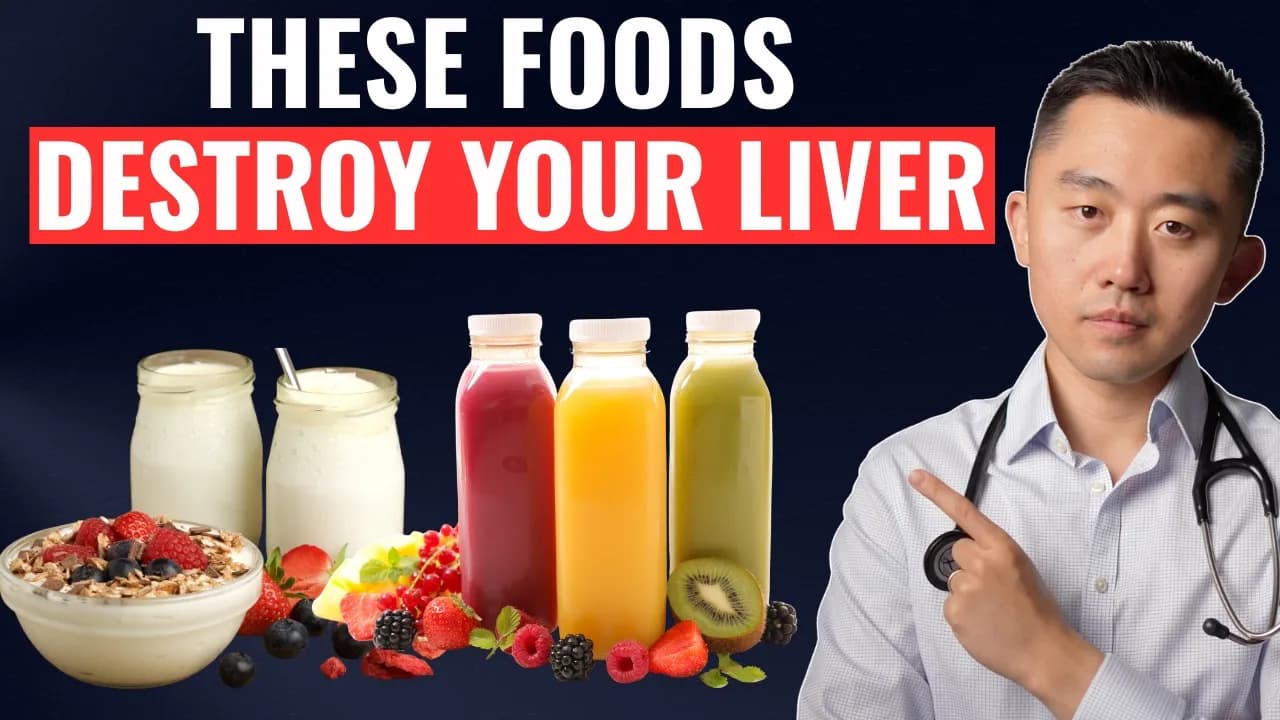
Some foods marketed as 'healthy' could be silently damaging your liver. A viral video titled Top 'Healthy' Foods Damaging Your Liver has sparked concern, highlighting items like flavored yogurts, granola bars, and fruit juices—packed with hidden sugars and unhealthy fats. While the video lacks a formal summary, its high pro-to-against score (48.0 vs. 6.0) suggests strong viewer agreement with its core message.
Many of these foods are high in refined carbs and added fructose, which studies show can drive liver fat accumulation and insulin resistance. Even 'natural' sweeteners like agave or coconut sugar are often fructose-heavy.
The lesson? Don’t trust the front label. Always check the ingredient list. If sugar (or its aliases like cane juice, syrup, or fruit concentrate) is near the top, it might not be as healthy as it seems—especially for your liver.
**Foods marketed as 'healthy' may contain liver-damaging levels of sugar and unhealthy fats—always read labels.**
Watch the full analysis
Popular 'Healthy' Foods May Be Harming Your Liver
The bottom line
Today’s findings paint a clear picture: your liver is exquisitely sensitive to the quality of your diet. From slashing liver fat in weeks to disrupting hunger hormones with fructose, the science shows that what you eat matters just as much—if not more—than how much. The good news? Small, strategic swaps can yield big results—no extreme diets required.
Topics
Sources & References
Popular 'Healthy' Foods May Be Harming Your Liver
**Foods marketed as 'healthy' may contain liver-damaging levels of sugar and unhealthy fats—always read labels.**
Fructose vs. Glucose: How Sugar Type Affects Hormones and Triglycerides
**Fructose disrupts key appetite hormones and raises triglycerides in women, even when calorie intake is matched to glucose.**
Low-GI Diet Tames Blood Sugar Spikes—Even at Lunch
**A low-GI diet reduces post-meal blood sugar spikes in overweight adults, even without changing calorie or carb intake.**
Liver Fat Drops—But Fat Burning Doesn’t Increase
**Liver fat drops on a better diet, but whole-body fat burning stays the same—pointing to reduced fat production, not increased oxidation.**
Diet Quality Slashes Liver Fat by 28%—No Calorie Cutting Needed
**Replacing high-GI, high-saturated fat foods with healthier alternatives reduces liver fat by 28% in two weeks—even without changing calories.**
Low-GI, Low-Saturated Fat Diet Reverses Fatty Liver Diagnosis
**A two-week switch to better-quality foods can reduce liver fat below the diagnostic threshold for fatty liver disease.**