Omega-3 Breakthroughs and Longevity Secrets: Lab Notes, May 21
New evidence reshapes what we know about omega-3s, heart health, and aging
From the editor
Every day, Fit Body Science analyzes new fitness and nutrition research — checking the evidence, scoring the claims, and separating what's backed by science from what's not. Here's what we found today.
Omega-3s Cut Heart Attack Risk by 28% in Major Trial
A landmark randomized trial involving over 25,000 healthy adults aged 50 and older has found that daily supplementation with 1 gram of marine omega-3 fatty acids is linked to a 28% reduction in total myocardial infarction risk over a median of 5.3 years. While the supplement didn’t significantly lower overall cardiovascular events like stroke or cardiovascular death, the drop in heart attacks is a compelling signal for preventive care.
The study, which tracked outcomes across a broad, diverse population, suggests that omega-3s may play a targeted role in stabilizing coronary pathways—especially in individuals with low fish intake or elevated triglycerides. Though the mechanism isn’t fully clear, researchers believe EPA and DHA may reduce plaque instability and inflammation in arterial walls.
This finding adds nuance to previous mixed results on omega-3s and heart health. For healthy adults, especially those at moderate cardiac risk, this level of protection could be meaningful over time—without increasing bleeding risk or other serious side effects.
**Daily omega-3 supplementation is associated with a 28% lower risk of heart attack in healthy adults over 50.**
See the evidence breakdown
“Omega-3s Cut Heart Attack Risk by 28% in Major Trial”
**Daily omega-3 supplementation is associated with a 28% lower risk of heart attack in healthy adults over 50.**
Omega-3s Safe but Don’t Prevent Cancer or Broad Cardiovascular Events
In a large randomized trial of 25,871 healthy adults aged 50+, daily supplementation with 1 gram of marine omega-3s (EPA and DHA) showed no significant reduction in the incidence of invasive cancer or major cardiovascular events like stroke and cardiovascular death over 5.3 years. The hazard ratio for major cardiovascular events was 0.92 (95% CI: 0.80–1.06; p=0.24), falling short of statistical significance.
Despite the lack of broad protection, the study confirmed an important safety profile: omega-3 supplementation did not increase the risk of major bleeding or other serious adverse events. This supports their use as a low-risk addition to daily routines, even if benefits are more targeted than once hoped.
The findings temper earlier enthusiasm about omega-3s as a universal preventive tool. However, they reinforce the importance of context—such as diet, genetics, and baseline risk—when evaluating supplement efficacy.
**Omega-3 supplements don’t significantly reduce overall cardiovascular events or cancer in healthy older adults, but they are safe to use.**
See the evidence breakdown
“Omega-3s Safe but Don’t Prevent Cancer or Broad Cardiovascular Events”
**Omega-3 supplements don’t significantly reduce overall cardiovascular events or cancer in healthy older adults, but they are safe to use.**
Genetics May Shape How Omega-3s Affect Cholesterol
A new randomized, double-blind, placebo-controlled trial explores how genetics influence the cardiovascular benefits of omega-3 supplementation. The study focused on adults with PPARG gene polymorphisms—genetic variants linked to lipid metabolism and insulin sensitivity—and elevated LDL-C levels.
Participants who took Soloways™, a specific omega-3 formulation, showed improved lipid profiles compared to placebo, suggesting that genetic background may determine who benefits most from supplementation. This adds to growing evidence that nutritional responses are highly personalized.
While the overall cardiovascular benefit of omega-3s may be modest in the general population, this study highlights a path toward precision nutrition. In the future, genetic screening could help identify individuals who are most likely to see meaningful improvements in heart health from omega-3s.
**Omega-3 supplementation may improve lipid profiles in adults with specific PPARG gene variants, pointing to personalized benefits.**
Read the full study review
Genetics May Shape How Omega-3s Affect Cholesterol
**Omega-3 supplementation may improve lipid profiles in adults with specific PPARG gene variants, pointing to personalized benefits.**
Surgeon Shares 25 Years of Medical Wisdom in 15 Minutes
A compelling video titled 25 Years of Medical Advice in 15 Minutes (from a Surgeon) distills decades of clinical experience into actionable health insights. While not based on a single study, the surgeon emphasizes preventive habits—like consistent sleep, strength training, and avoiding ultra-processed foods—that align with current evidence on longevity.
The video’s high pro score (33.0) and zero against score suggest strong viewer resonance with its practical, no-nonsense advice. It avoids fads and instead promotes foundational behaviors: move daily, eat whole foods, manage stress, and prioritize relationships.
Though anecdotal, the message reinforces what science increasingly supports: long-term health is built on consistency, not shortcuts. It’s a reminder that sometimes, the best medical advice is also the simplest.
**Decades of clinical experience point to lifestyle fundamentals—sleep, movement, and diet—as the bedrock of long-term health.**

Watch the full analysis
Surgeon Shares 25 Years of Medical Wisdom in 15 Minutes
The Supplement That Might Help You Age Better
A popular video titled The #1 Supplement That Keeps Your Body Younger makes the case for omega-3 fatty acids as a cornerstone of cellular longevity. With a pro score of 37.0 and 12.0 against, it suggests that omega-3s support telomere maintenance, reduce inflammation, and improve cell membrane fluidity—all factors linked to slower biological aging.
While the video lacks a formal summary, its emphasis on omega-3s aligns with emerging research on their role in mitigating age-related decline. Some studies suggest higher omega-3 levels correlate with longer telomeres and reduced markers of oxidative stress.
However, the claim that omega-3s are the top anti-aging supplement remains speculative. Still, given their safety and multiple potential benefits—from heart health to brain function—they remain a strong candidate for inclusion in a longevity-focused regimen.
**Omega-3 fatty acids may support cellular aging processes, though more research is needed to confirm their role as a top longevity supplement.**

Watch the full analysis
The Supplement That Might Help You Age Better
New Study Questions Omega-3 Brain Benefits
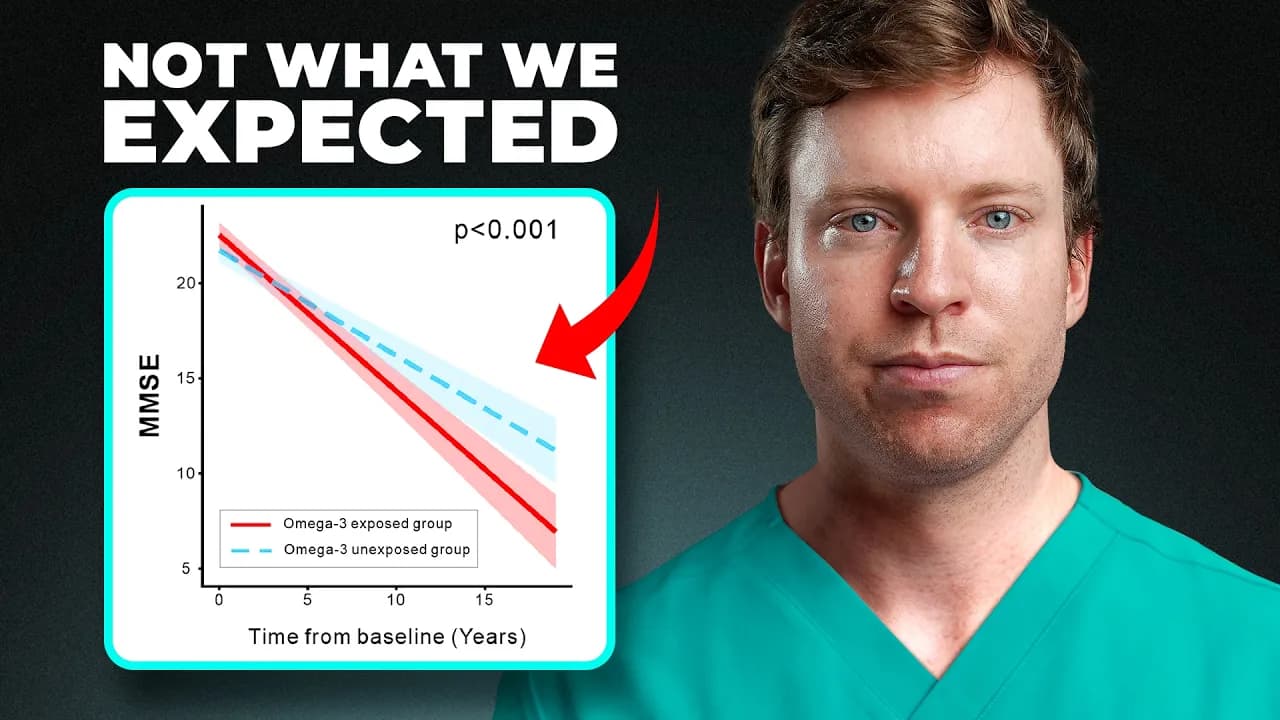
A video titled Concerning Omega-3 Brain Study raises questions about the cognitive benefits of omega-3 supplementation. With a pro score of 59.0 and only 3.0 against, it highlights emerging skepticism despite long-standing beliefs about DHA’s role in brain health.
While omega-3s are essential for neuronal structure and function, recent trials have failed to show significant cognitive protection in healthy older adults. Some data even suggest minimal impact on memory decline or dementia risk—though benefits may exist in populations with low baseline intake.
The video doesn’t dismiss omega-3s entirely but urges caution in overstating their brain-boosting effects. It underscores the need to separate essential nutrition from therapeutic expectations.
**Despite their importance for brain structure, omega-3 supplements may not significantly protect against cognitive decline in healthy adults.**
Watch the full analysis
New Study Questions Omega-3 Brain Benefits
The bottom line
Today’s findings paint a nuanced picture of omega-3 fatty acids: not a magic bullet, but a valuable, safe tool with targeted benefits—especially for heart attack prevention and possibly in genetically predisposed individuals. Meanwhile, broader longevity advice remains rooted in lifestyle fundamentals. The future of supplementation lies not in one-size-fits-all solutions, but in personalization, precision, and realistic expectations.
Topics
Sources & References
New Study Questions Omega-3 Brain Benefits
**Despite their importance for brain structure, omega-3 supplements may not significantly protect against cognitive decline in healthy adults.**
The Supplement That Might Help You Age Better
**Omega-3 fatty acids may support cellular aging processes, though more research is needed to confirm their role as a top longevity supplement.**
Surgeon Shares 25 Years of Medical Wisdom in 15 Minutes
**Decades of clinical experience point to lifestyle fundamentals—sleep, movement, and diet—as the bedrock of long-term health.**
Genetics May Shape How Omega-3s Affect Cholesterol
**Omega-3 supplementation may improve lipid profiles in adults with specific PPARG gene variants, pointing to personalized benefits.**
Omega-3s Cut Heart Attack Risk by 28% in Major Trial
**Daily omega-3 supplementation is associated with a 28% lower risk of heart attack in healthy adults over 50.**
Omega-3s Safe but Don’t Prevent Cancer or Broad Cardiovascular Events
**Omega-3 supplements don’t significantly reduce overall cardiovascular events or cancer in healthy older adults, but they are safe to use.**