Dr Brad Stanfield
Weight loss from GLP-1 drugs lowers uric acid, and slow allopurinol dosing with anti-inflammatories reduces gout flares.
Strong evidence supports reducing allopurinol after achieving low uric acid levels and using anti-inflammatories during initiation, while weight loss from GLP-1 drugs is linked to lower uric acid.
We checked the science
our breakdown of the video
10 claims, each mapped to its moment in the video
When uric acid levels in the blood exceed 0.36 mmol/L, crystals form in joint tissues.
Strong evidence from clinical studies backs this claim.
When the body breaks down purines from food, it produces more uric acid in the blood.
Multiple causal studies (randomized trials and reviews) support this claim.
Allopurinol decreases the amount of uric acid in the blood by increasing how much uric acid the kidneys remove through urine.
Not enough evidence yet — take this with caution.
Reducing calorie intake lowers the amount of uric acid in the blood because less purine is consumed in the diet.
Not enough evidence yet — take this with caution.
When serum uric acid levels are below 0.36 mmol/L, gout is considered under control, and patients do not need to continue taking high doses of allopurinol.
Multiple causal studies (randomized trials and reviews) support this claim.
When blood uric acid levels remain consistently below 0.36 mmol/L, the dose of allopurinol should be lowered.
Not enough evidence yet — take this with caution.
Weight loss caused by GLP-1 receptor agonists is associated with lower levels of uric acid in the blood.
Multiple causal studies (randomized trials and reviews) support this claim.
A quick drop in blood uric acid levels causes urate crystals to move through joint membranes and activate inflammation.
Good evidence supports this claim, with little to contradict it.
When uric acid moves quickly from the bloodstream into joints, it causes acute inflammation characteristic of gout.
Shows a real connection between these things — genuine evidence, though it can't prove cause and effect, and stronger studies could still change it.
Starting allopurinol at a low dose along with anti-inflammatory medication lowers the chance of acute gout flares when lowering uric acid levels.
Multiple causal studies (randomized trials and reviews) support this claim.
Key Takeaways
Summary
Based on the video transcript only.
- 1Gout happens when too much uric acid forms crystals in joints, causing pain.
- 2GLP-1 drugs like Ozempic make people eat less and lose weight, which naturally lowers uric acid without cutting meat or beer.
- 3Doctors often keep patients on high allopurinol doses even when uric acid is already very low—this is unnecessary and risky.
- 4Start allopurinol at 100 mg/day, increase by 100 mg every 4 weeks, and use 500 mcg colchicine daily to prevent flares during treatment.
- 5When uric acid drops below 0.36 mg/dL, reduce allopurinol—don’t keep it at 600 mg if it’s no longer needed.
Related videos

Dr Brad Stanfield
More Exercise, More Plaque?
Dr Brad Stanfield
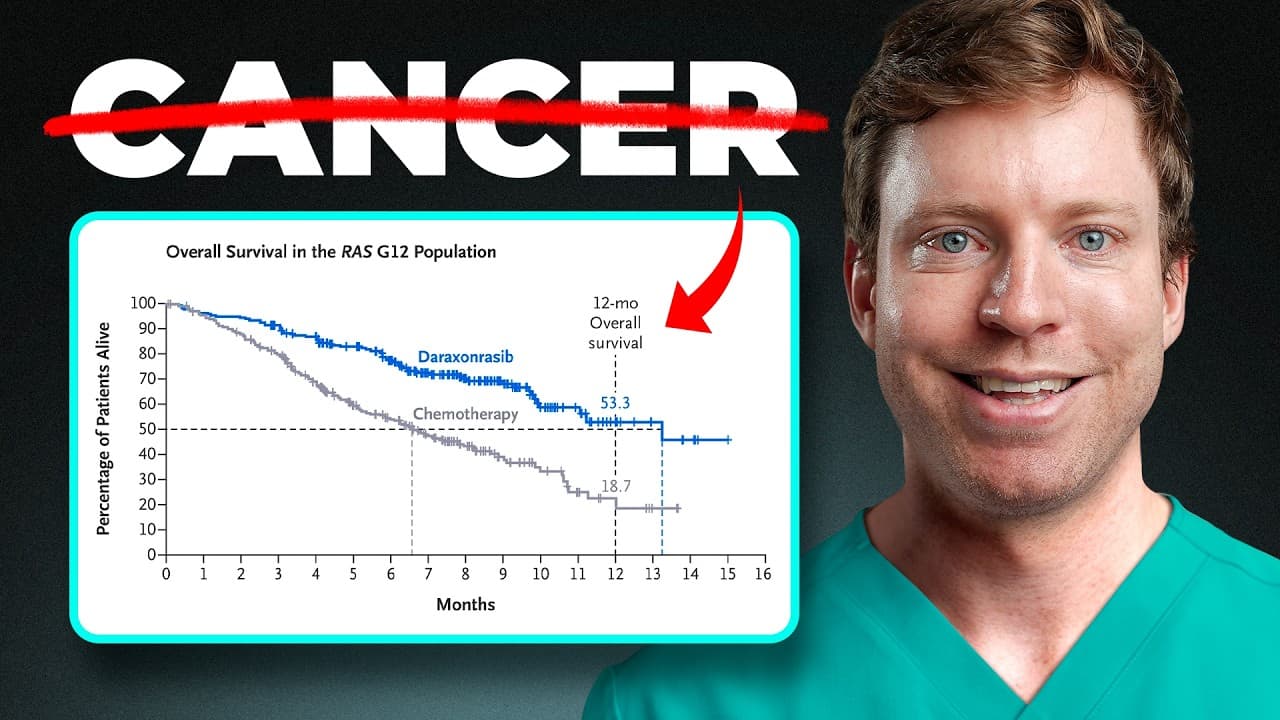
I've Never Seen Cancer Doctors React Like This
Dr Brad Stanfield
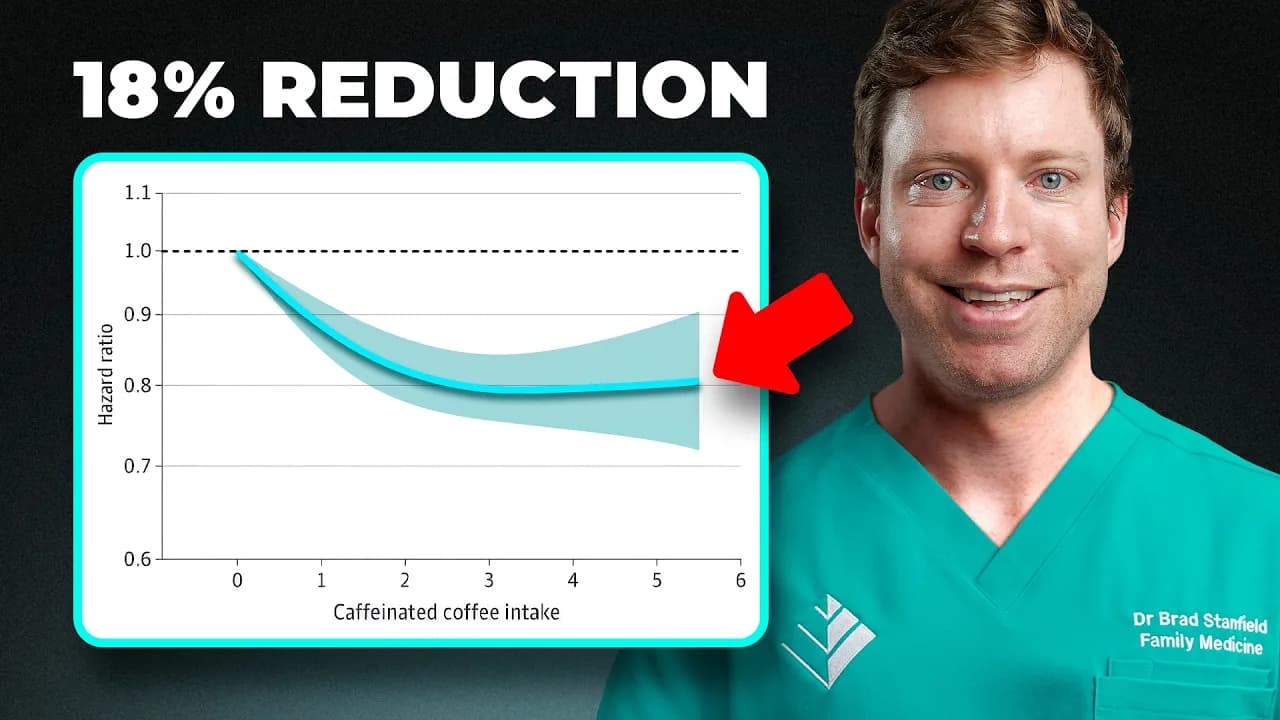
What Coffee Actually Does to Your Brain (131,821 Person Study)

Dr Brad Stanfield
Ridiculously Cheap Ways to Treat Skin Aging

Dr Brad Stanfield
Your Skin Loses 75% of This by Age 75 (New Fix)

Dr Brad Stanfield