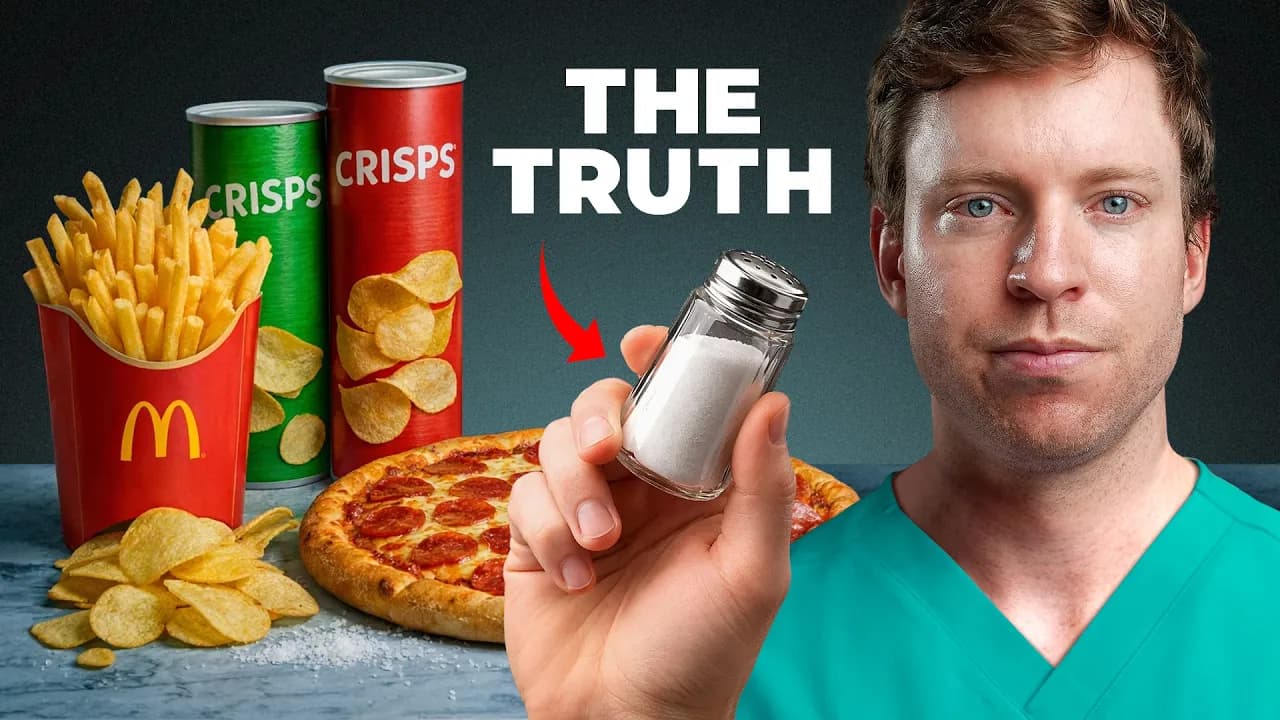
Processed foods disrupt blood pressure through insulin, sodium, and vascular dysfunction, not just salt.
Original: The Blood Pressure Myth That Won't Die: A Vascular Surgeon Reacts to @DrAlexWibberley
TL;DR
The evidence suggests that ultra-processed foods contribute to hypertension by disrupting multiple physiological systems, though some mechanisms lack strong human validation.
Quick Answer
The myth is that salt alone is the primary cause of high blood pressure. The video reveals that while salt can temporarily increase blood pressure through fluid retention, the main driver for most people—especially those with insulin resistance—is chronically elevated insulin from refined carbohydrates and sugar, which locks the kidneys into sodium retention and impairs blood vessel relaxation. Processed foods that combine high salt, refined carbs, and low potassium create a 'perfect storm' for sustained hypertension.
Claims (10)
1. Not getting enough sleep for a long time can rev up your body's stress system, making your heart beat faster and your blood vessels tighter, which over time can raise your blood pressure.
2. Eating ultra-processed foods can raise your blood pressure because the salt in them makes your body hold onto more fluid, and the sugar causes your insulin levels to spike — together, these push your blood pressure up over time.
3. Eating more fiber helps your blood sugar and insulin stay steady after meals, which in turn helps your kidneys handle salt better and keeps your blood pressure in a healthy range.
4. Your blood pressure goes up if your heart pumps more blood, if you have more blood in your body, or if your blood vessels become tighter — any one of these can push pressure higher.
5. If your body has too much insulin for a long time, it can make your kidneys hold onto more salt, which increases your blood volume and raises your blood pressure—even if you're not eating too much salt.
6. When your body breaks down fructose, it can create more uric acid, which might make your blood vessels less able to relax and widen because of lower levels of a helpful substance called nitric oxide.
7. When your body becomes resistant to insulin, it makes more insulin to compensate, and that extra insulin can make your kidneys hold onto too much salt, which over time can lead to high blood pressure.
8. When you do aerobic exercise like running or cycling, it pushes blood through your vessels in a way that helps your blood vessels make a substance called nitric oxide. This substance helps your blood vessels relax and widen, which lowers your blood pressure.
9. When the lining of blood vessels isn't working right and makes less of a substance that keeps vessels open, it can raise blood pressure — even if the heart's pumping and blood amount stay the same.
10. Eating a lot of ultra-processed foods—like packaged snacks, sugary drinks, and instant meals—might be the main reason people get high blood pressure, because these foods mess with how your body controls blood pressure in several ways at once.
Key Takeaways
- •Problem: High blood pressure isn't just from eating too much salt—it's often caused by eating too many processed foods with sugar and refined carbs that keep your body holding onto salt and stiffening your blood vessels.
- •Core methods: Reduce refined carbohydrates and sugar, increase physical activity, improve sleep, eat whole foods rich in potassium and fiber, and eliminate ultraprocessed foods.
- •How methods work: Cutting carbs lowers insulin, which tells your kidneys to stop holding onto salt; exercise and good sleep boost nitric oxide, helping blood vessels relax; whole foods provide potassium and fiber that help balance sodium and stabilize blood sugar.
- •Expected outcomes: Lower blood pressure, reduced need for medication, improved energy, and decreased risk of heart disease, stroke, and kidney damage.
- •Implementation timeframe: Some people see blood pressure drop within days to weeks of reducing refined carbs, especially if insulin levels fall and retained fluid is excreted.
Overview
Hypertension is a leading risk factor for cardiovascular disease, yet conventional advice focusing on salt reduction has failed to curb its prevalence. The core problem lies in the misunderstanding of blood pressure physiology: it is not just a mechanical issue of salt and fluid, but a systemic hormonal and vascular disorder. The solution involves addressing insulin resistance, restoring endothelial function, and eliminating processed foods—interventions that target the root causes rather than symptoms. This approach includes reducing refined carbohydrate intake, increasing physical activity to boost nitric oxide, improving sleep to balance autonomic tone, and consuming whole foods rich in potassium and fiber.
Key Terms
How to Apply
- 1.Step 1: Eliminate ultraprocessed foods high in refined carbohydrates, added sugars (especially fructose), and sodium, such as breakfast cereals, fast food, and packaged snacks.
- 2.Step 2: Reduce intake of refined carbohydrates and sugars to lower insulin levels, which will allow your kidneys to release retained sodium and reduce blood volume.
- 3.Step 3: Engage in regular aerobic exercise (e.g., brisk walking, cycling) to stimulate endothelial production of nitric oxide, helping blood vessels relax and reduce vascular resistance.
- 4.Step 4: Prioritize whole foods rich in potassium (e.g., vegetables, legumes) and fiber to support sodium excretion and stabilize blood sugar.
- 5.Step 5: Improve sleep quality and duration to reduce sympathetic nervous system activation, which lowers heart rate and vascular resistance.
Following these steps leads to reduced insulin levels, improved endothelial function, normalized renal sodium handling, and lower blood pressure—often within weeks. Many individuals experience rapid weight loss (from fluid excretion) and may require medication adjustments under medical supervision.
Claims (10)
1. Not getting enough sleep for a long time can rev up your body's stress system, making your heart beat faster and your blood vessels tighter, which over time can raise your blood pressure.
2. Eating ultra-processed foods can raise your blood pressure because the salt in them makes your body hold onto more fluid, and the sugar causes your insulin levels to spike — together, these push your blood pressure up over time.
3. Eating more fiber helps your blood sugar and insulin stay steady after meals, which in turn helps your kidneys handle salt better and keeps your blood pressure in a healthy range.
4. Your blood pressure goes up if your heart pumps more blood, if you have more blood in your body, or if your blood vessels become tighter — any one of these can push pressure higher.
5. If your body has too much insulin for a long time, it can make your kidneys hold onto more salt, which increases your blood volume and raises your blood pressure—even if you're not eating too much salt.
6. When your body breaks down fructose, it can create more uric acid, which might make your blood vessels less able to relax and widen because of lower levels of a helpful substance called nitric oxide.
7. When your body becomes resistant to insulin, it makes more insulin to compensate, and that extra insulin can make your kidneys hold onto too much salt, which over time can lead to high blood pressure.
8. When you do aerobic exercise like running or cycling, it pushes blood through your vessels in a way that helps your blood vessels make a substance called nitric oxide. This substance helps your blood vessels relax and widen, which lowers your blood pressure.
9. When the lining of blood vessels isn't working right and makes less of a substance that keeps vessels open, it can raise blood pressure — even if the heart's pumping and blood amount stay the same.
10. Eating a lot of ultra-processed foods—like packaged snacks, sugary drinks, and instant meals—might be the main reason people get high blood pressure, because these foods mess with how your body controls blood pressure in several ways at once.
Related Content
Claims (10)
Your blood pressure goes up if your heart pumps more blood, if you have more blood in your body, or if your blood vessels become tighter — any one of these can push pressure higher.
If your body has too much insulin for a long time, it can make your kidneys hold onto more salt, which increases your blood volume and raises your blood pressure—even if you're not eating too much salt.
Eating a lot of ultra-processed foods—like packaged snacks, sugary drinks, and instant meals—might be the main reason people get high blood pressure, because these foods mess with how your body controls blood pressure in several ways at once.
When your body becomes resistant to insulin, it makes more insulin to compensate, and that extra insulin can make your kidneys hold onto too much salt, which over time can lead to high blood pressure.
When the lining of blood vessels isn't working right and makes less of a substance that keeps vessels open, it can raise blood pressure — even if the heart's pumping and blood amount stay the same.