The Claim
Intermittent inhibition of mTORC1 using rapamycin, administered between exercise sessions, may promote autophagy during recovery and enhance anabolic processes during subsequent exercise, leading to a synergistic improvement in muscle health in aging individuals.
What the research says
Challenges is higher
Challenge is ahead, but a single strong supporting study can change this.
These are independent scores, not a percentage. Higher-grade studies count more, so a single strong opposing study can outweigh several weaker ones.
Taking rapamycin between workouts might help your muscles clean out junk and rebuild stronger as you age — like getting the best of both rest and exercise.
See the scientific wording
Intermittent mTORC1 inhibition via rapamycin, timed between exercise bouts, may enable autophagy during recovery and subsequent anabolic rebuilding during exercise, creating a synergistic 'best of both worlds' effect for muscle health in aging.
What the research says
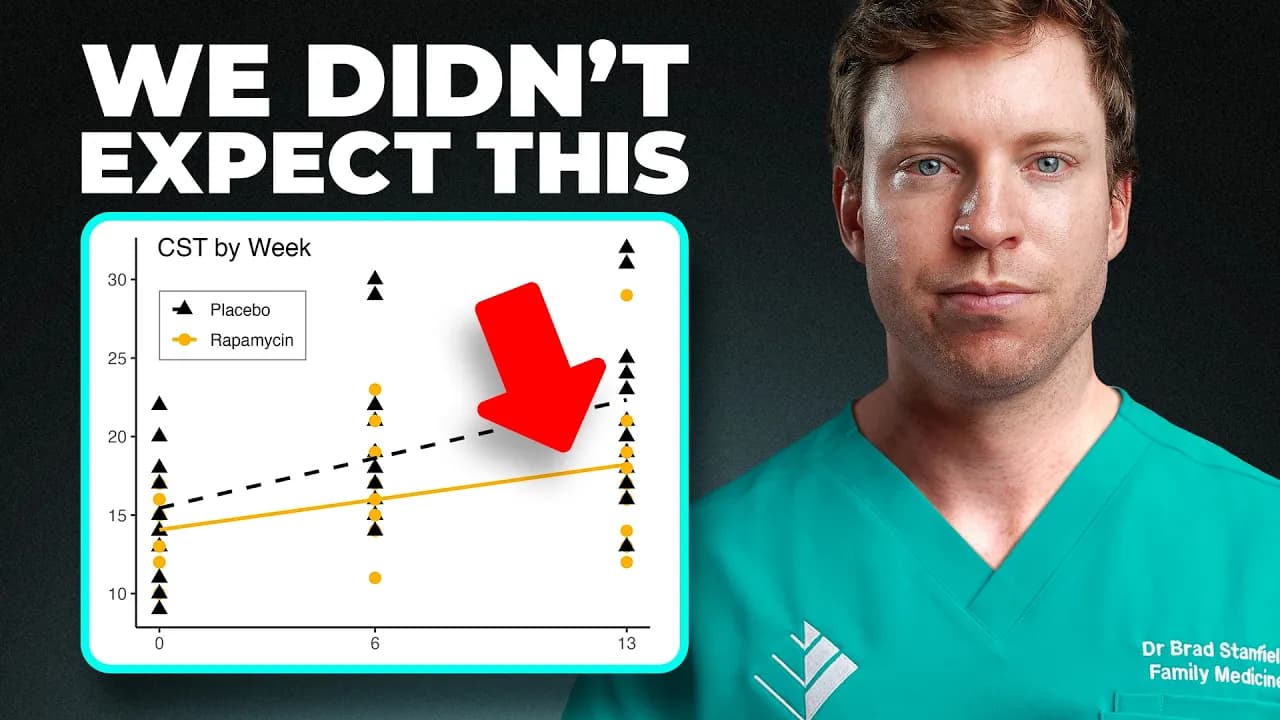
3 studiesThe study tested whether taking rapamycin once a week along with exercise helps older adults get stronger, but found it didn’t help and might have slightly reduced benefits compared to exercise alone.
Related videos
Score breakdown, mechanism chain, raw evidence, ideal studies needed & 3 supporting studies
Not medical advice. For informational purposes only. Always consult a qualified healthcare professional before making health decisions.