The Claim
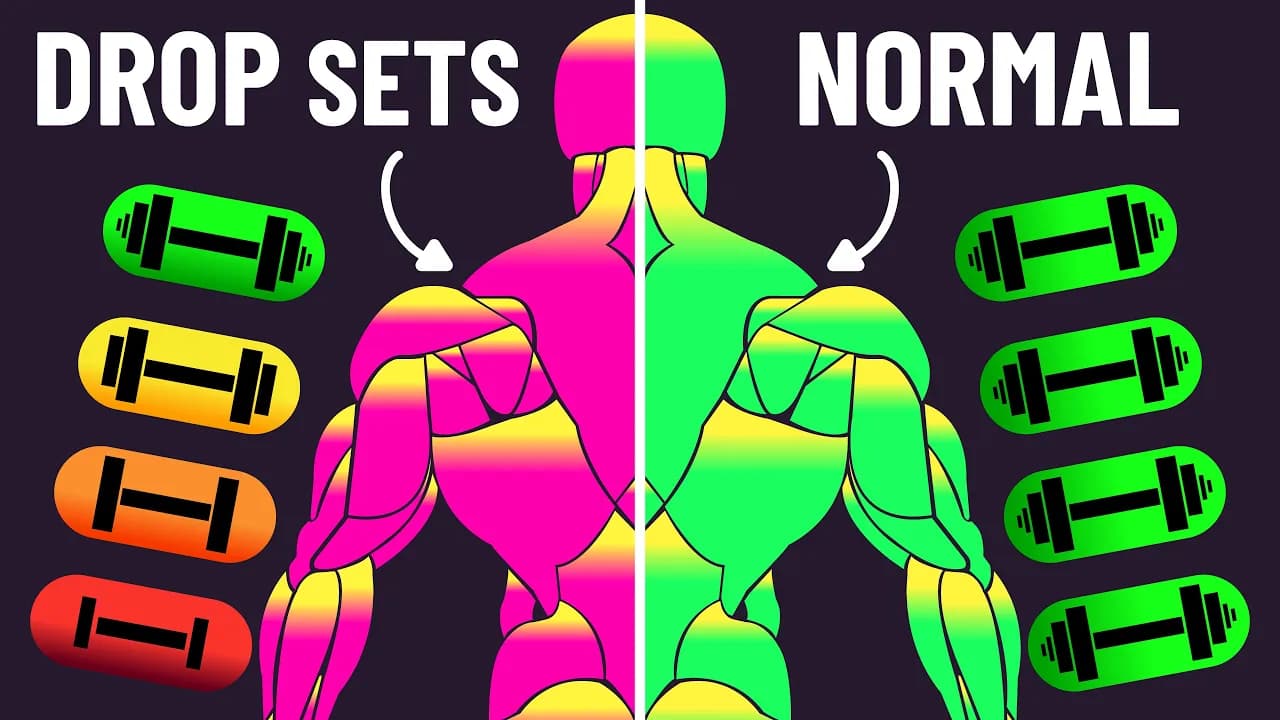
The increased number of hard repetitions (within 2–3 reps of failure) in drop set protocols compensates for the absence of inter-set rest, resulting in equivalent hypertrophic outcomes compared to traditional training with longer rest intervals.
What the research says
Roughly balanced
Support and challenge are close. The picture may shift as more studies come in.
These are independent scores, not a percentage. Higher-grade studies count more, so a single strong opposing study can outweigh several weaker ones.
Doing more reps near your limit makes up for not resting between sets.
See the scientific wording
The increased number of hard repetitions (within 2–3 reps of failure) in drop set protocols compensates for the absence of inter-set rest, resulting in equivalent hypertrophic outcomes compared to traditional training with longer rest intervals.
What the research says
4 studiesEven without resting between sets, people who did drop sets grew their muscles just as much as those who took breaks — because they pushed their muscles harder in each set.
Study: Effects of Drop Sets on Skeletal Muscle Hypertrophy: A Systematic Review and Meta-analysis
Even without resting between sets, doing multiple hard lifts to failure in drop sets builds muscle just as well as traditional workouts with longer breaks.
This study found that lifting weights with short breaks using drop sets (going lighter after each set) built just as much muscle as lifting with longer breaks — meaning you don’t need to rest long to get big muscles if you push hard each set.
Study: Investigating the Effect of the Tonal Drop Set Mode On Elbow Flexor Hypertrophy
Even though the drop set workout was faster and pushed muscles harder, it still didn’t build as much muscle as the regular workout with rest breaks.
Related videos
Score breakdown, mechanism chain, raw evidence, ideal studies needed & 4 supporting studies
Not medical advice. For informational purposes only. Always consult a qualified healthcare professional before making health decisions.