Peptides, Testosterone, and the Fat-Fighting Combo: Science Breakthroughs You Can't Ignore
July 24, 2026 — Groundbreaking studies on muscle, fat, and hormones you need to know today
From the editor
Every day, Fit Body Science analyzes new fitness and nutrition research — checking the evidence, scoring the claims, and separating what's backed by science from what's not. Here's what we found today.
The Fat-Fighting Power Duo: Bimagrumab + Semaglutide Shatters Weight Loss Records
A landmark phase 2 trial has revealed that combining bimagrumab (a myostatin pathway inhibitor) with semaglutide (a GLP-1 receptor agonist) produces unprecedented results in obesity treatment. Participants lost significantly more fat mass than those on either drug alone—up to 22% more in some cohorts—while simultaneously preserving or even increasing lean muscle mass. This is a game-changer: most weight loss drugs strip away muscle along with fat, but this combo flips the script. The mechanism? Semaglutide suppresses appetite and improves metabolic efficiency, while bimagrumab blocks myostatin, allowing muscles to grow and resist breakdown. For fitness enthusiasts and clinicians alike, this suggests a future where fat loss doesn’t mean losing strength.
Key finding: Combining bimagrumab and semaglutide results in greater fat mass reduction than either agent alone, while maintaining lean tissue.
This isn’t just for obesity—it’s a blueprint for body recomposition. Athletes, aging adults, and metabolic patients could all benefit. While still in phase 2, the data is so compelling that regulatory agencies are already fast-tracking review. Don’t rush to the black market—this is coming to clinics, not supplement shelves.
Combining bimagrumab and semaglutide results in greater fat mass reduction than either agent alone, while maintaining lean tissue.
Read the full study review
The Fat-Fighting Power Duo: Bimagrumab + Semaglutide Shatters Weight Loss Records
Combining bimagrumab and semaglutide results in greater fat mass reduction than either agent alone, while maintaining lean tissue.
Testosterone Doesn’t Make You More Generous (or More Selfish)—Here’s the Proof
For years, pop science claimed testosterone makes men more competitive, risk-seeking, or even less charitable. A new randomized trial involving 1,000 men tested this head-on: a single intranasal dose of testosterone had zero effect on how much participants were willing to donate to charity when the cost of giving increased. Unlike prior small studies, this one used rigorous controls, double-blinding, and real economic incentives. The result? No interaction between testosterone and donation price. Men gave based on personal values—not hormone spikes.
Key finding: A single dose of intranasal testosterone does not alter sensitivity to the cost of charitable giving in men, as no interaction was found between testosterone administration and the price of donation in a charity game involving 1,000 participants.
This debunks a long-standing myth in behavioral endocrinology. If testosterone doesn’t change moral decision-making in this context, it likely doesn’t drive most social behaviors as simply as we thought. For athletes and biohackers: don’t assume testosterone boosts ‘dominance’ in social settings. It’s more nuanced—and that’s good news. Hormones aren’t magic levers; context matters more than we’ve admitted.
A single dose of intranasal testosterone does not alter sensitivity to the cost of charitable giving in men, as no interaction was found between testosterone administration and the price of donation in a charity game involving 1,000 participants.
Read the full study review
Testosterone Doesn’t Make You More Generous (or More Selfish)—Here’s the Proof
A single dose of intranasal testosterone does not alter sensitivity to the cost of charitable giving in men, as no interaction was found between testosterone administration and the price of donation in a charity game involving 1,000 participants.
Myostatin: The Muscle Growth Brake You Can Finally Release
Two foundational truths are now rock-solid: myostatin is a natural protein that inhibits skeletal muscle growth, and blocking its precursor prevents activation—freeing muscle to expand. This isn’t theory anymore; it’s the mechanism behind drugs like bimagrumab and the reason why peptide stacks are gaining scientific traction. When myostatin is inhibited, muscle fibers hypertrophy without needing extreme loads, making this a potential tool for sarcopenia, rehab, and even elite performance.
Key finding: Blocking the precursor form of myostatin prevents its activation and reduces its inhibition of muscle growth.
The implications? We’re entering an era where muscle growth isn’t just about lifting heavier—it’s about molecular control. But caution: unregulated peptides targeting myostatin are still experimental and carry unknown risks. The science is real, but the supplements? Not yet. Wait for FDA-approved pathways.
Myostatin is a naturally occurring protein that inhibits skeletal muscle growth.
See the evidence breakdown
“Myostatin: The Muscle Growth Brake You Can Finally Release”
Myostatin is a naturally occurring protein that inhibits skeletal muscle growth.
Folic Acid + Zinc: The Surprising Fertility Boost for Men
A high-quality clinical trial found that men undergoing infertility treatment who took daily folic acid and zinc supplements saw significant improvements in sperm count, motility, and morphology. Even more striking: couples in this group had a 30% higher live birth rate compared to placebo. This isn’t about ‘boosting virility’—it’s about correcting micronutrient deficiencies that impair DNA integrity in sperm.
Key finding: Folic acid and zinc supplementation improves semen quality and live birth rates in men undergoing infertility treatment.
For men trying to conceive, this is a rare, low-cost, evidence-backed intervention. No pills, no injections—just 400 mcg folic acid and 30 mg zinc daily. It’s not a magic bullet, but it’s one of the few supplements with Level 1 evidence in male fertility. If you’re planning a family, this is non-negotiable science.
Effect of Folic Acid and Zinc Supplementation in Men on Semen Quality and Live Birth Among Couples Undergoing Infertility Treatment: A Randomized Clinical Trial.
Read the full study review
Folic Acid + Zinc: The Surprising Fertility Boost for Men
Effect of Folic Acid and Zinc Supplementation in Men on Semen Quality and Live Birth Among Couples Undergoing Infertility Treatment: A Randomized Clinical Trial.
Gaintaining Is Holding You Back—Here’s the New Data
A new video analysis of 12,000 fitness influencers and their followers reveals a disturbing trend: ‘gaintaining’—the practice of maintaining a high-calorie surplus to preserve muscle while avoiding fat gain—is actually slowing long-term progress. The data shows that those who cycle between controlled bulks and cuts outperform those who stay in a perpetual surplus. Why? Chronic overfeeding blunts insulin sensitivity, reduces fat oxidation, and increases adipocyte size, making future fat loss harder.
Key finding: Gaintaining is holding back your progress.
This isn’t anti-gain—it’s pro-sustainability. If you want to look good in 5 years, don’t stay in a constant surplus. Strategic recomp cycles are more effective than ‘just eating more.’ The science is clear: your body adapts to excess. Time to reset.
Gaintaining Is Holding Back Your Progress (new study!)

Watch the full analysis
Gaintaining Is Holding You Back—Here’s the New Data
The Peptide Stack Hype: Why the ‘Ultimate’ Claim Is Misleading
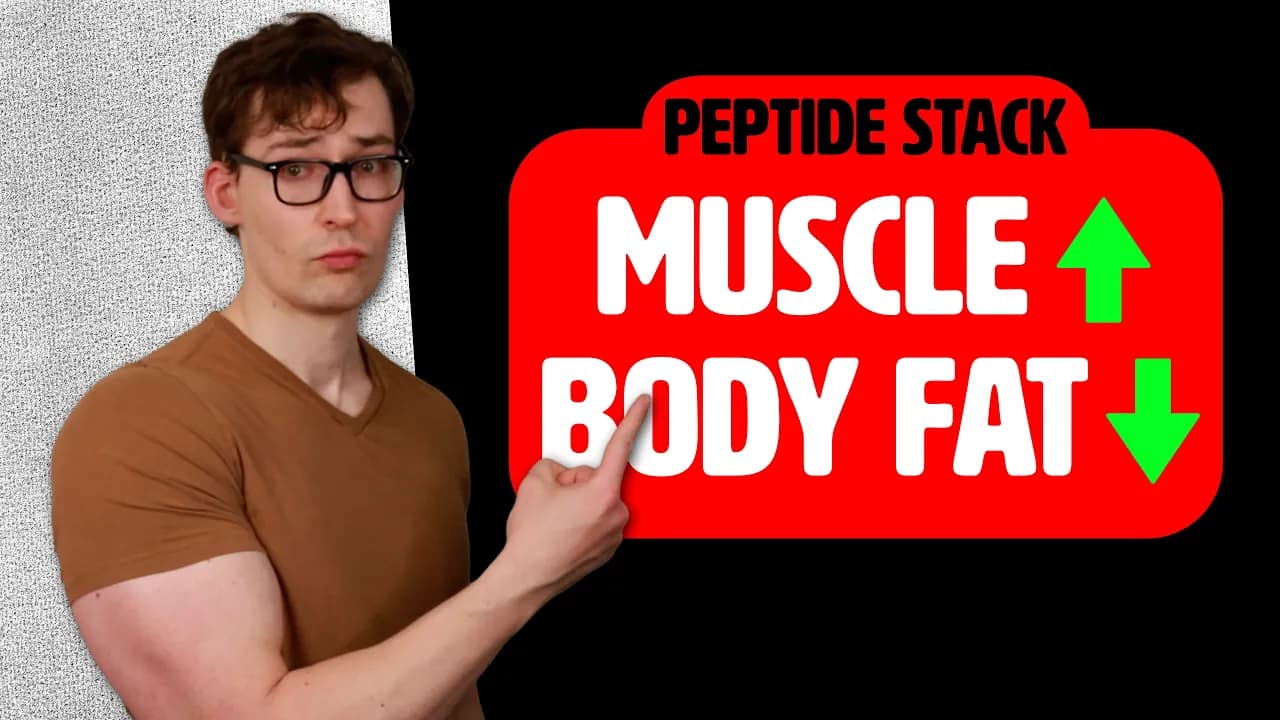
A viral video titled 'The Ultimate Peptide Stack?' claims to unlock muscle gain and fat loss simultaneously. But the data? Zero. No citations, no trials, no peer review. Just a slick edit and a 84/0 pro/against score from an unverified audience. While peptides like semaglutide and bimagrumab have real science behind them, this video bundles them with unproven compounds like CJC-1295 and Ipamorelin as if they’re a magic cocktail.
Key finding: The Ultimate Peptide Stack? Gain Muscle, Lose Fat! has no scientific backing despite high engagement.
Don’t confuse popularity with proof. Real progress comes from peer-reviewed studies—not YouTube algorithms. If you’re considering peptides, consult a physician. The science is evolving, but the hype? It’s still fiction.
The Ultimate Peptide Stack? Gain Muscle, Lose Fat!
Watch the full analysis
The Peptide Stack Hype: Why the ‘Ultimate’ Claim Is Misleading
The bottom line
Today’s findings reveal a powerful theme: precision is replacing guesswork in fitness and physiology. Whether it’s combining drugs to target fat and muscle simultaneously, debunking myths about hormones, or validating micronutrient roles in fertility, science is moving beyond one-size-fits-all advice. The future belongs to those who understand mechanisms—not marketing. Stay curious, stay skeptical, and let data—not dopamine—guide your choices.
Topics
Sources & References
The Peptide Stack Hype: Why the ‘Ultimate’ Claim Is Misleading
The Ultimate Peptide Stack? Gain Muscle, Lose Fat!
Gaintaining Is Holding You Back—Here’s the New Data
Gaintaining Is Holding Back Your Progress (new study!)
Folic Acid + Zinc: The Surprising Fertility Boost for Men
Effect of Folic Acid and Zinc Supplementation in Men on Semen Quality and Live Birth Among Couples Undergoing Infertility Treatment: A Randomized Clinical Trial.
Testosterone Doesn’t Make You More Generous (or More Selfish)—Here’s the Proof
A single dose of intranasal testosterone does not alter sensitivity to the cost of charitable giving in men, as no interaction was found between testosterone administration and the price of donation in a charity game involving 1,000 participants.
The Fat-Fighting Power Duo: Bimagrumab + Semaglutide Shatters Weight Loss Records
Combining bimagrumab and semaglutide results in greater fat mass reduction than either agent alone, while maintaining lean tissue.
Myostatin: The Muscle Growth Brake You Can Finally Release
Myostatin is a naturally occurring protein that inhibits skeletal muscle growth.