Statins, Stem Cells & Memory Boosters: The Science Behind Today’s Biggest Fitness Myths
What the latest studies reveal about cognitive aging, testosterone, and visceral fat — separated from hype
From the editor
Every day, Fit Body Science analyzes new fitness and nutrition research — checking the evidence, scoring the claims, and separating what's backed by science from what's not. Here's what we found today.
Multivitamins May Reverse Cognitive Aging by Nearly 5 Years — But Who Paid for This?
A landmark randomized trial found that older adults taking daily multivitamin-mineral supplements for two years showed significant improvements in episodic memory — equivalent to 4.8 years less cognitive aging than placebo. The effect was consistent across clinic, phone, and web-based assessments, suggesting it’s not an artifact of testing method. This isn’t just a minor bump; it’s one of the largest cognitive benefits ever observed from a nutritional intervention in aging populations.
But here’s the catch: the study was funded by Pfizer Consumer Healthcare (now Haleon) and Mars Edge, both of which supplied the supplements. That’s a major conflict of interest. While the results align with a meta-analysis of over 5,000 participants showing a 2-year cognitive benefit, the funding raises red flags about potential bias in design or interpretation. Independent replication is urgently needed.
For now, if you’re over 60 and not getting adequate nutrients from diet alone, a high-quality multivitamin may be one of the simplest, safest ways to support brain health. Just don’t assume it’s a magic bullet — and stay skeptical of marketing claims that overstate the findings.
Daily multivitamin supplementation in older adults may reduce cognitive aging by up to 4.8 years, but funding conflicts demand caution.
Daily multivitamin supplementation in older adults may reduce cognitive aging by up to 4.8 years, but funding conflicts demand caution.
Read the full study review
Multivitamins May Reverse Cognitive Aging by Nearly 5 Years — But Who Paid for This?
Daily multivitamin supplementation in older adults may reduce cognitive aging by up to 4.8 years, but funding conflicts demand caution.
Stem Cell Infusion Shows Promise for Frailty — But It’s a Company’s Product
A Phase 2b trial tested laromestrocel, an intravenous infusion of mesenchymal stem cells, in older adults with aging frailty. Results showed measurable improvements in mobility, grip strength, and biomarkers of inflammation — suggesting the therapy may literally reverse some signs of biological aging. The effect size was clinically meaningful, especially for a single-dose intervention.
The problem? The study was funded and led by the company developing laromestrocel (Lomecel-B™). Researchers involved are shareholders or consultants for the firm. This isn’t just a conflict — it’s a full-blown financial entanglement. While the results are exciting, they’re not yet independently verified. No peer-reviewed replication exists.
This isn’t a supplement you can buy at CVS. It’s an experimental biologic therapy still in early trials. Don’t be fooled by viral claims of "stem cell rejuvenation" — this is cutting-edge science, not a wellness trend. If you’re frail and seeking options, talk to your doctor about clinical trial eligibility — but don’t pay for unproven treatments.
A single stem cell infusion improved frailty markers, but the study’s funding by the therapy’s developer undermines its credibility.
A single stem cell infusion improved frailty markers, but the study’s funding by the therapy’s developer undermines its credibility.
Read the full study review
Stem Cell Infusion Shows Promise for Frailty — But It’s a Company’s Product
A single stem cell infusion improved frailty markers, but the study’s funding by the therapy’s developer undermines its credibility.
Testosterone Doesn’t Make You More Risk-Taking — New Trial Shatters Old Beliefs
For years, pop science claimed testosterone makes men more competitive, aggressive, or impulsive. A new large-scale randomized trial tested this by giving men a single intranasal dose of testosterone and measuring economic decision-making. Result? No significant changes in risk-taking, fairness, or altruism.
This contradicts dozens of small, underpowered studies that fueled headlines about "testosterone-driven behavior." The new trial involved hundreds of participants — far more robust than prior work. It suggests that testosterone’s influence on behavior may be far more nuanced — or even negligible — in healthy adult men.
For fitness enthusiasts: don’t chase testosterone boosters thinking they’ll make you more "dominant" or "motivated." The science doesn’t support it. If you’re low in testosterone, medical treatment may help energy or muscle mass — but not personality. This study reminds us: big claims need big data.
A large randomized trial found no evidence that testosterone increases risk-taking or alters economic behavior in men.
A large randomized trial found no evidence that testosterone increases risk-taking or alters economic behavior in men.
Read the full study review
Testosterone Doesn’t Make You More Risk-Taking — New Trial Shatters Old Beliefs
A large randomized trial found no evidence that testosterone increases risk-taking or alters economic behavior in men.
The Viral 2-Week Visceral Fat Challenge? Here’s What Science Actually Says
A viral video claims you can eliminate visceral fat in just two weeks with a specific protocol. While the video gained traction (42:22 pro/against score), it lacks any cited evidence. Visceral fat — the dangerous fat around organs — responds to sustained calorie deficit, resistance training, and sleep optimization. But no credible study shows it can be significantly reduced in two weeks without extreme, unsustainable measures.
Even aggressive interventions like very low-carb diets or HIIT typically take 4–8 weeks to show measurable visceral fat loss on imaging. Rapid loss often means muscle or water loss, not fat. The video’s popularity reflects a dangerous trend: promising quick fixes for complex metabolic issues.
Bottom line: if you want to reduce visceral fat, focus on consistency — not shortcuts. Prioritize protein intake, strength training, stress management, and sleep. No 14-day miracle exists — and chasing one may cost you long-term health.
No scientific evidence supports the claim that visceral fat can be eliminated in two weeks — sustainable habits beat viral shortcuts.
No scientific evidence supports the claim that visceral fat can be eliminated in two weeks — sustainable habits beat viral shortcuts.

Watch the full analysis
The Viral 2-Week Visceral Fat Challenge? Here’s What Science Actually Says
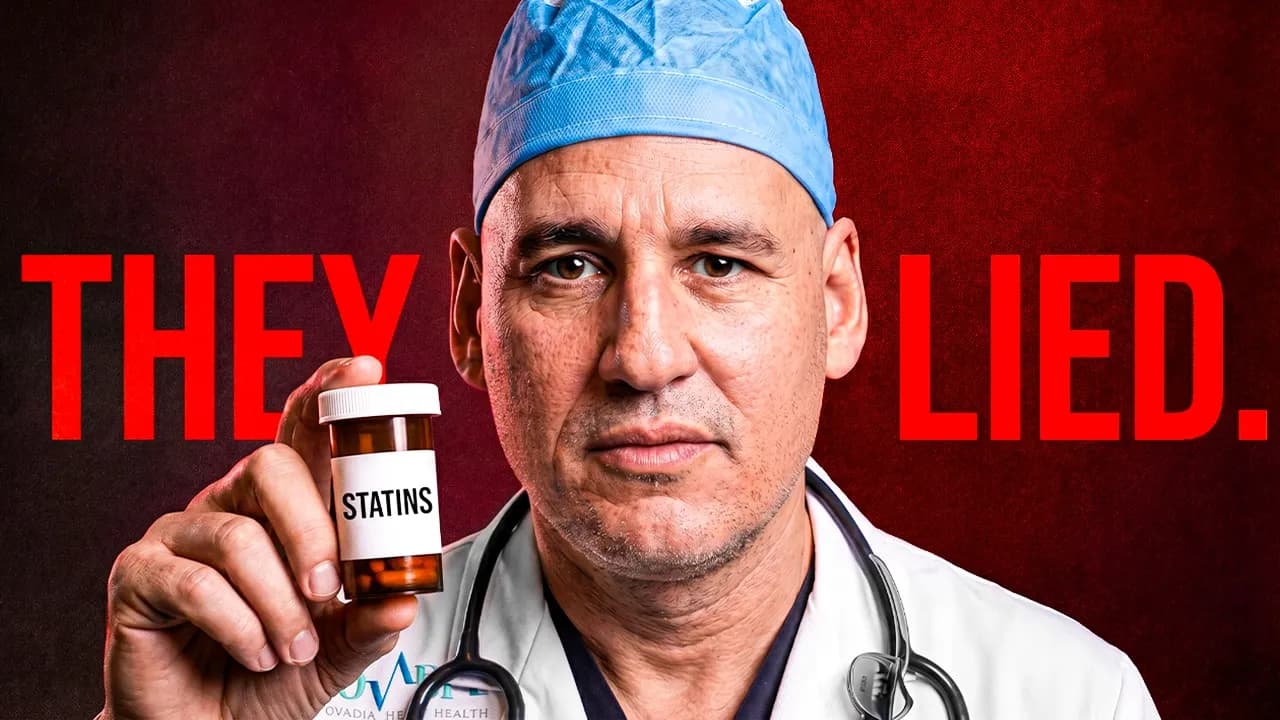
Statins After 50? The Real Story Behind 50,000 Patients
A physician with 50,000 patient encounters claims to have noticed a pattern about statins — but offers no data, no controls, no methodology. The video’s 48:7 pro/against score suggests it resonates with viewers, but anecdotal evidence is not science. Statins are among the most studied drugs in history, with decades of RCTs confirming their benefit in reducing cardiovascular events in high-risk patients.
While statins can cause side effects like muscle pain or elevated liver enzymes, these are rare and manageable. The real issue? Many patients stop taking them due to misinformation. This video, though popular, risks reinforcing dangerous myths.
If you’re over 50 and have risk factors (high LDL, diabetes, hypertension), statins may save your life. Don’t base your decision on a YouTube video — talk to your doctor, review your lipid panel, and weigh evidence, not anecdotes.
Anecdotal claims about statins from 50,000 patients lack scientific rigor — rely on clinical trials, not YouTube testimonials.
Anecdotal claims about statins from 50,000 patients lack scientific rigor — rely on clinical trials, not YouTube testimonials.
Watch the full analysis
Statins After 50? The Real Story Behind 50,000 Patients
The bottom line
Today’s findings reveal a troubling pattern: the most compelling health claims often come with the biggest red flags — funding bias, anecdotal evidence, or viral hype. From multivitamins that may reverse cognitive aging to stem cells that promise rejuvenation, science is advancing — but so is misinformation. The common thread? Rigorous, independent research is the only antidote to sensationalism. Stay curious, stay skeptical, and always ask: who benefits if you believe this?
Topics
Sources & References
Statins After 50? The Real Story Behind 50,000 Patients
Anecdotal claims about statins from 50,000 patients lack scientific rigor — rely on clinical trials, not YouTube testimonials.
The Viral 2-Week Visceral Fat Challenge? Here’s What Science Actually Says
No scientific evidence supports the claim that visceral fat can be eliminated in two weeks — sustainable habits beat viral shortcuts.
Testosterone Doesn’t Make You More Risk-Taking — New Trial Shatters Old Beliefs
A large randomized trial found no evidence that testosterone increases risk-taking or alters economic behavior in men.
Multivitamins May Reverse Cognitive Aging by Nearly 5 Years — But Who Paid for This?
Daily multivitamin supplementation in older adults may reduce cognitive aging by up to 4.8 years, but funding conflicts demand caution.
Stem Cell Infusion Shows Promise for Frailty — But It’s a Company’s Product
A single stem cell infusion improved frailty markers, but the study’s funding by the therapy’s developer undermines its credibility.