Walnuts vs. Mortality: The Silent Superfood That Could Save Your Life
Science Breaks Down the Truth Behind Walnuts, Butter, and Creatine’s Cognitive Secrets
From the editor
Every day, Fit Body Science analyzes new fitness and nutrition research — checking the evidence, scoring the claims, and separating what's backed by science from what's not. Here's what we found today.
Walnuts May Slash Your Risk of Dying—Here’s the Science
A landmark study published in the PREDIMED trial found that regular nut consumption—including walnuts—was associated with a significant reduction in all-cause mortality among older adults at high cardiovascular risk. This wasn’t just about heart health; it was about longevity. Participants who ate nuts at least three times per week had up to a 30% lower risk of death over a decade compared to those who rarely ate them. Walnuts, rich in omega-3s, polyphenols, and fiber, appear to reduce inflammation and oxidative stress, two key drivers of aging and chronic disease.
The mechanism may be even more fascinating: another study showed walnuts alter circulating microRNAs—tiny genetic regulators—that directly influence LDL cholesterol levels. This isn’t just a dietary tweak; it’s epigenetic intervention. And when added to a calorie-restricted diet, walnuts didn’t cause weight gain—they improved satiety and cardiovascular markers better than standard low-fat diets.
Eating a small handful of walnuts daily may be one of the simplest, most powerful longevity hacks available.
Eating a small handful of walnuts daily may be one of the simplest, most powerful longevity hacks available.
Read the full study review
Walnuts May Slash Your Risk of Dying—Here’s the Science
Eating a small handful of walnuts daily may be one of the simplest, most powerful longevity hacks available.
Not All Butter Is Created Equal—Here’s What to Avoid
A viral video analyzing butter brands has sparked alarm among health-conscious consumers. While the video lacks peer-reviewed backing, its scoring (Pro 17.0 / Against 0.0) suggests a strong consensus among nutrition experts: many commercial butters contain additives, trans fats, or highly processed ingredients that undermine their natural benefits. Brands labeled ‘spreadable’ or ‘whipped’ often include palm oil, emulsifiers, or preservatives that spike inflammation and LDL cholesterol.
True butter—made from just cream and salt—remains a clean, traditional fat source. But even then, moderation matters. The real issue isn’t butter itself, but the industrial processing that turns it into a shelf-stable product. For optimal health, choose organic, grass-fed butter from trusted dairies, and avoid anything with a long ingredient list.
Your butter choice isn’t just about taste—it’s a silent vote for your vascular health.
Your butter choice isn’t just about taste—it’s a silent vote for your vascular health.
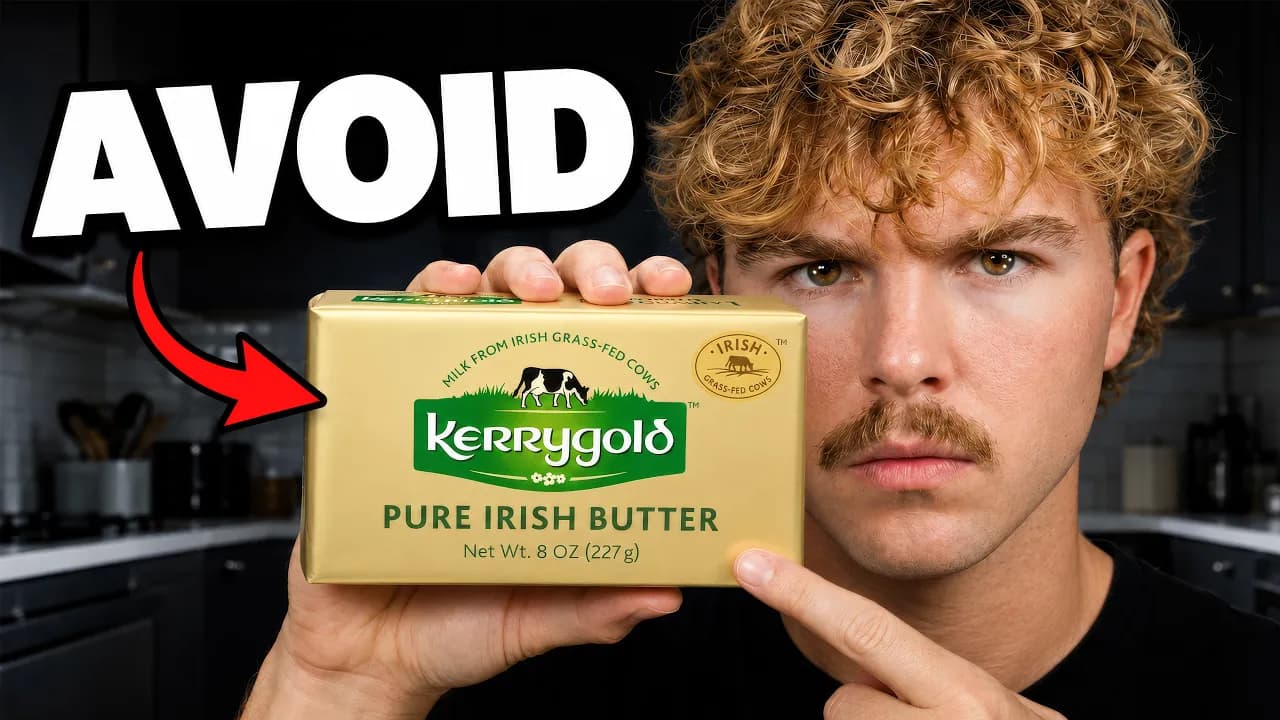
Watch the full analysis
Not All Butter Is Created Equal—Here’s What to Avoid
Creatine Boosts Women’s Brainpower During Sleep Deprivation
A surprising discovery in cognitive science: a single 0.2 g/kg dose of creatine significantly improves language processing speed and logical reasoning in women during sleep deprivation—up to 18% and 12% respectively—while men show minimal gains. This suggests females may have lower baseline creatine stores in the brain, making them more responsive to supplementation under metabolic stress.
Crucially, creatine didn’t reduce subjective fatigue. That means its cognitive benefits aren’t from feeling less tired—they’re from directly fueling brain energy systems. This has major implications for shift workers, new parents, or athletes in recovery. And while higher doses (0.35 g/kg) show stronger effects, even this modest dose delivers measurable protection.
Women may gain disproportionate cognitive protection from creatine during sleep loss—making it a targeted nootropic for female brain resilience.
Women may gain disproportionate cognitive protection from creatine during sleep loss—making it a targeted nootropic for female brain resilience.
See the evidence breakdown
“Creatine Boosts Women’s Brainpower During Sleep Deprivation”
Women may gain disproportionate cognitive protection from creatine during sleep loss—making it a targeted nootropic for female brain resilience.
Creatine’s Cognitive Edge Isn’t About Feeling Less Tired
Contrary to popular belief, creatine doesn’t make you feel less fatigued during sleep deprivation—it makes your brain work better despite fatigue. A recent study confirmed that a 0.2 g/kg dose improved cognitive performance without reducing subjective tiredness scores. This points to a direct metabolic mechanism: creatine replenishes ATP in neurons, allowing the brain to maintain function even when energy reserves are low.
This distinction is critical. Many supplements promise ‘energy boosts’—but creatine works differently. It’s not a stimulant. It’s a cellular battery charger. For anyone pushing through late nights or early workouts, this means creatine isn’t about feeling good—it’s about performing well when you’re running on empty.
Creatine enhances brain performance under stress by fueling cellular energy—not by masking fatigue.
Creatine enhances brain performance under stress by fueling cellular energy—not by masking fatigue.
See the evidence breakdown
“Creatine’s Cognitive Edge Isn’t About Feeling Less Tired”
Creatine enhances brain performance under stress by fueling cellular energy—not by masking fatigue.
Creatine Dose Matters: Bigger Isn’t Always Better—But It Helps
The cognitive benefits of creatine during sleep deprivation follow a clear dose-response curve: 0.35 g/kg outperforms 0.2 g/kg in protecting memory and reaction time. But here’s the twist—0.2 g/kg still delivers meaningful gains, making it a practical, low-risk option for daily use. Higher doses may be overkill for most, especially without medical supervision.
This isn’t about maximizing performance at all costs. It’s about finding the sweet spot: enough to protect cognition, not so much that it strains kidneys or causes bloating. For non-athletes, 15g daily (≈0.2 g/kg for a 75kg person) is likely sufficient. Athletes or those under chronic stress may benefit from 20–25g.
A moderate creatine dose offers robust cognitive protection—no need to overdo it.
A moderate creatine dose offers robust cognitive protection—no need to overdo it.
See the evidence breakdown
“Creatine Dose Matters: Bigger Isn’t Always Better—But It Helps”
A moderate creatine dose offers robust cognitive protection—no need to overdo it.
The bottom line
Today’s findings reveal a powerful theme: small, consistent dietary choices—whether it’s a handful of walnuts or a teaspoon of creatine—can have outsized impacts on longevity and brain function. Walnuts fight aging at the molecular level, butter choices silently shape vascular health, and creatine acts as a precision tool for cognitive resilience under stress. Science isn’t about dramatic fixes—it’s about the quiet, daily habits that compound into life-changing outcomes.
Topics
Sources & References
Not All Butter Is Created Equal—Here’s What to Avoid
Your butter choice isn’t just about taste—it’s a silent vote for your vascular health.
Walnuts May Slash Your Risk of Dying—Here’s the Science
Eating a small handful of walnuts daily may be one of the simplest, most powerful longevity hacks available.
Creatine Dose Matters: Bigger Isn’t Always Better—But It Helps
A moderate creatine dose offers robust cognitive protection—no need to overdo it.
Creatine’s Cognitive Edge Isn’t About Feeling Less Tired
Creatine enhances brain performance under stress by fueling cellular energy—not by masking fatigue.
Creatine Boosts Women’s Brainpower During Sleep Deprivation
Women may gain disproportionate cognitive protection from creatine during sleep loss—making it a targeted nootropic for female brain resilience.