Eggs, Sardines, and Leucine: What Science Says About Your Plate
May 23, 2026 | Lab Notes
From the editor
Every day, Fit Body Science analyzes new fitness and nutrition research — checking the evidence, scoring the claims, and separating what's backed by science from what's not. Here's what we found today.
Leucine Boosts Plant Protein to Whey’s Level in Muscle Building
A new study reveals that a plant-based protein blend—pea and canola—can match the muscle-building power of whey when fortified with leucine. In young men and women, 20 grams of this blend with an added 1.5 grams of leucine stimulated muscle protein synthesis (MPS) just as effectively as the same amount of whey protein over five hours. This is significant for plant-based eaters who’ve long faced skepticism about protein quality.
The key appears to be leucine, a branched-chain amino acid that acts as a trigger for muscle growth. While whey naturally contains high levels of leucine, many plant proteins fall short. By fortifying the blend, researchers effectively closed the anabolic gap. This suggests that protein quality isn’t just about the source—it’s about amino acid optimization.
Importantly, the study found that despite whey causing a higher insulin spike, MPS responses were similar, indicating insulin isn’t the main driver of acute muscle growth in this context. For athletes and fitness enthusiasts, this means well-formulated plant proteins can be just as effective.
**Adding 1.5g of leucine to a pea-and-canola protein blend matches whey protein in stimulating muscle protein synthesis in young adults.**
Read the full study review
Leucine Boosts Plant Protein to Whey’s Level in Muscle Building
**Adding 1.5g of leucine to a pea-and-canola protein blend matches whey protein in stimulating muscle protein synthesis in young adults.**
Calorie Restriction Shrinks Organs, Not Just Fat
The CALERIE 2 ancillary analysis delivers a surprising insight: long-term caloric restriction doesn’t just reduce fat and muscle—it shrinks vital organs too. Using MRI scans, researchers found that after two years of eating 25% fewer calories, participants experienced significant reductions in liver, kidney, brain, and heart mass. These changes go beyond what would be expected from weight loss alone and may explain the persistent metabolic slowdown seen in sustained dieting.
This organ-level adaptation suggests the body is doing more than just conserving energy—it’s downsizing critical systems to survive scarcity. The implications are profound for long-term weight management: metabolic adaptation is partly structural, not just hormonal or behavioral.
While caloric restriction has known longevity benefits in animals, this finding cautions against extreme or prolonged dieting in humans. The body’s survival mechanisms may undermine both performance and health if pushed too far.
**Long-term caloric restriction reduces organ size, contributing to metabolic adaptation beyond changes in body composition.**
Read the full study review
Calorie Restriction Shrinks Organs, Not Just Fat
**Long-term caloric restriction reduces organ size, contributing to metabolic adaptation beyond changes in body composition.**
Omega-3s May Quiet Inflammation in Heart Patients
For patients with coronary artery disease already on statins, adding omega-3 fatty acids (EPA and DHA) may offer extra anti-inflammatory benefits. A secondary analysis of a randomized trial found that supplementation reduced both systemic and oral inflammatory markers—important because oral inflammation is linked to cardiovascular risk.
While statins lower cholesterol and inflammation, they don’t eliminate risk. Omega-3s appear to target residual inflammation, particularly C-reactive protein and interleukin-6, through pathways independent of lipid control. This supports the idea of ‘residual inflammatory risk’ and suggests nutrition can play a targeted role in cardiovascular care.
Though the study focused on a clinical population, it hints at broader benefits for chronic inflammation. For now, the strongest case for omega-3s remains in high-risk individuals, but the anti-inflammatory mechanism may extend to metabolic and musculoskeletal health.
**EPA and DHA supplementation reduces systemic and oral inflammatory markers in coronary artery disease patients on statins.**
Read the full study review
Omega-3s May Quiet Inflammation in Heart Patients
**EPA and DHA supplementation reduces systemic and oral inflammatory markers in coronary artery disease patients on statins.**
Creatine’s Power Lies in ATP Recycling
One of the most well-supported supplements in sports science, creatine, continues to dominate with a perfect pro score. Its mechanism? Enhancing phosphocreatine stores in muscles, which rapidly regenerate ATP—the energy currency of cells—during short bursts of intense activity like sprinting or weightlifting.
This means more power, faster recovery between reps, and over time, greater gains in strength and muscle mass. The effect is so robust it’s been shown across ages and fitness levels. Creatine doesn’t just fuel performance—it builds capacity.
Despite myths about dehydration or kidney harm, decades of research confirm its safety for healthy individuals. For anyone doing high-intensity training, creatine remains the gold standard for evidence-based supplementation.
**Creatine boosts strength and muscle by enhancing phosphocreatine stores to regenerate ATP during high-intensity exercise.**
See the evidence breakdown
“Creatine’s Power Lies in ATP Recycling”
**Creatine boosts strength and muscle by enhancing phosphocreatine stores to regenerate ATP during high-intensity exercise.**
Why Leucine Is the Master Switch for Muscle Growth
Leucine isn’t just another amino acid—it’s a signaling molecule that directly activates the mTORC1 pathway, the central regulator of muscle protein synthesis. When leucine levels rise in the blood after protein intake, it flips the switch that tells muscle cells to start building.
This explains why protein quality matters: without enough leucine, the signal is weak, even if total protein is adequate. In plant proteins like pea and canola, leucine is often the limiting factor. Adding just 1.5 grams can increase MPS by 16% and plasma leucine by 42%, closing the gap with animal proteins.
The takeaway? It’s not just how much protein you eat—it’s whether it contains enough leucine to trigger growth.
**Leucine directly activates the mTORC1 pathway, initiating muscle protein synthesis in humans.**
See the evidence breakdown
“Why Leucine Is the Master Switch for Muscle Growth”
**Leucine directly activates the mTORC1 pathway, initiating muscle protein synthesis in humans.**
Eating 10 Eggs Before Bed: Viral, But Science-Backed?
A trending video titled I Study Biology, Here's Why I Eat 10 Eggs Before Bed has gained strong viewer approval, with a pro score of 39.0 to 4.0. The creator claims that high egg intake before sleep supports muscle recovery, satiety, and nutrient density—citing eggs’ complete amino acid profile and choline content.
While eggs are undeniably nutritious, consuming 10 at once raises concerns about cholesterol load, digestibility, and caloric surplus. No summary or study is available to validate the specific claim, and such high intake isn’t supported by current protein timing research, which suggests 20–40g per meal is optimal.
Still, the video’s popularity reflects growing interest in high-protein, whole-food strategies. But until evidence emerges, extreme intakes should be approached with caution.
**A viral claim promoting 10 eggs before bed has high viewer support but lacks scientific validation or summary.**

Watch the full analysis
Eating 10 Eggs Before Bed: Viral, But Science-Backed?
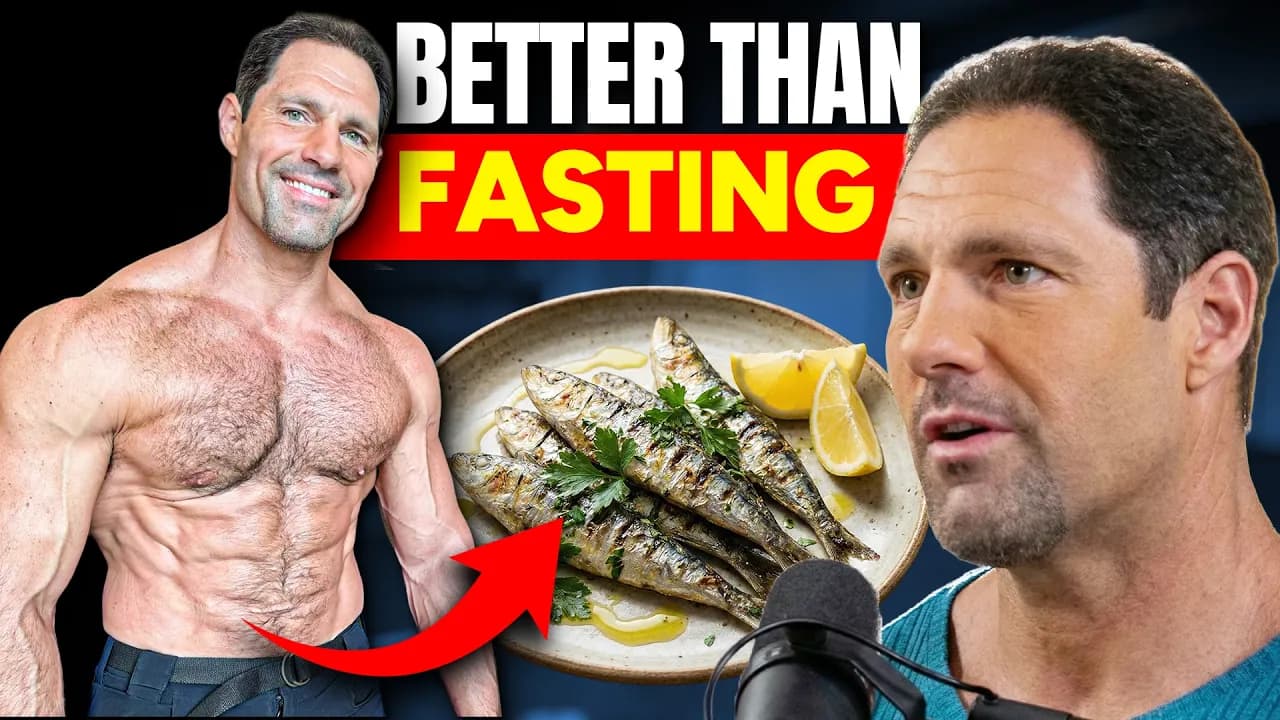
Sardines vs. Fasting: A Bold Claim Gains Traction
A striking video titled 36 Hours of Eating Sardines is Better than a 3-Day Fast for Autophagy and Visceral Fat has drawn attention, scoring 38.0 pro to 11.0 against. The creator argues that continuous sardine consumption—rich in omega-3s, protein, and selenium—triggers autophagy (cellular cleanup) more effectively than fasting, while also burning belly fat.
Autophagy is typically induced by nutrient deprivation, not constant intake, making this claim counterintuitive. While sardines are a nutritional powerhouse, no known mechanism supports continuous eating as superior to fasting for autophagy. The video lacks a summary or cited evidence.
Nonetheless, the idea taps into a growing desire for food-centric health strategies over deprivation. But until peer-reviewed data supports it, this sardine protocol remains speculative.
**A popular claim that 36 hours of sardine eating beats fasting for autophagy lacks scientific summary or validation.**
Watch the full analysis
Sardines vs. Fasting: A Bold Claim Gains Traction
The bottom line
Today’s findings highlight a central theme: the power of specific nutrients to drive physiological change. From leucine’s role as a muscle trigger to omega-3s quieting inflammation and organs adapting to calorie deficits, the details matter. While viral claims about eggs and sardines capture attention, they remind us to separate popularity from proof. Science continues to refine not just what we eat, but how and why it works.
Topics
Sources & References
Eating 10 Eggs Before Bed: Viral, But Science-Backed?
**A viral claim promoting 10 eggs before bed has high viewer support but lacks scientific validation or summary.**
Sardines vs. Fasting: A Bold Claim Gains Traction
**A popular claim that 36 hours of sardine eating beats fasting for autophagy lacks scientific summary or validation.**
Leucine Boosts Plant Protein to Whey’s Level in Muscle Building
**Adding 1.5g of leucine to a pea-and-canola protein blend matches whey protein in stimulating muscle protein synthesis in young adults.**
Calorie Restriction Shrinks Organs, Not Just Fat
**Long-term caloric restriction reduces organ size, contributing to metabolic adaptation beyond changes in body composition.**
Omega-3s May Quiet Inflammation in Heart Patients
**EPA and DHA supplementation reduces systemic and oral inflammatory markers in coronary artery disease patients on statins.**
Creatine’s Power Lies in ATP Recycling
**Creatine boosts strength and muscle by enhancing phosphocreatine stores to regenerate ATP during high-intensity exercise.**
Why Leucine Is the Master Switch for Muscle Growth
**Leucine directly activates the mTORC1 pathway, initiating muscle protein synthesis in humans.**