Jeremy Ethier
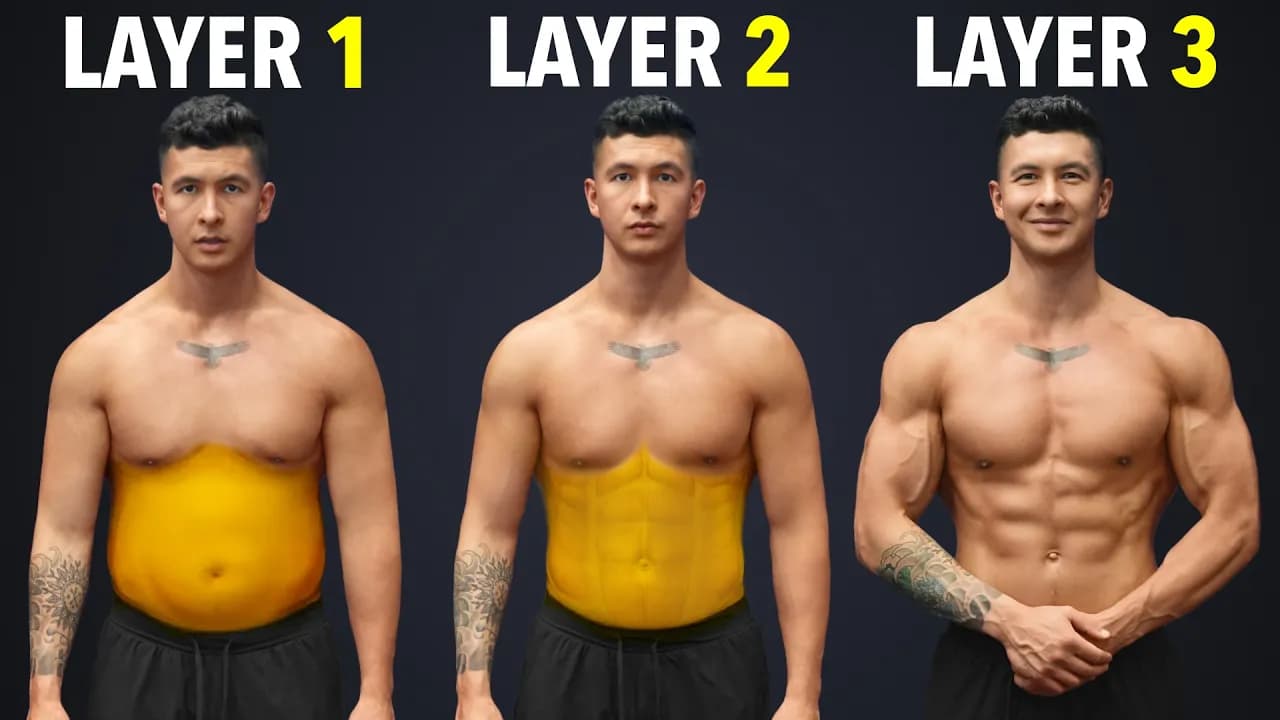
Resistance training during caloric maintenance can support muscle growth while burning stored fat, especially in individuals with higher body fat.
Evidence supports that muscle gain and fat loss can occur together under maintenance calories, but only when sufficient body fat is present.
We checked the science
our breakdown of the video
10 claims, each mapped to its moment in the video
If you exercise hard but don’t eat extra calories, your body can use stored fat to build muscle.
Shows a real connection between these things — genuine evidence, though it can't prove cause and effect, and stronger studies could still change it.
You don’t need a lot of protein to build muscle—just 0.7 grams per pound of body weight is enough to grow as much muscle as possible.
Not enough evidence yet — take this with caution.
Eating more carbs gives you more energy to lift heavier and work out longer.
Evidence points in both directions — no clear conclusion yet.
New people who lift weights and eat a lot can get really strong and muscular without getting fat.
Not enough evidence yet — take this with caution.
New lifters can gain muscle fast with lots of food, but experienced lifters mostly gain fat when they eat a lot.
Not enough evidence yet — take this with caution.
If you eat too much to gain muscle, you might get so fat that you never bother to lose it.
Not enough evidence yet — take this with caution.
Your body can use fat you already have as fuel to build new muscle.
Good evidence supports this claim, with little to contradict it.
When people with high body fat do resistance training while eating fewer calories, their muscle mass stays the same and their body fat decreases.
Multiple causal studies (randomized trials and reviews) support this claim.
If you’re getting stronger lifting the same weights, you’re probably gaining muscle—even if the scale doesn’t move.
Not enough evidence yet — take this with caution.
If you’re already skinny and lean, you can’t build muscle well unless you eat more.
Not enough evidence yet — take this with caution.
Key Takeaways
Summary
Based on the video transcript only.
- 1Problem: People want to gain muscle but often end up gaining too much fat when they eat too many calories.
- 2Core methods: Lean bulk, fast bulk, maingain.
- 3How methods work: Lean bulk adds 250 calories above maintenance to slowly build muscle with little fat; fast bulk adds 500 calories to maximize energy for workouts and muscle growth but causes more fat gain; maingain eats at maintenance calories and uses stored body fat to fuel muscle growth.
- 4Expected outcomes: Lean bulk gained 1.35 lbs muscle with minimal fat; fast bulk gained 1.8 lbs muscle but 3x more fat; maingain gained 1.1 lbs muscle and lost fat.
- 5Implementation timeframe: Results were measured every 30 days over a 90-day period, with muscle gains visible within 4–6 weeks and fat changes detectable via measurements.