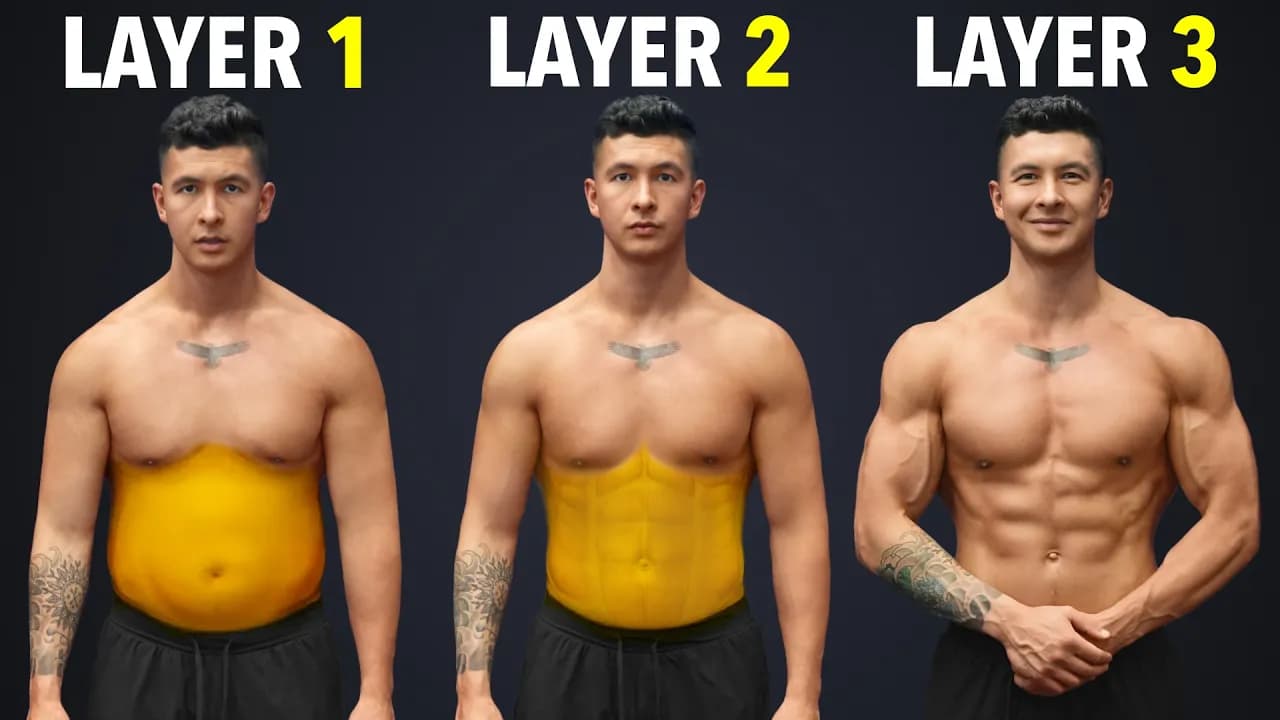
Spot reduction doesn't work; fat loss requires a calorie deficit, not ab workouts or cardio alone.
Original: Targeting Belly Fat Is POSSIBLE?! (60-Day MRI Experiment)
TL;DR
Evidence shows fat loss occurs systemically through energy balance, not localized exercise, with strength training and diet being key.
Quick Answer
No, targeted belly fat loss through ab exercises and cardio alone is not effective. The 60-day MRI experiment showed that a spot reduction protocol combining cardio and ab training resulted in negligible belly fat loss (0.3% for Dennis, 3% for Vicky), with fat loss occurring proportionally across the body. The real fat loss came from calorie tracking and strength training in Phase 2, where belly fat dropped by 26.3% (Dennis) and 30% (Vicky) without any direct ab training or cardio.
Claims (10)
1. If you burn the same number of calories overall, doing both strength training and cardio does not lead to more fat loss in specific areas than doing cardio alone.
2. Men and women tend to store body fat in different areas: men more around the abdomen, and women more around the hips and thighs.
3. To lose body fat, you must consume fewer calories than you expend, and the size of this calorie deficit has a greater impact on fat loss than whether you do running, weightlifting, or other forms of exercise.
4. To see abdominal muscles, a person needs to have a low enough level of fat over the abdomen and enough muscle mass in the rectus abdominis.
5. If fat is released from fat stores but not burned for energy, the total amount of fat in the body does not decrease.
6. When people reduce their calorie intake and do strength training, a greater share of the weight they lose comes from fat rather than muscle.
7. When people burn calories through cardiovascular exercise, their bodies often respond by increasing food intake or reducing daily movement, which can limit the amount of fat lost overall.
8. Exercising a specific muscle group increases blood flow and fat breakdown in that area, but it does not lead to greater fat loss from that area unless the body is in a state of overall calorie deficit.
9. Fat cells in the lower abdomen have more alpha-2 receptors than beta receptors, which makes them less responsive to signals that trigger fat breakdown.
10. The rectus abdominis muscle, commonly known as the abs, has differences in thickness and gene activity between its upper and lower parts, with the upper portion generally being thicker and more consistent in size across individuals.
Key Takeaways
- •Problem: Many people believe doing lots of crunches and cardio can specifically burn fat from their belly, but this is a myth.
- •Core methods: Calorie tracking (eating based on body weight × 12), strength training (full-body or upper/lower splits), and direct ab exercises (weighted crunches and reverse crunches).
- •How methods work: Calorie tracking ensures you burn more than you eat, forcing your body to use stored fat. Strength training builds muscle and increases metabolism. Direct ab exercises grow the abdominal muscles but don’t burn belly fat directly.
- •Expected outcomes: Without calorie control and lifting, belly fat barely changed. With calorie tracking and lifting, belly fat dropped by 26–30% in one month, and muscle grew or was maintained.
- •Implementation timeframe: Results were measured after 30 days per phase, with noticeable fat loss and muscle changes visible by the end of each 30-day period.

Overview
The problem of stubborn belly fat has led many to believe targeted exercises like crunches and cardio can selectively burn fat from the abdomen. This video presents a 60-day MRI-based experiment testing this claim by comparing a spot reduction protocol (cardio + ab training) against a calorie-controlled strength training protocol. The solution preview is that systemic fat loss through diet and resistance training, not localized exercise, is the only effective method for reducing belly fat.
Key Terms
How to Apply
- 1.Calculate your daily calorie target by multiplying your body weight in pounds by 12 (e.g., 170 lbs = 2,040 calories/day).
- 2.Track every food and drink consumed using a calorie-tracking app to stay within your daily calorie target.
- 3.Prioritize protein intake by including a fist-sized portion of lean protein (e.g., chicken, fish, shrimp) in every meal to protect muscle.
- 4.Perform strength training 3–4 days per week: either a 3-day full-body routine (Vicky) or a 4-day upper/lower split (Dennis), focusing on compound lifts like squats, deadlifts, and presses.
- 5.If you want visible abs, add direct ab training: 4 sets of weighted crunches for upper abs and 4 sets of reverse crunches for lower abs, 2–3 times per week, increasing weight or reps each session.
- 6.Avoid sugary drinks and high-calorie sauces when eating out; opt for sauces on the side and choose lean proteins like fish or shrimp over fatty meats like salmon if calories are tight.
Following these steps for 30 days will result in significant belly fat reduction (26–30% based on the study), muscle gain or maintenance, and improved body composition—without needing to do excessive cardio or spot-reduction ab workouts. Direct ab training will enhance abdominal muscle size but is not required for fat loss.
Studies from Description (1)
Claims (10)
1. If you burn the same number of calories overall, doing both strength training and cardio does not lead to more fat loss in specific areas than doing cardio alone.
2. Men and women tend to store body fat in different areas: men more around the abdomen, and women more around the hips and thighs.
3. To lose body fat, you must consume fewer calories than you expend, and the size of this calorie deficit has a greater impact on fat loss than whether you do running, weightlifting, or other forms of exercise.
4. To see abdominal muscles, a person needs to have a low enough level of fat over the abdomen and enough muscle mass in the rectus abdominis.
5. If fat is released from fat stores but not burned for energy, the total amount of fat in the body does not decrease.
6. When people reduce their calorie intake and do strength training, a greater share of the weight they lose comes from fat rather than muscle.
7. When people burn calories through cardiovascular exercise, their bodies often respond by increasing food intake or reducing daily movement, which can limit the amount of fat lost overall.
8. Exercising a specific muscle group increases blood flow and fat breakdown in that area, but it does not lead to greater fat loss from that area unless the body is in a state of overall calorie deficit.
9. Fat cells in the lower abdomen have more alpha-2 receptors than beta receptors, which makes them less responsive to signals that trigger fat breakdown.
10. The rectus abdominis muscle, commonly known as the abs, has differences in thickness and gene activity between its upper and lower parts, with the upper portion generally being thicker and more consistent in size across individuals.
Claims (10)
1. If you burn the same number of calories overall, doing both strength training and cardio does not lead to more fat loss in specific areas than doing cardio alone.
2. Men and women tend to store body fat in different areas: men more around the abdomen, and women more around the hips and thighs.
3. To lose body fat, you must consume fewer calories than you expend, and the size of this calorie deficit has a greater impact on fat loss than whether you do running, weightlifting, or other forms of exercise.
4. To see abdominal muscles, a person needs to have a low enough level of fat over the abdomen and enough muscle mass in the rectus abdominis.
5. If fat is released from fat stores but not burned for energy, the total amount of fat in the body does not decrease.
6. When people reduce their calorie intake and do strength training, a greater share of the weight they lose comes from fat rather than muscle.
7. When people burn calories through cardiovascular exercise, their bodies often respond by increasing food intake or reducing daily movement, which can limit the amount of fat lost overall.
8. Exercising a specific muscle group increases blood flow and fat breakdown in that area, but it does not lead to greater fat loss from that area unless the body is in a state of overall calorie deficit.
9. Fat cells in the lower abdomen have more alpha-2 receptors than beta receptors, which makes them less responsive to signals that trigger fat breakdown.
10. The rectus abdominis muscle, commonly known as the abs, has differences in thickness and gene activity between its upper and lower parts, with the upper portion generally being thicker and more consistent in size across individuals.
Related Content
Claims (10)
Exercising a specific muscle group increases blood flow and fat breakdown in that area, but it does not lead to greater fat loss from that area unless the body is in a state of overall calorie deficit.
To lose body fat, you must consume fewer calories than you expend, and the size of this calorie deficit has a greater impact on fat loss than whether you do running, weightlifting, or other forms of exercise.
If fat is released from fat stores but not burned for energy, the total amount of fat in the body does not decrease.
If you burn the same number of calories overall, doing both strength training and cardio does not lead to more fat loss in specific areas than doing cardio alone.
When people reduce their calorie intake and do strength training, a greater share of the weight they lose comes from fat rather than muscle.