Uncited study references: Creator repeatedly references 'Dr. Valter Longo's work', 'Dr. Dom D'Agostino's research', and 'literature' without naming specific studies, journals, authors, or years. No study is cited with verifiable identifiers (e.g., DOI, journal name, publication date).
Thomas DeLauer
Carb restriction reliably triggers ketosis and fat burning, but hunger suppression and sardine nutrient bioavailability lack direct human evidence.
Core metabolic claims are strongly supported by clinical trials, while nutrient-specific and hunger-related assertions remain unverified.
We checked the science
our breakdown of the video
10 claims, each mapped to its moment in the video
When no carbohydrates are consumed, blood glucose levels decrease and glucagon levels increase.
Multiple causal studies (randomized trials and reviews) support this claim.
When carbohydrate intake is low, the liver breaks down fatty acids to produce ketone bodies.
Multiple causal studies (randomized trials and reviews) support this claim.
Eating a diet very low in carbohydrates and restricted in calories results in the body producing ketones as a fuel source within one day.
Multiple causal studies (randomized trials and reviews) support this claim.
Eating fewer calories while keeping protein and carbohydrate intake at moderate levels lowers insulin and IGF-1 levels and triggers autophagy.
Strong evidence from clinical studies backs this claim.
Autophagy is a natural process in cells that breaks down and clears out damaged parts to maintain cellular health.
Multiple causal studies (randomized trials and reviews) support this claim.
Consuming dietary protein and omega-3 fatty acids reduces ghrelin secretion and lowers hunger levels.
Not enough evidence yet — take this with caution.
People in nutritional ketosis report clearer thinking and less brain fog compared to those not in ketosis.
Multiple causal studies (randomized trials and reviews) support this claim.
When insulin levels remain low over time, the body reduces fat storage and increases the breakdown and use of fat for energy.
Multiple causal studies (randomized trials and reviews) support this claim.
When insulin levels remain low for an extended period due to reduced calorie intake, liver fat and visceral fat decrease.
Multiple causal studies (randomized trials and reviews) support this claim.
Sardines contain absorbable amounts of omega-3 fatty acids, vitamin B12, vitamin D, calcium, selenium, and all essential amino acids.
Not enough evidence yet — take this with caution.
Key Takeaways
Summary
Based on the video transcript only.
- 1Your body switches to burning fat for fuel because you eat zero carbs, which drops insulin and turns on ketosis.
- 2You eat sardines—rich in protein, omega-3s, B12, calcium, and vitamin D—which keeps you full and nourished despite eating few calories.
- 3Your cells clean out damaged parts (autophagy) because insulin and growth signals are low, but you don’t lose muscle because you’re getting enough protein and nutrients.
- 4You feel mentally sharp and energetic because your brain runs on ketones and omega-3s instead of sugar.
- 5After three days, you must break the fast with lean protein like whey—not carbs or fatty foods—to rebuild muscle without reversing the benefits.
Related videos
Thomas DeLauer
You’ll Never Get Hungry During a Fast Again (16 Hours or More)
Thomas DeLauer
The Literal Best Source of Protein for Losing Fat and Building Muscle (hands down)

Thomas DeLauer
This Makes Sedentary People Lose Belly Fat (without exercise)
Thomas DeLauer
They Were Wrong About Fasting (this study misled us)
Thomas DeLauer
They Tried to Ban NAC… (because it works)
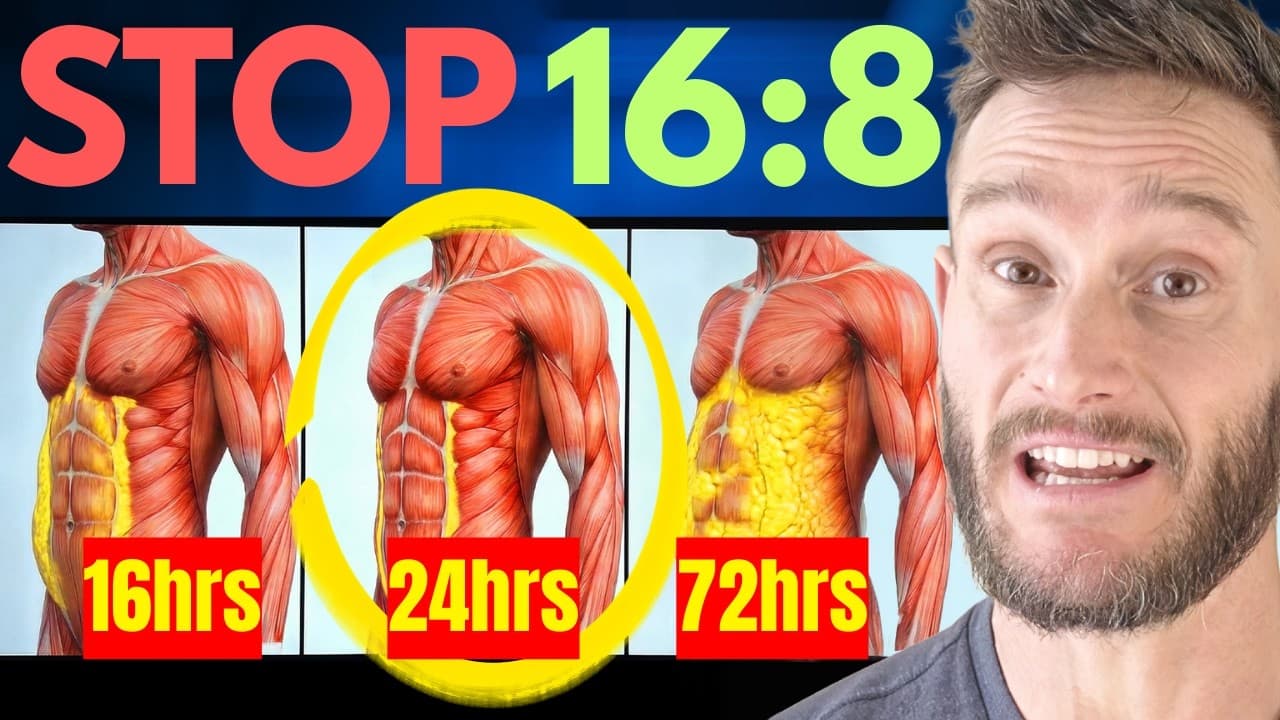
Thomas DeLauer