The Claim
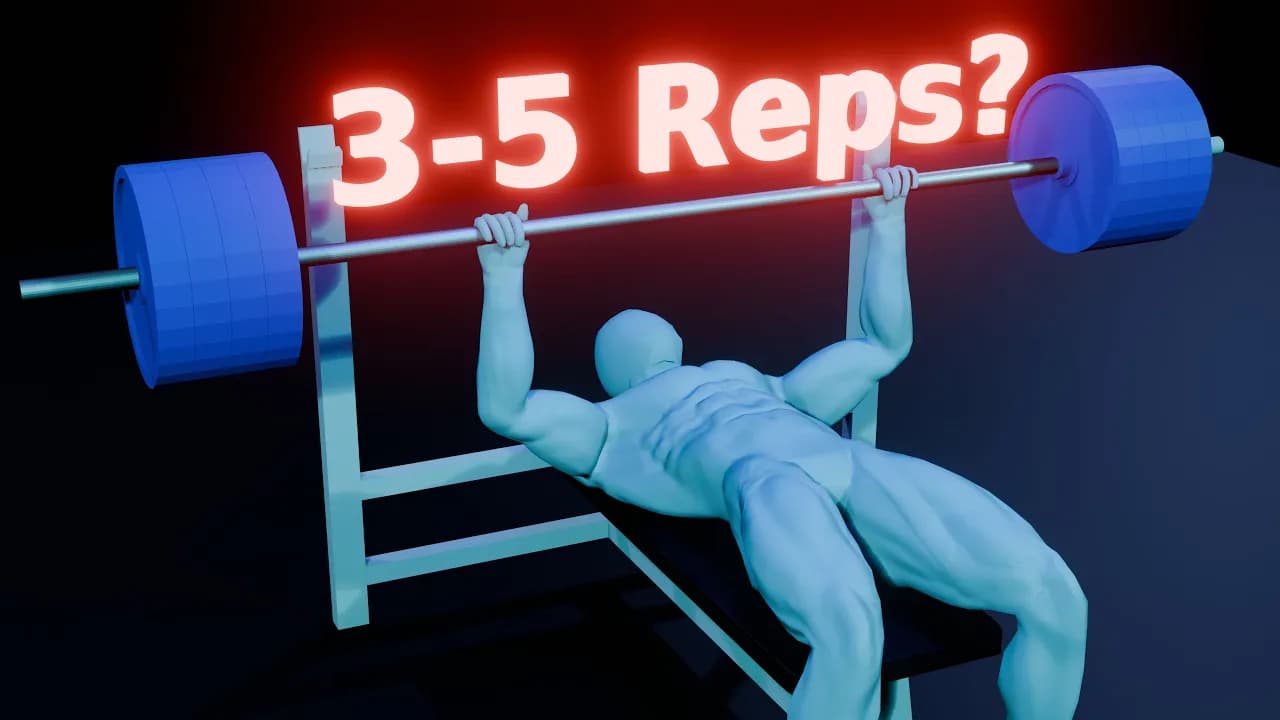
Different repetition ranges in resistance training produce specific adaptations: low repetitions (3-5 repetitions) maximize strength gains, high repetitions (20-28 repetitions) maximize endurance and aerobic capacity, while intermediate repetitions (3-11 repetitions) maximize muscle hypertrophy.
What the research says
Challenges is higher
Challenge is ahead, but a single strong supporting study can change this.
These are independent scores, not a percentage. Higher-grade studies count more, so a single strong opposing study can outweigh several weaker ones.
When you lift weights, doing a few heavy reps makes you stronger, doing lots of light reps helps your stamina, and doing a medium amount builds bigger muscles.
See the scientific wording
Different repetition ranges in resistance training produce specific adaptations: low reps (3-5) maximize strength gains, high reps (20-28) maximize endurance and aerobic capacity, while intermediate reps (3-11) maximize muscle hypertrophy.
When you lift heavy weights for few reps, the force on muscle fibers triggers signals that make nerves fire more strongly, increasing strength. When you lift light weights for many reps, the buildup of metabolic byproducts activates pathways that improve the muscle's ability to use oxygen and resist fatigue. When you lift moderate weights to failure, muscle repair cells multiply and reorganize the tissue structure to support larger fiber size.
What the research says
5 studiesThis study found that lifting light weights for many reps and heavy weights for few reps both made people stronger and their muscles bigger — even though the claim says only heavy weights make you strong and medium weights make you big. So the study contradicts that idea.
The study looked at lifting weights with different rep counts but didn't test the high reps (20-28) for endurance like the claim says, and it found that lower reps were better for strength than the hypertrophy rep range, which partly goes against the claim.
The study shows that lifting heavy weights makes you stronger, but muscle growth is similar no matter how heavy you lift if the total work is the same. It doesn't test endurance at all, so the claim is only partly right and goes too far.
The study says that doing different numbers of reps in weight training doesn't always lead to just one specific result like more strength or endurance, which goes against the claim that each rep range has a special benefit.
Related videos
Score breakdown, mechanism chain, raw evidence, ideal studies needed & 5 supporting studies
Not medical advice. For informational purposes only. Always consult a qualified healthcare professional before making health decisions.