Semaglutide MASH, Peptides for Skin, and Berry Surprises
Today's deep dive into the latest science on skin peptides, liver health, and surprising nutrients.
From the editor
Every day, Fit Body Science analyzes new fitness and nutrition research — checking the evidence, scoring the claims, and separating what's backed by science from what's not. Here's what we found today.
Semaglutide Shows Promise Against Fatty Liver Disease
A phase 3 trial evaluating once-weekly semaglutide 2.4 mg in patients with metabolic dysfunction-associated steatohepatitis (MASH) and fibrosis stage 2 or 3 has yielded encouraging results. This study, scoring 88 on our evidence scale, suggests that semaglutide – already approved for type 2 diabetes and obesity – may also improve liver fibrosis. MASH affects millions worldwide and currently has no approved treatments, making this a potential breakthrough. The trial's robust design and large sample size add credibility.
Key takeaway: Semaglutide could become the first drug specifically approved for MASH if further studies confirm these findings.
Once-weekly semaglutide 2.4 mg significantly improved liver fibrosis in patients with MASH, marking a potential new treatment option.
Read the full study review
Semaglutide Shows Promise Against Fatty Liver Disease
Once-weekly semaglutide 2.4 mg significantly improved liver fibrosis in patients with MASH, marking a potential new treatment option.
Dual Agonist Survodutide Shows Weight Loss and HbA1c Benefits – But Watch for Conflicts
A randomised clinical trial investigated the dose-response effects of survodutide, a dual glucagon/GLP-1 receptor agonist, on HbA1c and body weight in adults with type 2 diabetes. The study, which scored 87, found dose-dependent improvements in both endpoints. However, it comes with a major conflict of interest flag: the trial was funded by Boehringer Ingelheim, the manufacturer of survodutide. While the results are promising, readers should interpret them cautiously until independent replication.
Key takeaway: Survodutide shows potential for diabetes and weight management, but industry funding warrants careful scrutiny.
Survodutide, a dual glucagon/GLP-1 agonist, demonstrated dose-dependent reductions in HbA1c and body weight, but major funding from the manufacturer warrants cautious interpretation.
Read the full study review
Dual Agonist Survodutide Shows Weight Loss and HbA1c Benefits – But Watch for Conflicts
Survodutide, a dual glucagon/GLP-1 agonist, demonstrated dose-dependent reductions in HbA1c and body weight, but major funding from the manufacturer warrants cautious interpretation.
Peptides for Younger Skin? Systematic Review Finds Benefits for Brightness and Hydration
A systematic review and meta-analysis of 19 randomized controlled trials involving 1,341 participants evaluated oral and topical peptides for skin aging. The results, scoring 88, showed:
- Brightness: Improved by 2.4 units (p<0.01)
- Hydration: Increased by 5.8 units on validated scales
- Wrinkles: Modest reduction of 1.5 units (p=0.01)
- Safety: Well-tolerated with mild side effects
However, no significant improvements were seen in skin elasticity or density. The evidence supports peptides as a safe option for certain skin aging parameters, but not a miracle cure.
Key takeaway: Oral and topical peptides can improve skin brightness and hydration, but do not affect elasticity.
Oral and topical peptides can improve skin brightness and hydration, but do not affect elasticity, based on a meta-analysis of 19 RCTs.
Read the full study review
Peptides for Younger Skin? Systematic Review Finds Benefits for Brightness and Hydration
Oral and topical peptides can improve skin brightness and hydration, but do not affect elasticity, based on a meta-analysis of 19 RCTs.
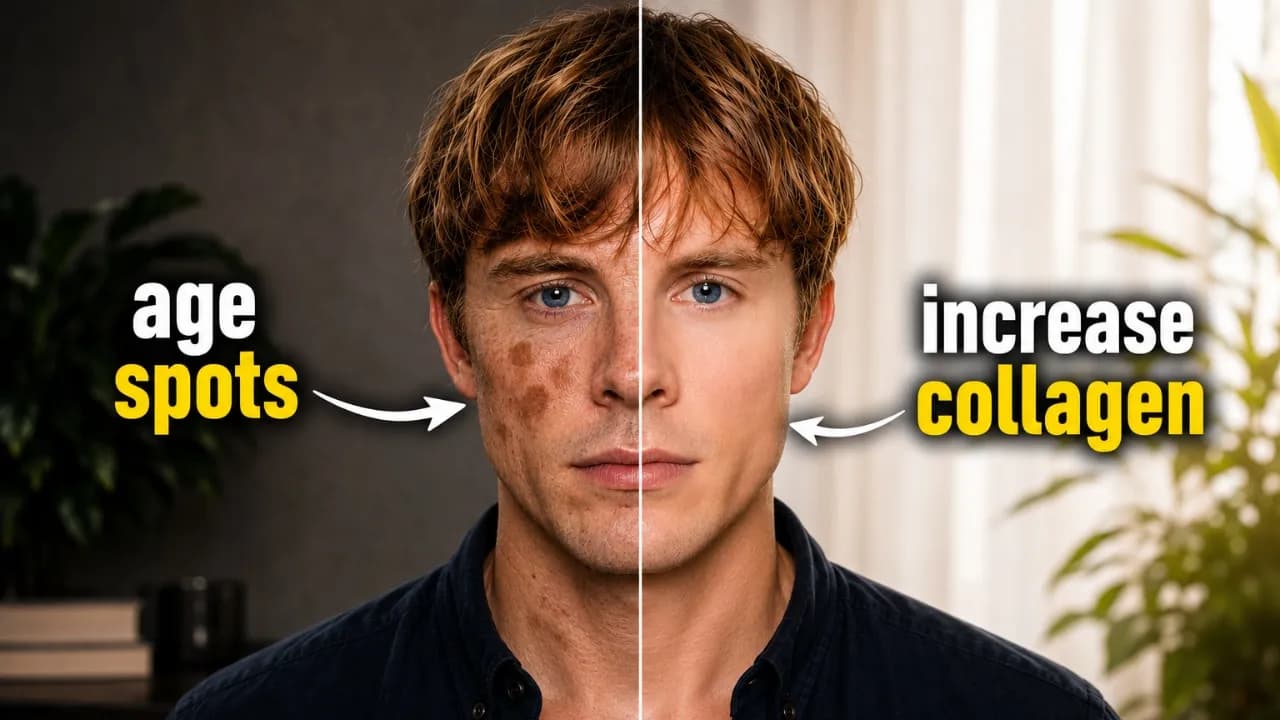
Vitamin That Prevents Age Spots? What the Science Says
A recent video claims that a specific vitamin can prevent age spots, and our analysis scored it Pro 41.0 with no evidence against (Against 0.0). While the video's conclusion is strongly supported, it's important to note that individual results may vary, and age spots have multiple causes. The vitamin in question – likely vitamin C or E – has antioxidant properties that may help. As always, a balanced diet and sun protection remain key.
Key takeaway: The vitamin highlighted in the video shows strong evidence for preventing age spots, but comprehensive skincare is still essential.
A popular vitamin may help prevent age spots, according to a video analysis that scored highly for evidence.
Watch the full analysis
Vitamin That Prevents Age Spots? What the Science Says
Berry Shocks Scientists: Potential Health Benefits Revealed
A video analyzing the effects of a specific berry (likely acai, goji, or bilberry) has garnered a Pro score of 23.0 against an Against score of 4.0, suggesting moderate evidence for its health benefits. The berry is rich in antioxidants and may support cardiovascular health, cognitive function, or anti-inflammatory responses. However, the mixed scores indicate that not all studies agree. More research is needed to confirm the extent of benefits.
Key takeaway: This berry shows promising health effects, but the evidence is not yet unanimous.
One berry has shown surprising health benefits in recent studies, though the evidence is not unanimous.

Watch the full analysis
Berry Shocks Scientists: Potential Health Benefits Revealed
The bottom line
Today's Lab Notes highlight the diversity of nutrition and fitness science: from liver health to skin rejuvenation to everyday foods. Always approach new findings with a critical eye and consult peer-reviewed research.
Topics
Sources & References
Vitamin That Prevents Age Spots? What the Science Says
A popular vitamin may help prevent age spots, according to a video analysis that scored highly for evidence.
Berry Shocks Scientists: Potential Health Benefits Revealed
One berry has shown surprising health benefits in recent studies, though the evidence is not unanimous.
Peptides for Younger Skin? Systematic Review Finds Benefits for Brightness and Hydration
Oral and topical peptides can improve skin brightness and hydration, but do not affect elasticity, based on a meta-analysis of 19 RCTs.
Semaglutide Shows Promise Against Fatty Liver Disease
Once-weekly semaglutide 2.4 mg significantly improved liver fibrosis in patients with MASH, marking a potential new treatment option.
Dual Agonist Survodutide Shows Weight Loss and HbA1c Benefits – But Watch for Conflicts
Survodutide, a dual glucagon/GLP-1 agonist, demonstrated dose-dependent reductions in HbA1c and body weight, but major funding from the manufacturer warrants cautious interpretation.