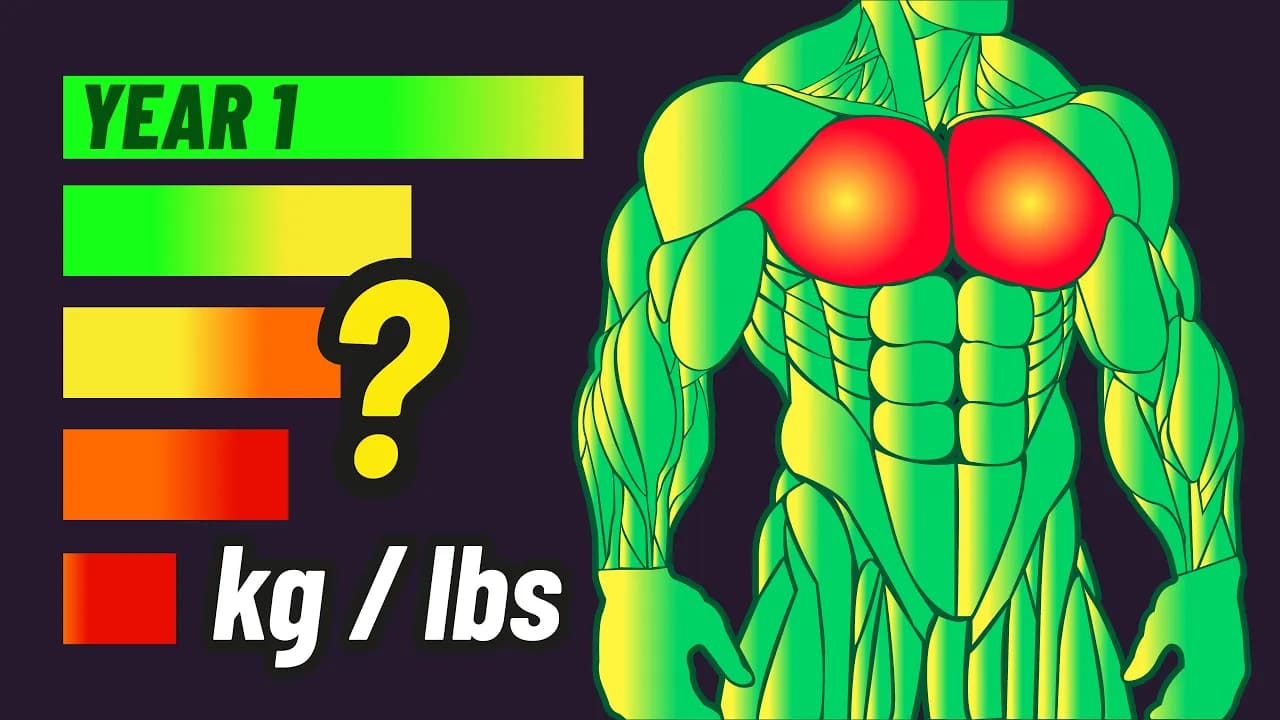
Research supports straight-leg raises, high volume, and inter-set stretching for calf growth.
Original: Bigger Calves: The ULTIMATE Guide (32 Studies)
TL;DR
Clinical trials strongly support knee-extended raises, higher weekly set volumes, and inter-set stretching for calf hypertrophy, while evidence for high-volume static stretching and lengthened partials remains mixed or contradictory.
Quick Answer
Straight leg calf raises are the most effective exercise for overall calf growth, particularly for the gastrocnemius, while bent leg variations may better isolate the soleus. To maximize growth, prioritize lengthened partials over full range of motion, use foot positions that target specific heads (feet out for medial, feet in for lateral), and aim for higher weekly volumes (around 12 sets) with reps between 6-35. Additionally, holding a stretch between sets can provide an extra growth stimulus.
Claims (10)
1. Doing more sets of calf exercises each week generally builds bigger calf muscles, but after a certain point, adding even more sets gives you less and less extra muscle growth.
2. If you swap out your usual rest breaks between weightlifting sets for stretches that include light weights, this claim says it will help your calf muscle grow bigger and get stronger. It suggests that active stretching beats just sitting still when trying to build calf size and power.
3. Doing a lot of long static stretches can actually build up and strengthen your calf muscles just as much as traditional weightlifting. It means stretching isn't just for flexibility—it can also help you get stronger and bigger muscles.
4. Doing calf raises with your knees straight builds more of your main calf muscle than doing them with your knees bent. This happens because keeping your knees straight puts the muscle in a better position to handle more tension and stretch, leading to bigger growth.
5. Doing calf raises with your knees bent builds more of the deep calf muscle than doing them with straight legs. This happens because bending your knees changes how the calf muscles stretch and push, making the exercise more effective for that specific muscle.
6. Doing weightlifting exercises by only moving the weight through the longest part of the stretch actually builds more calf muscle than lifting through the full range or only the shortened part.
7. Changing the direction you point your toes while doing calf raises changes which part of your calf muscle gets the most work. Pointing your toes out targets the inner calf, while pointing them in targets the outer calf.
8. Your calf muscle is strongest at pushing off or bending your knee when your leg is completely straight. As you bend your knee more, it gets much weaker because the muscle becomes too shortened to generate full force.
9. Compound leg exercises like squats and leg presses don't actually build much calf muscle because of how your body mechanics work and how little they activate that specific muscle. To really grow your calves, you need to do exercises that target them directly instead of relying on big compound movements.
10. If you lift weights until your muscles are completely exhausted, it doesn't matter whether you do 6 reps or 35 reps per set—you will build the exact same amount of calf muscle either way.
Key Takeaways
- •Problem: Calves are often considered one of the hardest muscles to grow, but they actually respond well to the right training methods.
- •Core methods: Straight leg calf raises, bent leg calf raises, targeted foot positioning (in/out), lengthened partial reps, high repetition ranges (6-35), high weekly volume (12+ sets), and stretching between sets.
- •How methods work: Straight leg raises fully stretch and load the main calf muscle (gastrocnemius), while bent leg raises bypass it to target the deeper soleus muscle. Pointing feet out or in shifts the workload to different calf heads. Training only the bottom half of the movement keeps the muscle under maximum tension at its longest length. Higher volumes and stretching between sets increase metabolic stress and time under tension to trigger more growth.
- •Expected outcomes: Significant increases in overall calf size, with targeted growth for both the inner and outer calf heads and the deep soleus muscle.
- •Implementation timeframe: Consistent training over 6-8 weeks is required to see measurable muscle growth, with higher volumes showing dose-dependent benefits over time.
Overview
The calves are notoriously difficult to grow, but research shows they respond robustly to specific hypertrophy protocols. This analysis reviews 32 studies to uncover the optimal methods for targeting the gastrocnemius and soleus, addressing knee angle, foot position, range of motion, volume, and supplementary techniques like stretching.
Key Terms
How to Apply
- 1.Step 1: Perform straight leg calf raises as your primary exercise, focusing on the bottom half of the movement (lengthened partials) to maximize tension at the stretched position.
- 2.Step 2: Rotate your feet outward to emphasize the inner calf (medial gastrocnemius) and inward to emphasize the outer calf (lateral gastrocnemius), or alternate these positions within your workout.
- 3.Step 3: Train in the 6-35 repetition range, taking every set close to muscular failure to ensure adequate stimulus for both slow and fast-twitch fibers.
- 4.Step 4: Aim for a higher weekly volume by performing 3-4 sets per session, three times per week, totaling around 12 weekly sets to maximize the dose-dependent growth response.
- 5.Step 5: After completing each set, immediately hold the stretched (bottom) position of the calf raise for 20-30 seconds before resting for the remainder of your rest period to enhance hypertrophy.
Following this protocol will systematically overload both the gastrocnemius and soleus muscles, leading to measurable increases in calf circumference and improved muscle definition within 6-8 weeks of consistent application.
Studies from Description (34)
Unprocessed Studies (3)
Claims (10)
1. Doing more sets of calf exercises each week generally builds bigger calf muscles, but after a certain point, adding even more sets gives you less and less extra muscle growth.
2. If you swap out your usual rest breaks between weightlifting sets for stretches that include light weights, this claim says it will help your calf muscle grow bigger and get stronger. It suggests that active stretching beats just sitting still when trying to build calf size and power.
3. Doing a lot of long static stretches can actually build up and strengthen your calf muscles just as much as traditional weightlifting. It means stretching isn't just for flexibility—it can also help you get stronger and bigger muscles.
4. Doing calf raises with your knees straight builds more of your main calf muscle than doing them with your knees bent. This happens because keeping your knees straight puts the muscle in a better position to handle more tension and stretch, leading to bigger growth.
5. Doing calf raises with your knees bent builds more of the deep calf muscle than doing them with straight legs. This happens because bending your knees changes how the calf muscles stretch and push, making the exercise more effective for that specific muscle.
6. Doing weightlifting exercises by only moving the weight through the longest part of the stretch actually builds more calf muscle than lifting through the full range or only the shortened part.
7. Changing the direction you point your toes while doing calf raises changes which part of your calf muscle gets the most work. Pointing your toes out targets the inner calf, while pointing them in targets the outer calf.
8. Your calf muscle is strongest at pushing off or bending your knee when your leg is completely straight. As you bend your knee more, it gets much weaker because the muscle becomes too shortened to generate full force.
9. Compound leg exercises like squats and leg presses don't actually build much calf muscle because of how your body mechanics work and how little they activate that specific muscle. To really grow your calves, you need to do exercises that target them directly instead of relying on big compound movements.
10. If you lift weights until your muscles are completely exhausted, it doesn't matter whether you do 6 reps or 35 reps per set—you will build the exact same amount of calf muscle either way.
Related Content
Claims (10)
Doing calf raises with your knees straight builds more of your main calf muscle than doing them with your knees bent. This happens because keeping your knees straight puts the muscle in a better position to handle more tension and stretch, leading to bigger growth.
Doing calf raises with your knees bent builds more of the deep calf muscle than doing them with straight legs. This happens because bending your knees changes how the calf muscles stretch and push, making the exercise more effective for that specific muscle.
Doing weightlifting exercises by only moving the weight through the longest part of the stretch actually builds more calf muscle than lifting through the full range or only the shortened part.
If you swap out your usual rest breaks between weightlifting sets for stretches that include light weights, this claim says it will help your calf muscle grow bigger and get stronger. It suggests that active stretching beats just sitting still when trying to build calf size and power.
Doing more sets of calf exercises each week generally builds bigger calf muscles, but after a certain point, adding even more sets gives you less and less extra muscle growth.
Studies (10)
Influence of Long-Lasting Static Stretching on Maximal Strength, Muscle Thickness and Flexibility
DOI: 10.3389/fphys.2022.878955
Squatting kinematics and kinetics and their application to exercise performance.
DOI: 10.1519/jsc.0b013e3181bac2d7
Resistance training beyond momentary failure: the effects of past-failure partials on muscle hypertrophy in the gastrocnemius
DOI: 10.3389/fpsyg.2025.1494323
Comparison of the effects of long-lasting static stretching and hypertrophy training on maximal strength, muscle thickness and flexibility in the plantar flexors
DOI: 10.1007/s00421-023-05184-6
Greater Gastrocnemius Muscle Hypertrophy After Partial Range of Motion Training Performed at Long Muscle Lengths
DOI: 10.1519/jsc.0000000000004460