The Claim
Inhibition of PCSK9 with evolocumab reduces the risk of first major cardiovascular events by 25% in high-risk patients who have not experienced a prior heart attack or stroke.
What the research says
Supports is higher
Support is ahead, but a single strong opposing study can change this.
These are independent scores, not a percentage. Higher-grade studies count more, so a single strong opposing study can outweigh several weaker ones.
Taking a drug called evolocumab can lower the chance of having a first major heart problem by 25% in people at high risk who’ve never had a heart attack or stroke before.
See the scientific wording
PCSK9 inhibition with evolocumab reduces the risk of first major cardiovascular events by 25% in high-risk patients without prior heart attack or stroke.
A drug blocks a protein that normally destroys receptors in the liver that remove bad cholesterol from the blood. With more receptors available, the liver pulls more cholesterol out of the bloodstream. This lowers the amount of cholesterol that can build up in artery walls, which prevents new blockages from forming and reduces the chance of a first heart attack or stroke.
What the research says
6 studiesStudy: Evolocumab in Patients without a Previous Myocardial Infarction or Stroke.
The study tested evolocumab in people at high risk for heart problems but who hadn’t had a heart attack or stroke, and found it reduced their risk of such events by 25%, just like the claim says.
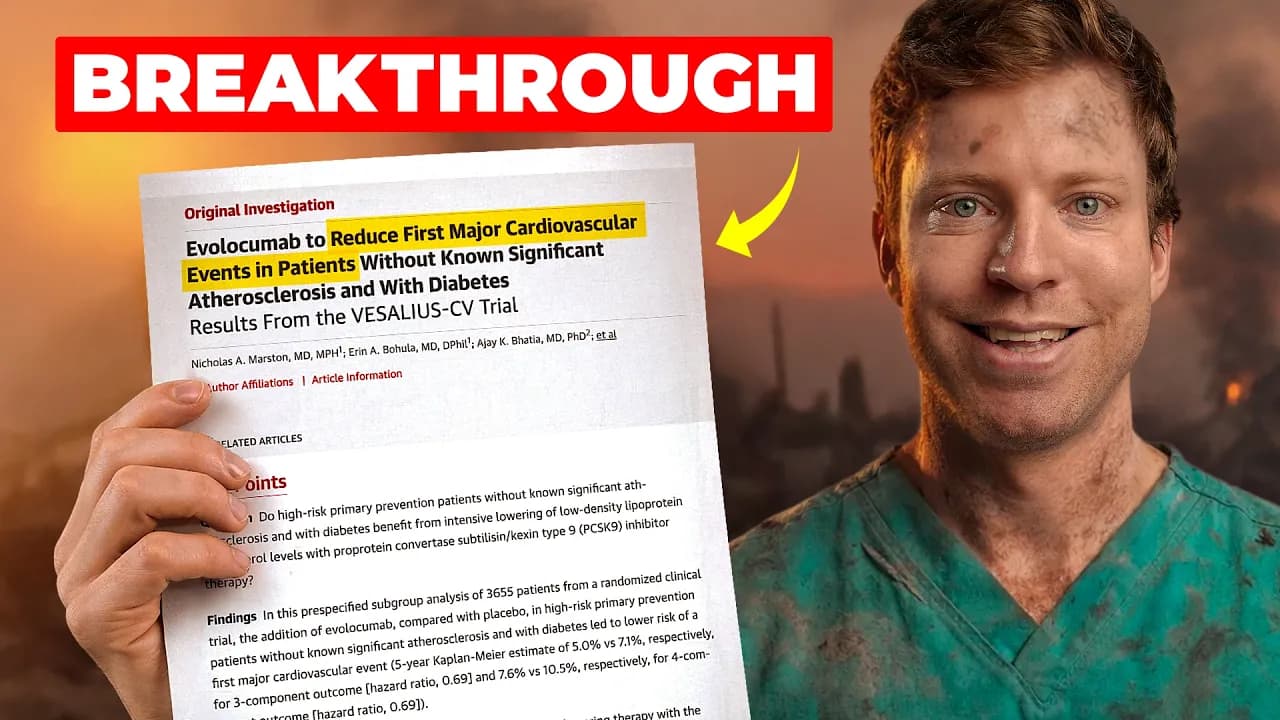
This study showed that people with high cholesterol and diabetes who had never had a heart attack or stroke were 31% less likely to have a first major heart problem when taking evolocumab, which supports the claim that the drug lowers first-time heart risks by about 25%.
The study shows that adding evolocumab to statins helps prevent serious heart and stroke problems in high-risk patients, including those who haven’t had a heart attack or stroke before.
The study shows that evolocumab helps prevent heart problems in high-risk patients who haven’t had a heart attack or stroke, but the benefit is about 18%, not 25% as claimed.
Score breakdown, mechanism chain, raw evidence, ideal studies needed & 6 supporting studies
Not medical advice. For informational purposes only. Always consult a qualified healthcare professional before making health decisions.